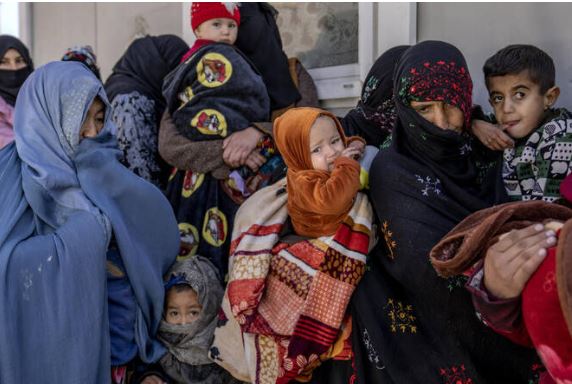
Afghan hunger crisis deepens as aid funding falls short, UN says

KABUL: The UN World Food Programme is unable for the first time in decades to provide effective aid to millions of Afghans suffering from malnutrition, with deaths especially among children likely to rise this winter, the WFP said on Tuesday.
International aid to war-torn Afghanistan has dwindled significantly since 2021, when US-led forces exited the country and the Taliban regained power. The crisis has been compounded by multiple natural calamities such as earthquakes.
“For the first time in decades, WFP cannot launch a significant winter response, while also scaling up emergency and nutrition support nationwide,” the UN agency said in a statement, adding that it needed over $460 million to deliver food assistance to six million most vulnerable Afghans.
“With child malnutrition already at its highest level in decades, and unprecedented reductions in (international) funding for agencies providing essential services, access to treatment is increasingly scarce,” it said.
Child deaths are likely to rise during Afghanistan’s freezing winter months when food is scarcest, it said.
The WFP estimates that 17 million people face hunger, up about 3 million from last year, a rise driven in part by millions of Afghans deported from neighboring Iran and Pakistan under programs to send back migrants and refugees.
Humanitarian agencies have warned that Afghanistan lacks the infrastructure to absorb a sudden influx of returnees.
“We are only 12 percent funded. This is an obstacle,” Jean-Martin Bauer, WFP Director of Food Security and Nutrition Analysis, told a press briefing in Geneva. He added that 3.7 million Afghan children were acutely malnourished, 1 million of whom were severe cases. “So yes, children are dying,” he said.