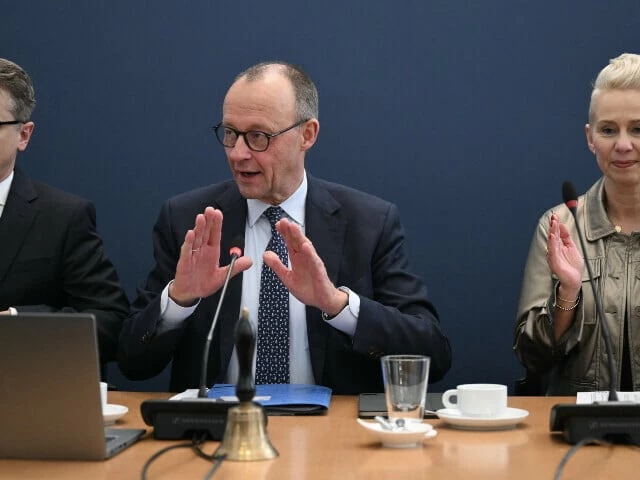
Washington: German Chancellor Friedrich Merz became the first foreign leader to visit the White House since the outbreak of the US-Israeli war on Iran, offering political support for the operation’s objectives while urging a swift conclusion due to mounting concerns over the global economy.
Meeting with President Donald Trump in the Oval Office on Tuesday, Merz struck a dual tone: solidarity with the goal of regime change in Tehran, coupled with anxiety over the conflict’s economic ripple effects.
“This is, of course, damaging our economies. This is true for the oil prices, and this is true for the gas prices as well,” Merz told reporters, highlighting the immediate pain being felt across European markets.
“So that’s the reason why we all hope that this war will come to an end as soon as possible,” he added.
‘On the Same Page’ on Regime Change
Despite his call for a quick end to hostilities, Merz made clear that Germany shares Washington’s fundamental objective regarding Iran’s leadership.
Merz, who has established himself as one of Europe’s more hawkish voices on Tehran, emphasized the ideological alignment between Berlin and Washington.
“We are on the same page in terms of getting this terrible regime in Tehran away,” he stated, endorsing the Trump administration’s stated aim of facilitating conditions for the Iranian people to change their government.
Economic Fallout
The Chancellor’s remarks reflect growing alarm in European capitals over the secondary effects of the widening conflict. Since the US and Israel launched their air campaign on Saturday, global oil prices have spiked, and shipping through the strategic Strait of Hormuz has been disrupted, threatening energy supplies and economic stability.
Merz’s visit underscores the delicate balancing act facing European allies: supporting a key NATO partner while shielding their own economies from the fallout of a prolonged Middle Eastern war.