
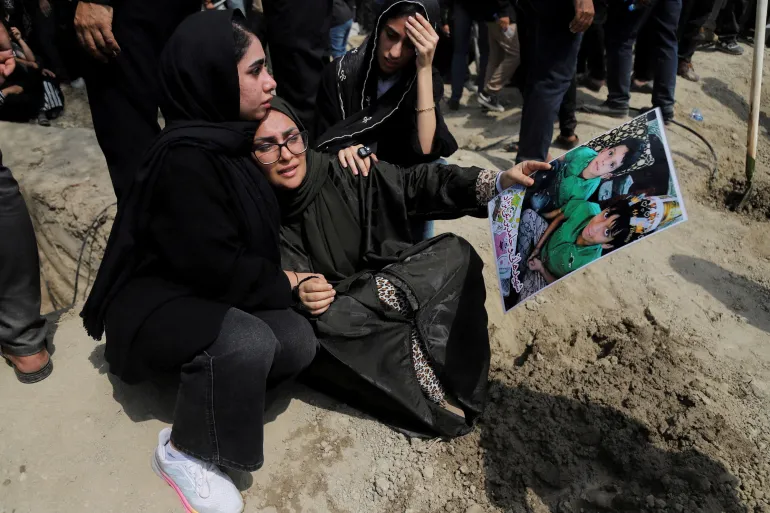
Athens, Greece – As Iran’s warning to European leaders echoes across the continent, the European Union finds itself deeply divided over how to respond to the US-Israeli war that has destabilized the Middle East and sent shockwaves through the global economy.
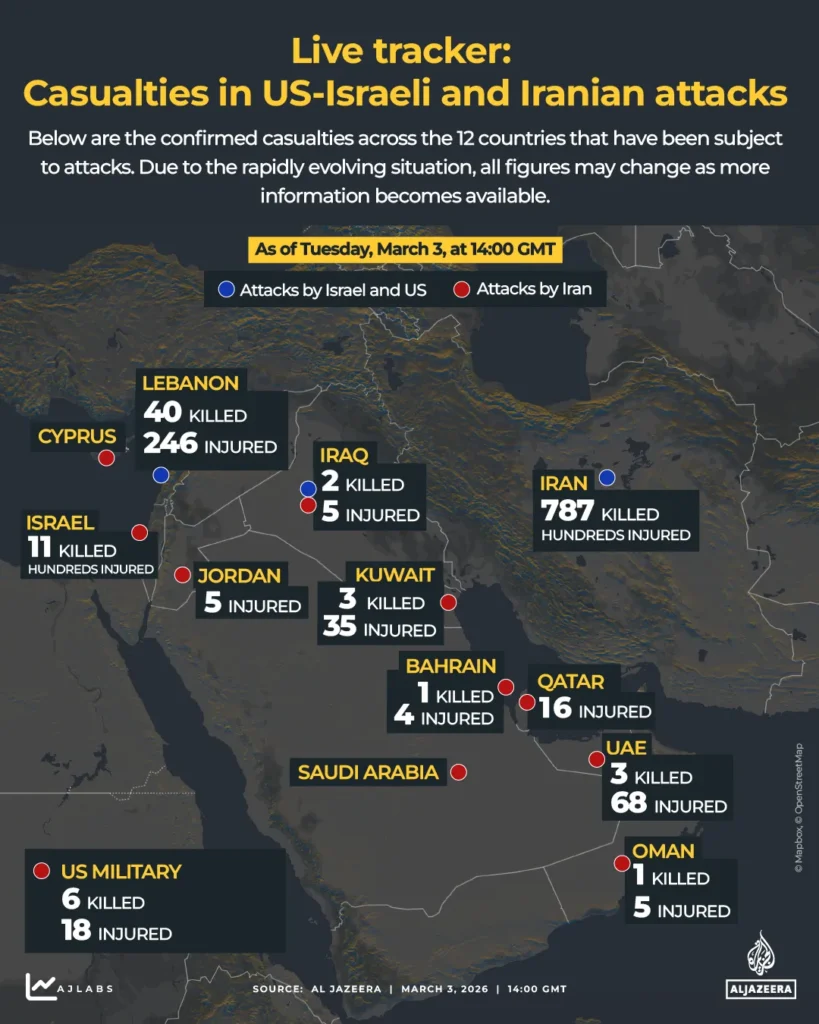
While EU members have united in condemning Iran’s retaliatory strikes on Gulf states, their positions on the underlying US-Israeli action range from outright opposition to tacit endorsement, leaving the bloc without a coherent strategy.
The Three Europes
The continent has fractured into three distinct camps:
1. Spain: The Dissenter
Spain has taken the strongest stance against the war, evicting US military aircraft from its bases. The move drew a furious response from President Donald Trump, who on Tuesday threatened to “cut off all trade” with Madrid.
Spanish Prime Minister Pedro Sanchez has been unequivocal, stating that the military operation is “not covered by international law.” Political scientist Ignacio Torreblanca told Al Jazeera that Spain is “keeping consistency” with its calls for respect of international law in Ukraine and Gaza.
2. Germany: The Supporter
At the opposite end, Germany has aligned itself with Washington’s objectives. Chancellor Friedrich Merz, who met with Trump at the White House on Tuesday, framed the war as a shared interest.
“The mullah regime is a terrorist regime responsible for decades of oppression of the Iranian people,” Merz said Sunday. “We share the interest of the United States and Israel in seeing an end to this regime’s terror and its dangerous nuclear and ballistic armament.”
This position marks a break from Germany’s traditional alignment with France and the UK, all of which had previously supported negotiations with Tehran even after Trump’s 2018 withdrawal from the nuclear deal.
3. The UK: The Middle Path
Britain has charted a cautious middle course. Prime Minister Keir Starmer initially hesitated but has now authorized the US to use the Akrotiri base in Cyprus for what he describes as strictly defensive purposes.
“The only way to stop the threat is to destroy the missiles at source,” Starmer explained. “We are not joining these strikes, but we will continue with our defensive actions in the region.”
Defending Cyprus: A European Test Case
The war’s geographic spread has brought it to the EU’s doorstep. A drone struck the UK base at Akrotiri on Monday, and Cypriot officials believe it was launched by Iran-backed Hezbollah.
In response, European nations are mobilizing to defend the EU member state:
- Greece dispatched four F-16 Viper fighter aircraft and two frigates, including the state-of-the-art Kimon with its advanced Sea Fire radar system.
- France announced it would send antimissile and antidrone systems to Cyprus.
- Britain will send a warship to defend its base.
The Mutual Defence Question
The deployment highlights a critical strategic question for Europe: how to defend itself as the US increasingly focuses elsewhere.
Elena Lazarou, director general of the Hellenic Foundation for European and Foreign Policy, noted that Cyprus cannot invoke NATO’s Article 5 because it is not a NATO member. However, it could invoke Article 42.7 of the EU Treaty—the mutual defence clause—which it has not yet done.
European Commission President Ursula von der Leyen has been pushing to activate this mechanism. “Mutual defence is not optional for the EU. It is an obligation within our own treaty,” she said at the Munich Security Conference last month.
Lazarou stressed the need for specificity: “Article 42.7 needs to be made more specific in terms of the threats it addresses and the level of member states’ obligation to help if it is invoked.”
Russia and Ukraine Factor
The war complicates Europe’s already fraught relationship with Russia. Iran is a close ally of Moscow, supplying Shahed drones that have devastated Ukrainian cities. Ukraine has downed approximately 44,700 such drones over the past year.
Yet, unlike the near-unity Europe has shown against Russia, the Iranian dimension has exposed deep fissures. The fact that a Russian antenna was reportedly used in the drone that struck Cyprus has not been enough to rally Europeans against Tehran as effectively as they have against Moscow.
What’s Next?
As the conflict enters its fifth day, Europe faces an uncomfortable reality: it is a spectator to a war on its periphery, unable to speak with one voice and only now beginning to take halting steps toward collective self-defence.