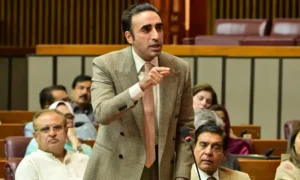
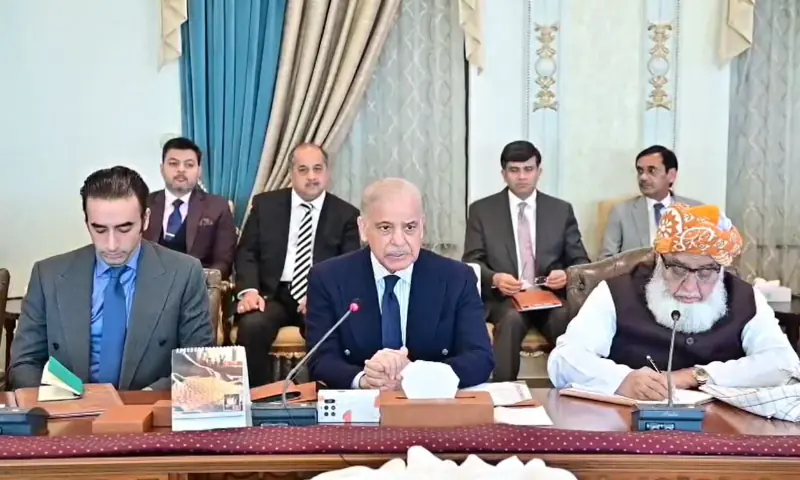
Islamabad: Parliamentary leaders from across the political spectrum gathered at the Prime Minister’s House on Wednesday for an in-camera briefing on the escalating regional situation, with participants emphasizing the urgent need for national unity and consensus.
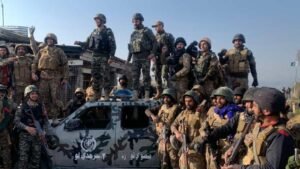
The over-two-hour briefing, chaired by Prime Minister Shehbaz Sharif, focused on two critical fronts: the ongoing ‘Operation Ghazab lil-Haq’ against terrorist hideouts along the Pakistan-Afghanistan border, and the widening conflict in the Middle East involving Iran, Israel, and Gulf states.
“The meeting was given an in-camera briefing regarding the Pakistan-Afghanistan situation, the hostilities in Iran, Middle East and the Gulf, and Pakistan’s diplomatic efforts,” read a statement from the Prime Minister’s Office (PMO) .
Participants Hail Diplomatic Efforts
The PMO statement noted that parliamentary leaders “freely expressed their views” and hailed Pakistan’s diplomatic efforts for peace.
“The participants underscored the need for national unity, consensus and unanimity in the current circumstances,” the statement added. Leaders also stressed the need to intensify diplomatic efforts and made recommendations for the future plan of action.
“All participants reiterated their firm commitment for the eradication of terrorism from the country,” the PMO stated, adding that leaders commended PM Shehbaz’s initiative to take the entire political leadership into confidence.
Who Attended?
Prominent political figures in attendance included:
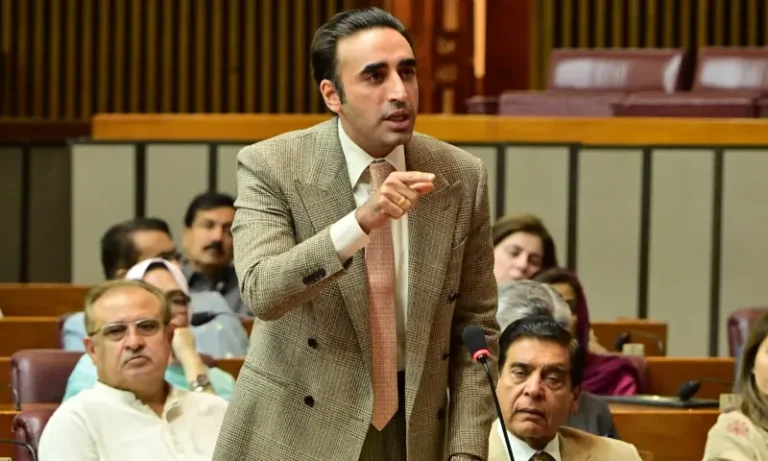
- Bilawal Bhutto-Zardari (PPP Chairman)
- Maulana Fazlur Rehman (JUI-F Chief)
- Khalid Maqbool Siddiqui (MQM-P)
- Abdul Aleem Khan (IPP)
- Khalid Hussain Magsi (BAP)
- Chaudhry Salik Hussain (PML-Q)
Senate Chairman Yousaf Raza Gilani, National Assembly Speaker Sardar Ayaz Sadiq, and Deputy PM/Foreign Minister Ishaq Dar were also present, along with several federal ministers.
The PTI Boycott
Notably absent was the Pakistan Tehreek-e-Insaf (PTI) , which declined the invitation. The party had insisted it would not attend any meeting unless a meeting with its incarcerated founder, Imran Khan, was arranged.
PM’s Adviser on Political Affairs Rana Sanaullah expressed disappointment at the opposition’s “attitude of isolation,” revealing that he and the Parliamentary Affairs Minister had personally invited opposition leaders.
“I requested them that this is a national issue… we should sit together,” Sanaullah told Geo News after the briefing. He hinted that participation could have opened doors for broader dialogue: “If they would have come and played their national role… they could have also touched upon that topic.”
Inside the Briefing: Diplomatic Push for Iran War End
Speaking on Geo News’ programme ‘Geo Pakistan’, Sanaullah provided insights into the discussions, revealing that Pakistan is actively working to broker an end to the Iran conflict.
“Pakistan’s efforts on the diplomatic front were that this war imposed on Iran ends in some kind of agreement or understanding,” he said.
He confirmed that Islamabad is acting as a communicator, engaging with both sides to convince Iran not to target Gulf countries. If attacks on Gulf states cease, and those countries “also add their weight that this war should end,” the chances of a resolution would increase.
Sanaullah affirmed that Iran “definitely has the right to respond to aggression,” but stressed that Pakistan is working to ensure that retaliation does not target other Muslim and Gulf countries, which would weaken the Muslim alliance.
Operation Ghazab lil-Haq: Goals ‘Almost Achieved’
On the border front with Afghanistan, Sanaullah stated that Pakistan’s objectives in Operation Ghazab lil-Haq have been “almost achieved” and are now being fortified.
He reiterated Pakistan’s core demand: that the Afghan Taliban “do not allow their soil to be used for terrorism against us.”
Pakistan is seeking a buffer zone that could be jointly monitored or overseen by friendly nations. “If they back off from it, we have no fight with them,” Sanaullah emphasized.
Looking Ahead
The briefing concluded with a consensus on continuing diplomatic efforts and maintaining military readiness. The absence of PTI, however, underscores the domestic political fissures that persist even as the nation faces multiple external threats.