Paolo Sorrentino premieres his best film since ‘The Great Beauty’ in Venice.

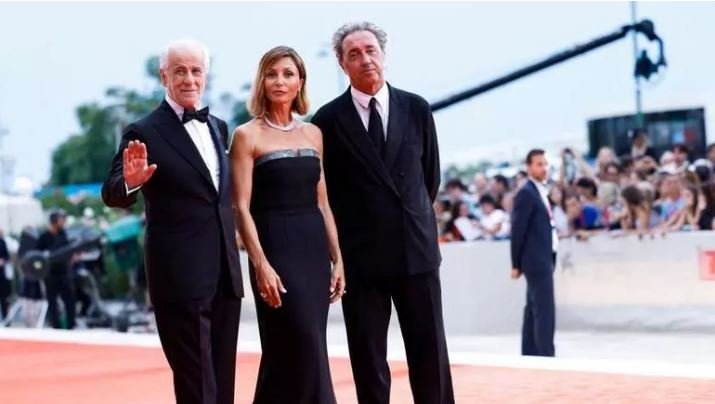
VENICE:(Web News)One of the main objectives of the 82nd Venice Film Festival is to establish itself as a privileged showcase for the best Italian cinema. Accustomed to seeing the country’s great filmmakers, such as Nanni Moretti and Alice Rohrwacher, present their works at Cannes, this year the veteran Italian festival is betting on local talent, starting with Paolo Sorrentino. Despite being a regular presence at the French event, the director of The great beauty has opened this year’s Mostra with The grace, a film that broadens Sorrentino’s approach to the universe of politics, a territory he already satirized in Il divo (2008) and in Silvio (and the others) (2018), two parody portraits of Giulio Andreotti and Silvio Berlusconi. At the press conference for the presentation of The grace In Venice, Sorrentino has expressed his interest in making a political film “at a historical moment in which ethics seems optional, elusive, opaque, or invoked only for instrumental reasons.”
Honing his talent for composing characters touched by a strong awareness of their own decadence, Sorrentino focuses The grace, his best film since The great beauty (2013), in the figure of Mariano de Santis, a president of the Republic who has accepted with a mixture of resignation and melancholy his status as an irrelevant symbol of the Italian state. “We weren’t inspired by a single president, but by many different profiles: Italian politicians, Germans, lawyers, fathers, and leaders from different backgrounds,” explains Sorrentino. This myriad of influences converges in the character of De Santis, known in fiction by the nickname “Reinforced Cement” for his marble-like demeanor—Toni Servillo, Sorrentino’s favorite actor, once again offers a masterclass in expressionless loquacity—and for his ability to stay out of political battles.