Architect of Modern Iran’s Power Structure
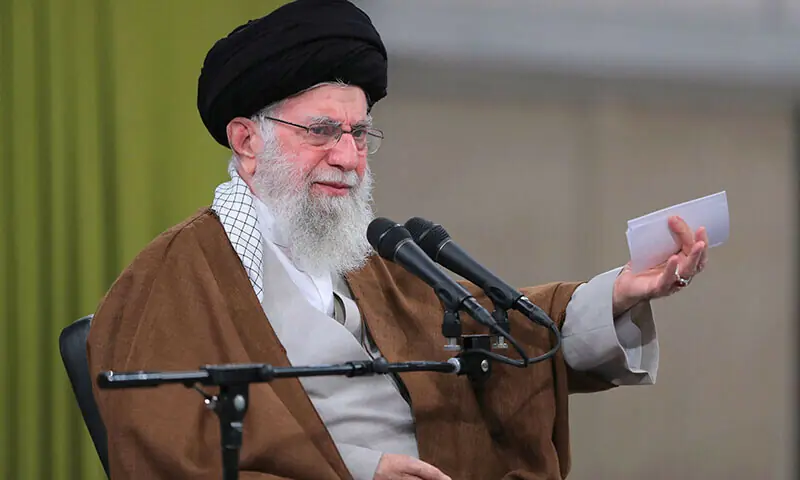
Ayatollah Ali Khamenei, who led Iran from 1989 until his reported death, was the most powerful figure in the Islamic Republic — wielding ultimate authority over the state’s political institutions, armed forces and clerical establishment.
At 86, Khamenei had ruled longer than any other leader in the country’s post-revolutionary history. He assumed office following the death of the Islamic Republic’s founder, Ruhollah Khomeini, and steadily consolidated his position at the apex of Iran’s hybrid political-religious system.
Under Iran’s constitution, the supreme leader stands above the presidency and parliament, with final authority over the judiciary, state broadcasting, intelligence services and the armed forces.
Surviving Decades of Crisis
Khamenei’s tenure was marked by repeated internal and external crises. He weathered the 1999 student unrest, the mass protests following the disputed 2009 presidential election, and the 2019 demonstrations triggered by fuel price hikes — all of which were forcefully suppressed.
He also confronted the 2022–2023 “Woman, Life, Freedom” movement sparked by the death in custody of Mahsa Amini, whose arrest for allegedly violating Iran’s dress code ignited nationwide protests and intensified international scrutiny.
Despite periodic unrest, Khamenei’s authority remained intact, underpinned by the loyalty of the Islamic Revolutionary Guard Corps (IRGC) and the Basij paramilitary forces — powerful security institutions central to preserving the regime’s stability.
Guardian of a Conservative Vision
Khamenei upheld the conservative revolutionary doctrine laid down by Khomeini, often curbing reformist ambitions within the political establishment. While he allowed presidents such as Mohammad Khatami and Hassan Rouhani limited space for cautious reform and diplomatic outreach, ultimate decision-making power rested with him.
He endorsed the 2015 nuclear agreement negotiated between Iran and world powers, which temporarily eased sanctions and diplomatic isolation. However, relations deteriorated sharply after US President Donald Trump withdrew from the accord in 2018 and reinstated sweeping sanctions.
Israel long viewed Khamenei as a destabilising force in the region, citing Iran’s backing of armed groups across the Middle East. During a 12-day conflict in 2025, Israeli officials openly threatened his life, underscoring how central he was perceived to be to Tehran’s regional posture.
A Life Shaped by Revolution and Conflict
Born in 1939 in Mashhad, Khamenei was repeatedly arrested under the rule of Mohammad Reza Pahlavi for anti-monarchy activism. Following the 1979 revolution, he rose rapidly through the ranks, serving as Tehran’s Friday prayer leader and later as president after the assassination of Mohammad Ali Rajai in 1981.
That same year, he survived an assassination attempt that left his right arm partially paralysed — an attack authorities blamed on the outlawed People’s Mujahedin of Iran (MEK).
When Khomeini died in 1989, Iran’s Assembly of Experts selected Khamenei as supreme leader. He initially expressed reluctance, reportedly declaring “I am opposed,” but was confirmed by the clerical body and went on to entrench his authority for decades.
Tight Security and Limited Public Exposure
Khamenei lived under heavy security, rarely appearing in public without prior notice. Unlike many world leaders, he never travelled abroad as supreme leader, following a precedent set by Khomeini. His last known foreign visit was to North Korea in 1989, where he met Kim Il Sung while serving as president.
Speculation about his health surfaced periodically, though officials consistently dismissed concerns.
A Dominant, Enduring Figure
Throughout his rule, Khamenei worked alongside six presidents and maintained firm oversight over Iran’s strategic direction. Though largely operating from behind the scenes, his influence permeated every branch of governance.
Believed to have six children, his son Mojtaba emerged as a prominent and sometimes controversial figure within Iran’s political circles and was placed under US sanctions in 2019.
Khamenei’s death — if definitively confirmed — would mark the end of an era in Iranian politics. For more than three decades, he stood at the centre of the Islamic Republic’s power structure, shaping its domestic governance and foreign policy with an unyielding grip that defined modern Iran.