



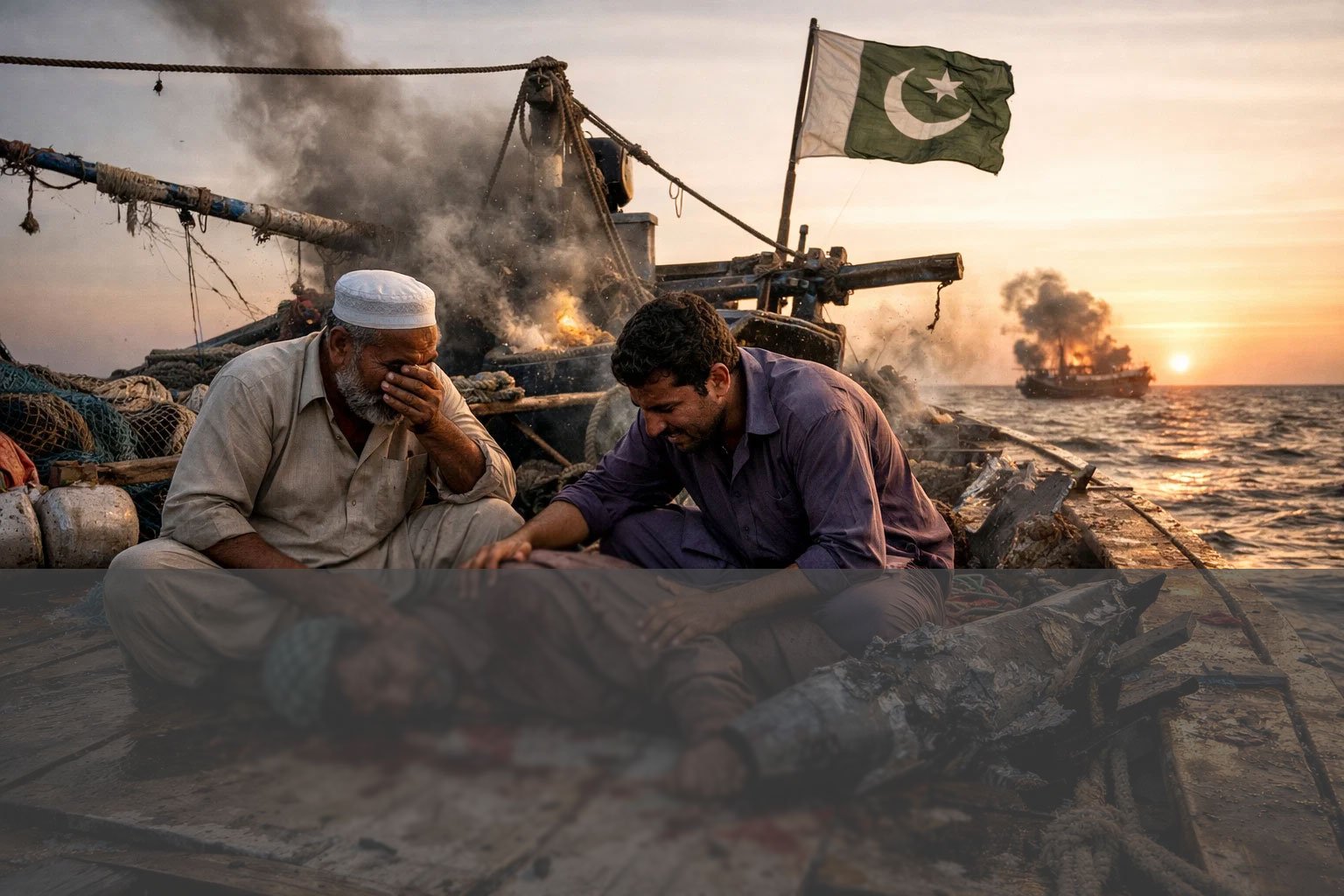
Gwadar – A fisherman from the Gwadar district lost his life on Saturday after debris from an Israeli missile, intercepted by Iranian air defence systems, struck his boat in Iranian waters, officials confirmed on Sunday.
The victim was identified as Muhammad Tayyab, a resident of Gannz, a small coastal settlement in Balochistan’s Gwadar district. Gwadar Deputy Commissioner Naqibullah Kakar confirmed the tragic incident to The Express Tribune.
Details of the Incident
According to DC Kakar, the missile was likely intended for fishing vessels in Iran’s Sistan-Baluchistan coastal region. While Iranian defence forces successfully intercepted the projectile, fragments from the missile hit Tayyab’s boat, resulting in his immediate death.
Following the incident, Tayyab’s body was transported back to Gannz by sea and laid to rest in his hometown, officials confirmed.
A Widening Conflict
The incident comes amid escalating and unprecedented hostilities in the region. Since late February, Iran has been engaged in direct confrontations with Israel and the United States following coordinated strikes against Iranian targets.
In response to those initial attacks, Tehran has launched waves of drone and missile attacks on US military bases and assets across Gulf states, heightening fears of a wider, protracted regional conflict that shows no signs of abating.
Civilians in the Crossfire
This tragedy starkly highlights the growing vulnerability of ordinary civilians caught in the crossfire of geopolitical tensions. Fishing communities along the Arabian Sea, particularly in Gwadar and Iran’s coastal belt, now face increased and unpredictable risks as military exchanges between major powers spill into maritime zones.
For Gwadar—a hub of immense economic activity and strategic importance for Pakistan’s future—such incidents raise serious concerns. They not only threaten the safety and livelihoods of local fishermen but also have broader implications for the security of trade routes and the overall stability of the region. The death of Muhammad Tayyab serves as a grim reminder that the cost of war is often borne by those farthest from the halls of power.