




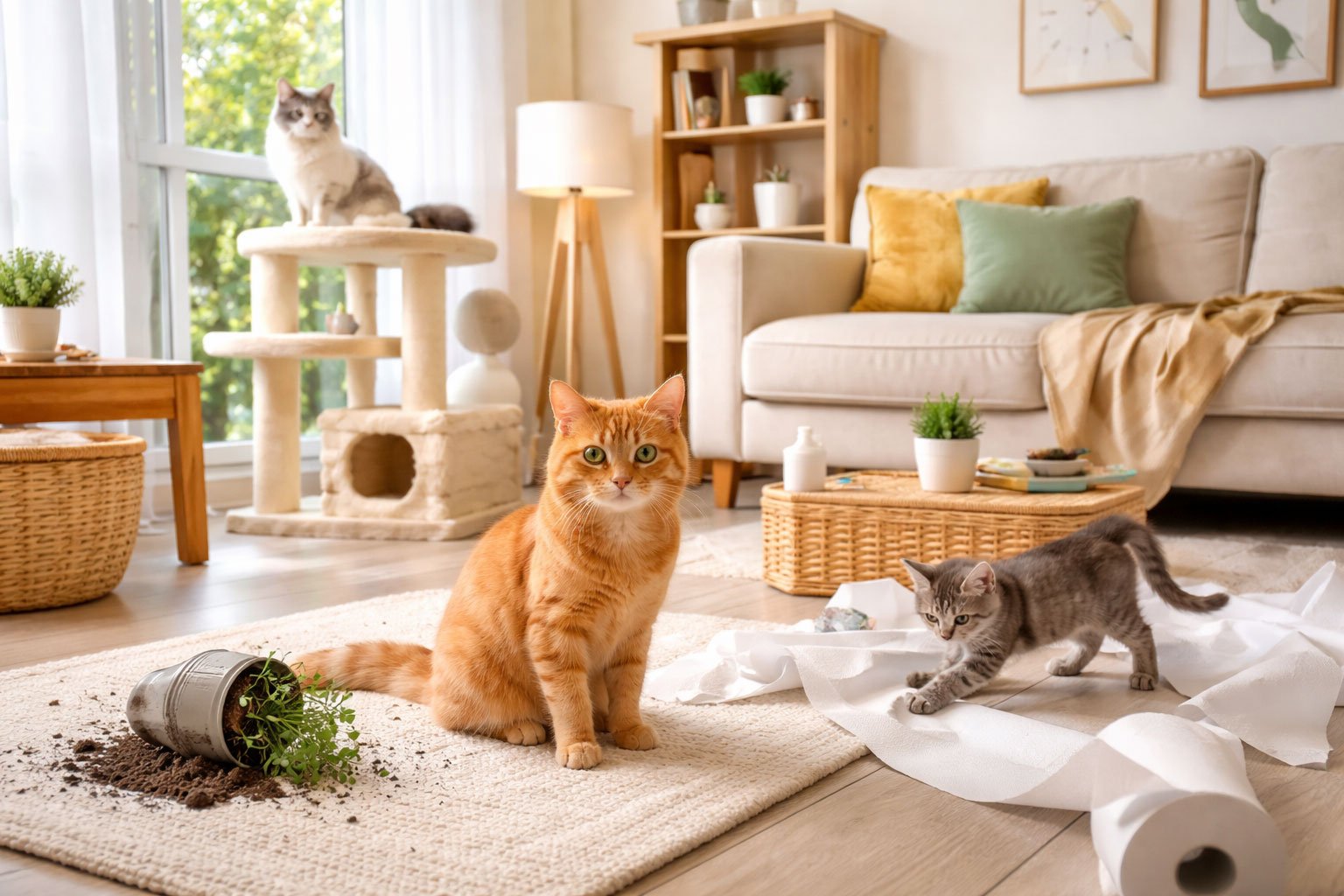
Discover essential cat safety tips for your home. From toxic plants to hidden dangers, learn how to create a safe haven for your feline friend with this expert-backed guide for US cat owners.
There’s no feeling quite like the one you get when your cat curls up in your lap, purring contentedly as you watch television. That deep sense of trust and companionship is what makes being a “cat parent” so special. But here’s the thing about our feline friends: they share their lives with us, but they also share our homes—and our homes, as cozy as they are for humans, can be veritable obstacle courses of hidden dangers for a curious cat.
In the United States, over 45 million households include a cat, yet many of these homes contain hazards that owners don’t even think about . From the lilies on your dining room table to the dangling blind cords in the living room, threats can lurk in every corner. This comprehensive guide will walk you through everything you need to know about cat safety, helping you transform your home into the safe haven your feline deserves.
The Indoor vs. Outdoor Debate: What’s Safest for Your Cat?
Before we dive into the nitty-gritty of home safety, we need to address one of the most fundamental questions in cat ownership: should your cat go outside?
According to veterinary experts, it’s much safer for cats to stay indoors than to be allowed outside . The reasons are compelling. Outdoor cats face a gauntlet of dangers including fights with other animals, encounters with predators, ingestion of toxic substances, and the ever-present risk of being hit by cars . They’re also exposed to parasites that can bring disease into your home, and they contribute to the decimation of local bird populations .
The American Veterinary Medical Association reports that outdoor cats have a significantly shorter lifespan than their indoor counterparts. While an indoor cat may live 15-20 years, outdoor cats often live only 2-5 years .
But what about cats who are used to going outside? Is it cruel to transition an outdoor cat to an indoor lifestyle? Veterinary behaviorists say not at all. With thoughtful enrichment and patience, most cats can successfully transition to indoor life. The key is replacing outdoor stimulation with indoor alternatives: vertical space through cat trees and shelves, puzzle feeders, window perches for bird-watching, and regular interactive play sessions .
For those who feel their cat absolutely needs outdoor time, consider a compromise: supervised leash walks or a secure “catio” (an enclosed cat patio). These options provide fresh air and enrichment without the life-threatening risks of free-roaming .
The Foundation of Feline Safety: Understanding Your Cat
Before you can effectively cat-proof your home, you need to understand your cat’s unique personality and tendencies . Every cat is different, and their safety needs will vary based on their behavior.
Does your cat love playing with strings, cords, and dangly items? Do they scale bookshelves like miniature mountain climbers? Do they seek out small, cozy spaces for napping? Will they try to eat just about anything that hits the floor?
Knowing your cat’s quirks isn’t just cute—it’s essential safety information. A cat who chews everything needs different protections than one who prefers to climb. Take a few days to observe your feline’s behavior patterns before you start making changes. You’ll be better equipped to prioritize the most relevant safety measures for your specific situation.
Room-by-Room Safety Checklist
Living Areas: The Heart of the Home
Your living room is probably where you spend the most time with your cat, which means it needs the most attention when it comes to safety.
Secure Your Furniture: That beautiful bookshelf could become a deadly hazard if your cat decides to climb it. Bookcases and tall furniture should be secured to the wall using brackets, straps, or anchors . Cats are natural climbers, and a toppling bookcase can cause severe injury or death.
Window Safety: Windows are a source of endless entertainment for cats, but they’re also dangerous. Ensure all windows are securely closed when you’re not actively monitoring them, and check that screens are tight in their frames . Cats have been known to fall through unsecured screens, leading to a phenomenon veterinarians call “high-rise syndrome”—injuries from falls that can be devastating .
Cord Control: Electrical cords are irresistible to many cats, especially kittens. Those thin cords used to charge phones and laptops are particularly tempting . Chewing on cords can cause electrocution, burns, or death . Invest in cord concealers, wire looms, or cable management systems to keep cords tucked away .
Don’t forget blind and curtain cords, which pose a strangulation risk. Loop and tie them up out of reach, or install cordless blinds for maximum safety .
Fireplace and Candle Safety: An open flame and a curious cat are a dangerous combination. Cats can knock over candles, set their tails on fire, or burn themselves on fireplaces . Never leave candles unattended, and keep fireplace guards firmly in place.
The Kitchen: A Minefield of Temptations
The kitchen is arguably the most dangerous room in the house for cats. Between toxic foods, sharp objects, and hot surfaces, vigilance is key.
Human Foods That Are Toxic to Cats: Many common human foods are poisonous to felines. The list includes:
- Chocolate, caffeine, and alcohol (all highly toxic)
- Onions, garlic, and chives (can damage red blood cells)
- Grapes and raisins (can cause kidney failure)
- Yeast dough (expands in the stomach, causing pain and potential rupture)
Even foods that seem cat-appropriate can be problematic. Tuna, for instance, shouldn’t be a dietary staple—it can lead to malnutrition and mercury poisoning, especially in kittens and senior cats .
Never leave food uncovered when you’re not actively eating, as the smell will entice your curious cat to investigate .
Trash Can Security: Your garbage can is a treasure trove of dangers: meat bones that can splinter and cause internal punctures, plastic wrap that can cause choking, and food scraps that may be toxic . Invest in trash cans with secure lids, and consider keeping them in an enclosed space. Some cats are clever enough to open sliding closet doors, so you may need childproof locks .
Sharp Objects: Scissors, knives, and other sharp tools should never be left out. A cat can easily cut a paw pad on a sharp edge, leading to bleeding and potential infection . The rule is simple: when you’re finished using it, put it away.
Bathrooms and Laundry Rooms: Hidden Danger Zones
These rooms contain some of the most overlooked hazards for cats.
Medication Safety: Human medications are a leading cause of pet poisoning. Even a single pill dropped on the floor can be fatal if your cat scarf it up . Antidepressants, painkillers, and ADHD medications are particularly dangerous—cats are actually attracted to the smell of some antidepressants .
Keep all medication bottles tightly closed and stored in cabinets. Be extra careful when dispensing pills, and immediately retrieve any that fall.
Toilet Lids: It sounds funny, but keep toilet lids closed. Curious kittens can fall in and drown, and drinking toilet water exposes cats to cleaning chemicals and bacteria .
Laundry Room Hazards: Before starting your washer or dryer, always check inside. Cats love warm, cozy spaces and may climb in for a nap . The results can be tragic. Also keep laundry detergents, fabric softeners, and cleaning supplies in sealed containers behind closed doors .
Household Chemicals: From cleaning supplies to personal care products, bathrooms are full of chemicals toxic to cats. Nail polish remover, lotions, and cosmetics can all cause problems if ingested . Store these items securely, and remember that cats groom themselves by licking—anything they walk through or get on their fur will end up in their digestive system .
Toxic Plants: A Deadly Beauty
One of the most surprising dangers for cat owners is houseplants. Many common and beloved plants are extremely toxic to cats, sometimes fatally so.
The Lily Family is Particularly Deadly: Lilies of any variety can cause acute kidney failure in cats. Even ingesting a small amount of pollen or drinking water from a vase containing lilies can be fatal .
Other common toxic plants include:
- Aloe Vera
- Azaleas
- Chrysanthemums
- Daffodils
- Dieffenbachia (Dumb Cane)
- English Ivy
- Hyacinth
- Jade Plant
- Mistletoe
- Oleander
- Peace Lily (less toxic than true lilies but still dangerous)
- Philodendron
- Poinsettia (contrary to popular belief, it’s not the most deadly, but it can still cause issues)
- Sago Palm (extremely toxic)
- Tulips
Before bringing any plant into your home, check the ASPCA’s list of toxic and non-toxic plants. If you have toxic plants already, either remove them or place them in areas completely inaccessible to your cat.
Essential Oils: Aromatherapy’s Dark Side
The essential oils trend has swept through American homes, but many cat owners don’t realize that essential oils can be deadly to felines. Cats lack certain liver enzymes needed to metabolize the compounds in essential oils, making them highly susceptible to toxicity .
Oils that are particularly dangerous include:
Both ingestion and skin exposure can be toxic. This includes oils used in diffusers, applied to the skin, or used in cleaning products. If you use essential oils in your home, ensure your cat cannot access the area, and never apply them directly to your cat.
Small Objects: The Swallowing Hazard
Cats, especially kittens, explore the world with their mouths. Small objects that seem harmless can become life-threatening if swallowed.
Items that frequently require surgical removal include:
- Hair ties, rubber bands, and dental floss
- Earbuds and hearing aids
- Batteries and coins
- Buttons and beads
- String, yarn, and thread
String-like objects are particularly dangerous. If swallowed, they can cause a condition called “linear foreign body” where the string gets caught and the intestine bunches up around it like an accordion. This requires emergency surgery and can be fatal .
Keep small items stored securely, and do a quick floor sweep before bed each night. Those little things that fall out of pockets or off counters can be irresistible to a curious cat.
Holiday Hazards: Seasonal Safety
Holidays bring special risks for cats. From Christmas to Halloween, seasonal decorations can spell trouble.
Christmas Trees: Ensure your tree is securely anchored so it can’t tip over if your cat climbs it. If you have a live tree, be aware that fir tree oils can cause vomiting, and the water at the base may contain fertilizers or bacteria . Cover the tree water so your cat can’t drink it.
Ornaments and Tinsel: Glass ornaments can break, causing cuts. Tinsel is irresistible to many cats but extremely dangerous if swallowed. Tinsel ingestion often requires surgery as it can cut through the intestines .
Holiday Plants: Mistletoe, holly berries, and poinsettias are all toxic. Keep them out of reach or, better yet, opt for artificial versions .
Candles and Lights: Never leave lit candles unattended. Check holiday lights for signs of chewing, and unplug them when you’re not home.
Balcony and High-Rise Safety
For those in apartments or multi-story homes, balconies present unique risks. Cats can and do fall from balconies, often while napping or chasing a bug .
Screens Aren’t Enough: Standard window screens aren’t designed to hold a cat’s weight. If your cat likes to sit in open windows, install sturdy security screens designed for pets.
Balcony Proofing: If you have a balcony, consider installing cat netting. Telescopic rods can be used to attach netting without drilling, making this possible even in rentals . Ensure the netting is taut and secured from floor to ceiling.
Never leave a cat unsupervised on a balcony, even if you think it’s secure.
Creating an Enriched Indoor Environment
Safety isn’t just about removing dangers—it’s also about providing appropriate outlets for natural behaviors. A bored cat is more likely to get into trouble.
Vertical Space: Cats are climbers by nature. Provide cat trees, wall shelves, or window perches that allow your cat to survey their territory from above . This reduces stress and provides exercise.
Scratching Posts: Scratching is a natural behavior that cats need to perform. Provide posts made of different materials (sisal, carpet, cardboard) and place them strategically around your home . This redirects scratching away from your furniture.
Hiding Spots: Cats need safe spaces where they can retreat when feeling overwhelmed. Cardboard boxes, cat caves, or even a quiet corner with a soft bed can serve this purpose . Boxes are particularly effective—they provide security and help cats reduce stress .
Interactive Play: Set aside time each day for interactive play with wand toys that mimic prey. This satisfies hunting instincts, provides exercise, and strengthens your bond .
Puzzle Feeders: Instead of free-feeding, use puzzle feeders or scatter food around the house to encourage natural foraging behavior . This prevents obesity and keeps your cat mentally stimulated.
Emergency Preparedness: Planning for the Worst
Natural disasters and emergencies happen, and having a plan for your cat is essential. Recent disaster responses show that the percentage of households able to evacuate with their pets safely remains low .
Microchipping and ID: Ensure your cat is microchipped and that the registration information is current. Even indoor cats should wear a breakaway collar with an ID tag . If your cat does escape, proper identification is their ticket home.
Disaster Kit: Prepare a cat-specific disaster kit including:
- At least two weeks of food and medication
- Portable water bowls and bottled water
- A secure carrier (familiarize your cat with it beforehand)
- Copies of veterinary records
- Recent photos of your cat (for identification if separated)
- Familiar items like a favorite toy or blanket
Evacuation Practice: Help your cat become comfortable with carriers and car travel through gradual, positive experiences . If a disaster strikes, you won’t have time to convince a terrified cat to enter a carrier.
Senior Cat Safety: Special Considerations
As cats age, their safety needs change. Around age seven, cats enter their senior years and may require adjustments to their environment .
Mobility Issues: Senior cats often develop arthritis or other mobility problems. Provide steps or ramps to help them reach favorite spots, and ensure food, water, and litter boxes are easily accessible on one level .
Confusion and Disorientation: Older cats can become confused, sometimes forgetting where the litter box is or getting “stuck” in corners. Maintain consistency in your home layout and provide night lights to help them navigate .
Dental Health: Dental disease becomes more common with age and can lead to serious health issues. Watch for signs like bad breath, drooling, or difficulty eating, and maintain regular veterinary dental care .
Regular Monitoring: Senior cats need more frequent veterinary check-ups to catch age-related health issues early. At home, monitor for changes in behavior, appetite, or litter box habits that could signal problems .
What to Do in an Emergency
Despite your best efforts, emergencies can happen. Being prepared to act quickly can save your cat’s life.
Signs of Poisoning: If you suspect your cat has ingested something toxic, look for:
- Vomiting or diarrhea
- Drooling
- Difficulty breathing
- Seizures or tremors
- Lethargy or weakness
- Loss of appetite
Immediate Action: If you witness your cat ingesting something toxic, or if they show symptoms, take them to an emergency veterinary clinic immediately. Time is critical.
Poison Control Resources: While en route to the vet, you can contact:
- ASPCA Animal Poison Control Center: (888) 426-4435 (consultation fee may apply)
- Pet Poison Helpline: (855) 764-7661 (consultation fee may apply)
These hotlines are staffed 24/7 by veterinary toxicologists who can provide immediate guidance.
Conclusion: Safety Is an Ongoing Journey
Cat-proofing your home isn’t a one-time event—it’s an ongoing process that evolves as your cat ages and as your home changes. New hazards appear with each season, each holiday, and each new purchase. The key is to remain vigilant and to always view your home through your cat’s eyes.
Remember that the goal isn’t to create a sterile, empty space but to create a rich, engaging environment where your cat can thrive safely. With thoughtful preparation and ongoing attention, you can provide the safe, loving home your feline friend deserves—a place where their curiosity can flourish without putting them at risk.
After all, the peace of mind that comes from knowing your home is truly cat-safe means more relaxed snuggles, more playful moments, and more years of purring companionship. And isn’t that what being a cat parent is all about?