
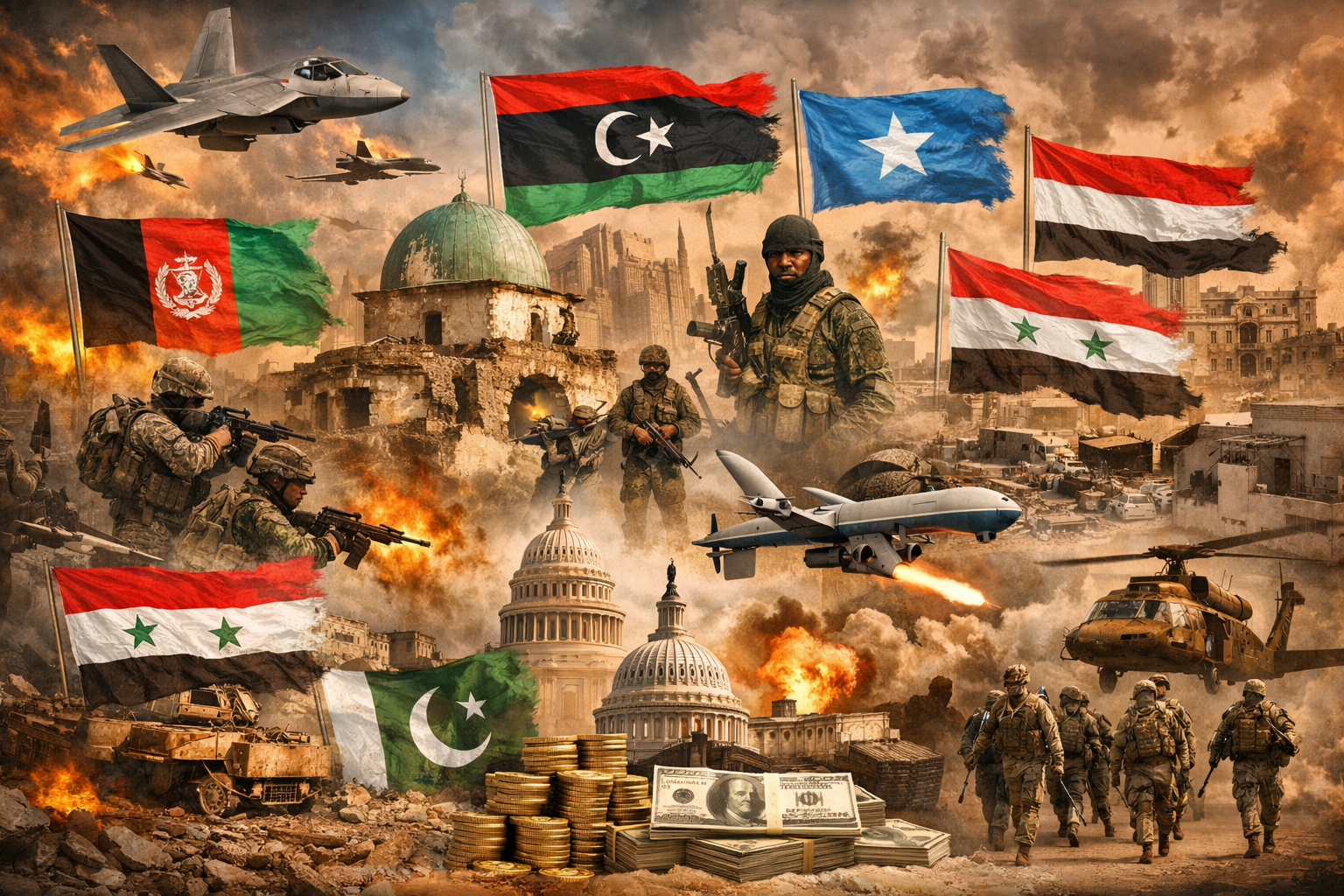
In the hazy, smoke-choked morning of September 11, 2001, the world watched in horror as the symbols of American power crumbled. That tragedy would trigger a promise from President George W. Bush: a “war on terror” designed to hunt down those responsible and ensure such an attack never happened again.
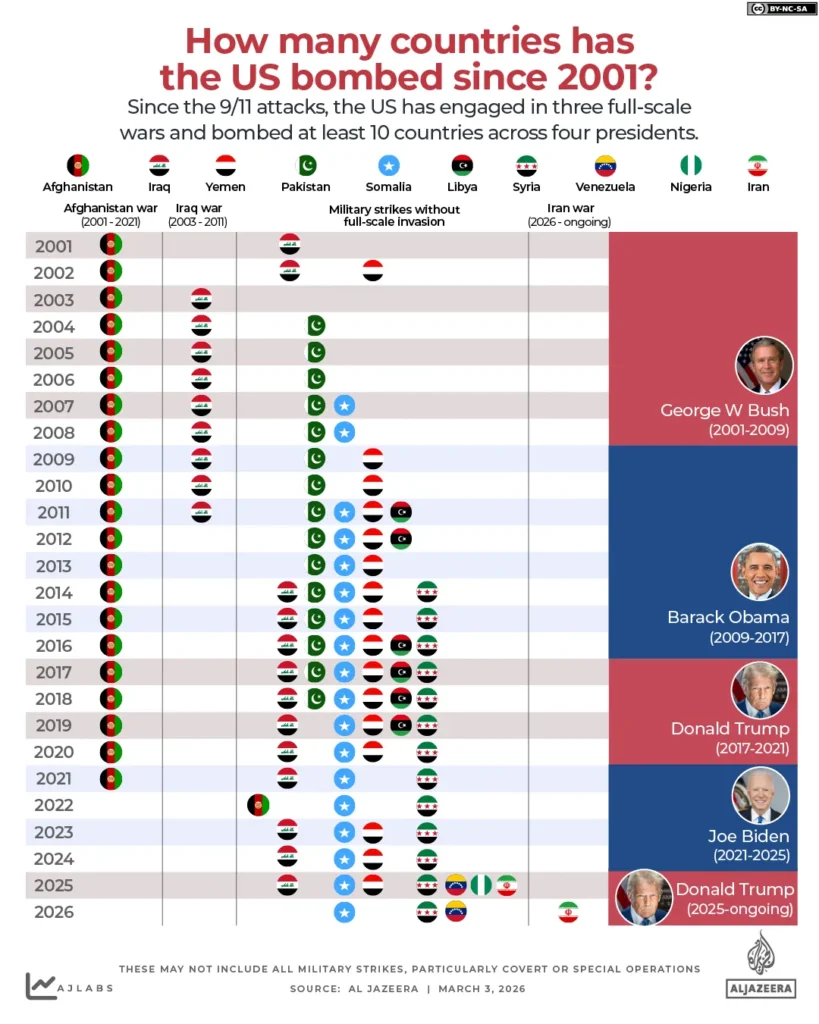
Twenty-four years later, that promise has metastasized into something its architects never fully disclosed to the American people. Under four presidents—two Republicans and two Democrats—the United States has transformed from a nation responding to an attack into a global military power that has rained bombs on at least ten countries, with a price tag that staggers the imagination.
And the bombing hasn’t stopped.
Just weeks into his return to the White House, President Donald Trump—who campaigned on ending “endless wars”—authorized massive military strikes against Iran, targeting its leadership and nuclear infrastructure in coordination with Israel. The irony was lost on no one: another president, another country, more bombs.
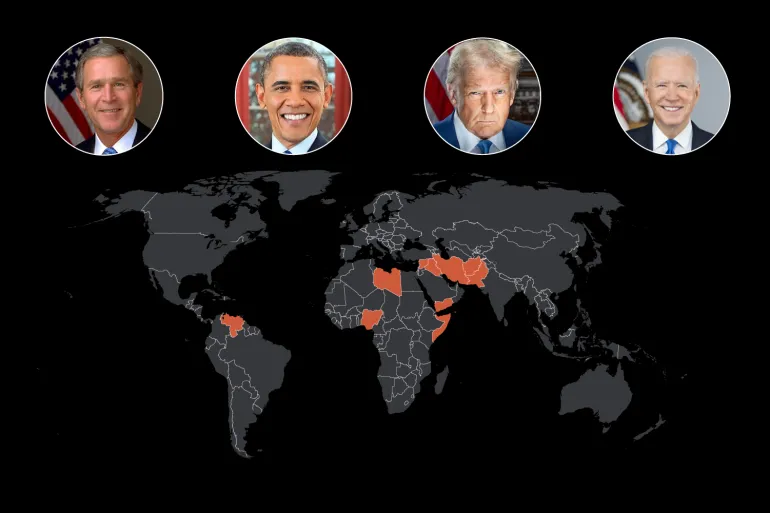
The Map of American Explosives
When you look at a world map marked with every nation the U.S. has bombed since 2001, a startling picture emerges. Afghanistan (2001-2021). Iraq (2003-2011, and again from 2014). Pakistan (2004-present). Somalia (2007-present). Yemen (2002-present). Libya (2011, and again in 2015). Syria (2014-present). And now, escalating strikes in Iran.
This doesn’t include the covert operations, the special forces raids that never make headlines, or the drone strikes that the CIA won’t acknowledge. These are just the acknowledged campaigns—the ones we know about because someone, somewhere, counted the dead.
“We’ve created a norm where the president can order lethal force anywhere on the planet, against anyone, without meaningful congressional oversight,” explains Neta Crawford, co-director of Brown University’s Costs of War project. “That’s not what anyone envisioned after 9/11.”
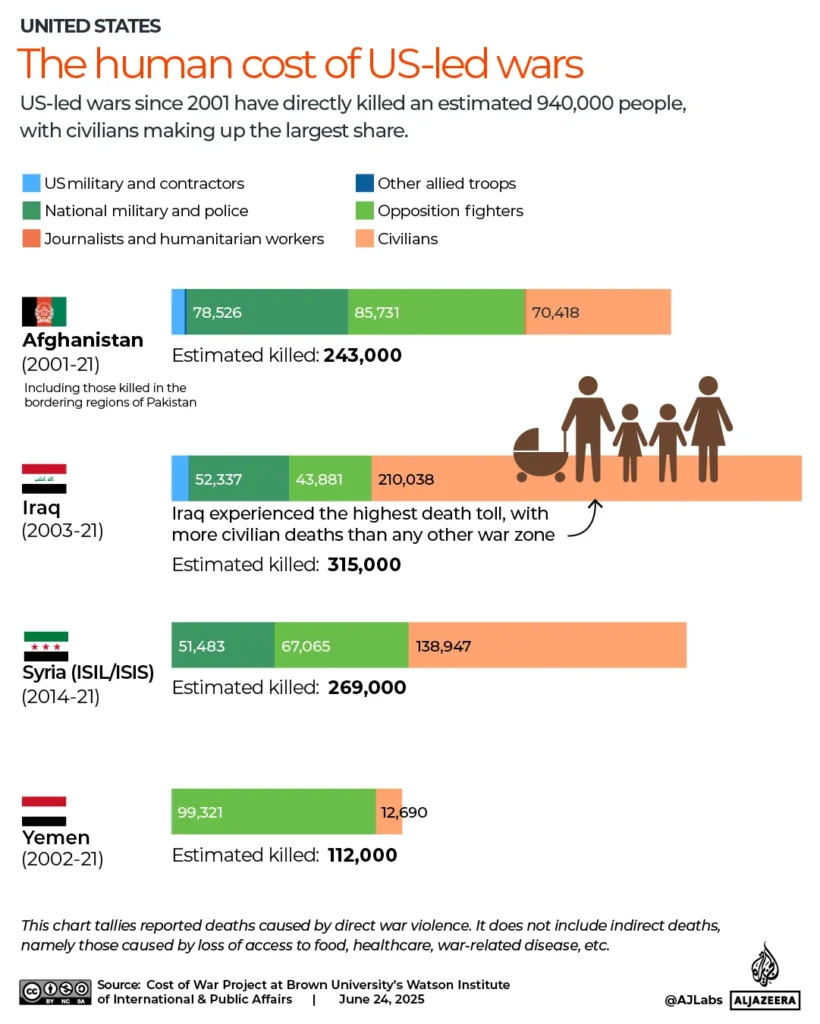
The Human Toll: Nearly a Million Dead
Statistics numb the mind. They arrive in press releases and academic papers, easily scrolled past. But behind every number in the Costs of War analysis is a story that will never be told.
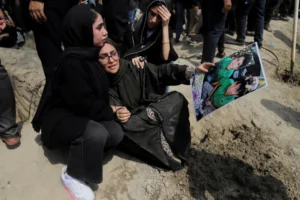
Approximately 940,000 people have died directly from violence in these post-9/11 wars. Let that number settle for a moment. Nearly a million mothers, fathers, children, teachers, doctors, farmers—gone.
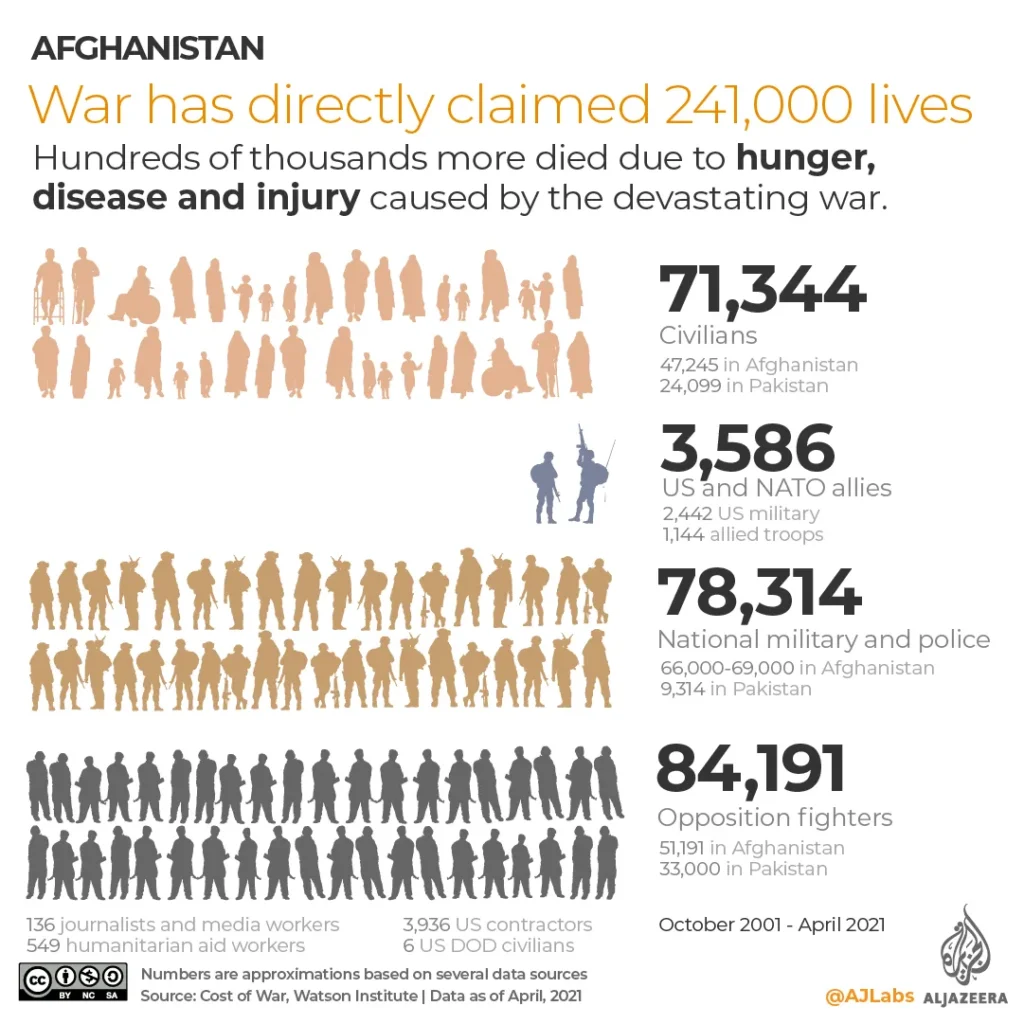
In Afghanistan, where the war began, an estimated 241,000 people perished. In Iraq, at least 210,090 civilians have been killed since 2003. These aren’t combatants with guns; they’re families caught between American bombs and insurgent bullets, people who woke up one morning and found their world turned to fire.
And that’s just the direct deaths. The indirect deaths—the children who starved because conflict destroyed their village’s food supply, the patients who died because hospitals were bombed, the families wiped out by disease in the chaos of war—those numbers are incalculably higher.
“When we talk about the cost of war, we’re not just talking about defense budgets,” says Crawford. “We’re talking about generations lost to displacement, trauma, and the destruction of entire societies.”
The Price Tag: $8 Trillion and Counting
If you tried to visualize $8 trillion, you’d fail. It’s beyond human comprehension. But let’s try anyway.
If you spent one dollar every single second, it would take you more than 31,000 years to spend $1 trillion. Now multiply that by eight.
The United States has already spent $5.8 trillion funding these conflicts. That includes $2.1 trillion from the Defense Department, $1.1 trillion from Homeland Security, $884 billion in increased base budget costs, and $465 billion on veterans’ medical care. Oh, and $1 trillion in interest payments alone on the loans we took out to pay for it all.
But here’s the kicker: we’re not done paying. Over the next 30 years, the U.S. will need to spend at least another $2.2 trillion caring for the veterans of these wars—the young men and women who survived the bombs only to come home with bodies and minds shattered by what they witnessed.
That brings the total to $8 trillion.
To put that in perspective: for the cost of these wars, the United States could have provided free college education for every American student for decades, eliminated student debt entirely, rebuilt every crumbling bridge and road in the country, funded universal healthcare, and still had money left over.
Instead, we got two decades of conflict and a Taliban-controlled Afghanistan.
Afghanistan: The Twenty-Year War
It began on October 7, 2001, with Operation Enduring Freedom. The goal was clear: dismantle al-Qaeda and remove the Taliban from power. The initial invasion succeeded brilliantly—the Taliban fell within weeks.
What followed was the longest war in American history.
Twenty years. Four presidents. 3,586 coalition soldiers dead. And in the end, the Taliban regained control. What exactly did those two decades accomplish?
The answer, for many veterans who served multiple tours, is painfully unclear. They watched friends die. They lost years of their lives to a conflict that, by the end, most Americans had stopped thinking about entirely.
“The hardest part isn’t what I saw over there,” one Afghanistan veteran told me, asking not to be named. “It’s coming home and realizing no one here knows what happened, and most don’t care. We fought for nothing, and now we’re supposed to just move on.”
Iraq: The War Built on a Lie
March 20, 2003. President Bush announced that the U.S. was launching a war against Iraq because Saddam Hussein possessed weapons of mass destruction—weapons that could be used against America.
It was all false. The intelligence was flawed, manipulated, or simply invented. But by the time the world knew the truth, the invasion was underway.
On May 1, 2003, Bush stood beneath a banner declaring “Mission Accomplished” aboard the USS Abraham Lincoln. Major combat operations, he announced, were over.
They weren’t. What followed was years of insurgency, the rise of al-Qaeda in Iraq, and eventually the emergence of ISIS—a terrorist group more brutal than anything that existed before the invasion. At least 210,090 Iraqi civilians died.
The mission wasn’t accomplished. It had barely begun.
The Drone Wars: Death From Above, Far From the Battlefield
While Americans watched troops on the news, a different war was being fought in the shadows. Starting in the mid-2000s, the CIA began launching drone strikes in Pakistan’s tribal areas—remote regions where al-Qaeda and Taliban fighters supposedly hid.
President Barack Obama dramatically expanded these strikes. What had been a handful of operations became a campaign of hundreds. In Yemen, in Somalia, in places where American troops never set foot, Hellfire missiles rained from drones piloted by operators sitting in air-conditioned trailers in Nevada.
The legal justification was murky. The oversight was minimal. The civilian casualties—what the military calls “collateral damage”—were often significant.
“Signature strikes,” they were called—attacks on unidentified individuals whose “patterns of life” matched those of militants. In practice, this meant bombing wedding parties, funerals, and gatherings of civilians who happened to be in the wrong place at the wrong time.
Libya: The Intervention That Destroyed a Country
In 2011, as the Arab Spring swept through the Middle East, Libyans rose up against dictator Muhmmad Gaddafi. When his forces threatened to crush the rebellion in Benghazi, the U.S. joined a NATO-led intervention.
American missiles struck Libyan air defenses. American planes enforced a no-fly zone. And when it was over, Gaddafi was dead—dragged through the streets and shot by his own people.
But the intervention didn’t create democracy. It created chaos. Libya descended into factional fighting, became a hub for human trafficking, and today remains a failed state where rival governments battle for control.
“Mission accomplished” in Libya meant a country destroyed, thousands dead, and a new source of instability in North Africa that continues to this day.
Syria and the Return to Iraq
By 2014, a new threat had emerged from the wreckage of Iraq: ISIS. The terrorist group swept through northern Iraq, capturing Mosul and declaring a caliphate.
The U.S. responded with a new campaign of airstrikes—first in Iraq, then in Syria. Once again, American bombs fell on Middle Eastern cities. Once again, civilians died. And once again, the long-term outcome remains uncertain.
In 2020, President Trump ordered a drone strike that killed Iranian General Qassem Soleimani at Baghdad airport. The strike was justified as necessary to stop “imminent” attacks—but no evidence of imminence was ever presented to the public. Iran retaliated by launching missiles at Iraqi bases housing American troops, giving dozens of soldiers traumatic brain injuries.
The cycle of violence continued.
What Have We Learned?
As Trump’s new strikes on Iran demonstrate, the answer appears to be: nothing.
Each president inherits these wars. Each promises to end them. Each finds reasons to continue them—or start new ones. The national security state, with its $5.8 trillion budget and its global network of bases and drones, has become self-perpetuating.
“There’s always another target, always another threat,” says one former Pentagon official who served under both Bush and Obama. “The machine doesn’t know how to stop. It only knows how to keep running.”
Meanwhile, the costs mount. The nearly million dead. The $8 trillion. The generations of veterans who will carry these wars in their bodies and minds for decades to come. The countries reduced to rubble. The hatreds sown that will produce new enemies for years to come.
And for what?
Twenty-four years after 9/11, al-Qaeda is weakened but not destroyed. ISIS rose and fell but still exists. The Taliban controls Afghanistan. Iran remains a regional power. American soldiers are still in harm’s way. And American bombs are still falling.
The war on terror didn’t end. It just spread, mutated, and became permanent—a constant hum in the background of American life, noticed only when a new crisis erupts, then quickly forgotten again.
But for the families of the 940,000 dead, for the veterans struggling with nightmares and prosthetics, for the Iraqi civilians who lost everything, and for the next target of American missiles—wherever that may be—the war never really fades into the background.
It’s always there. Just like the bombs.