




In the weeks after U.S. President Donald Trump sparked a trade war with his punishing tariffs, Prime Minister Mark Carney said Canada’s “old relationship” with the U.S. would be “over” soon — and now there’s some hard evidence that is indeed happening.
CBC News reviewed datasets on travel, trade, shopping and culture, and all of them paint a similar picture: Canadians are taking a big step back from the U.S.
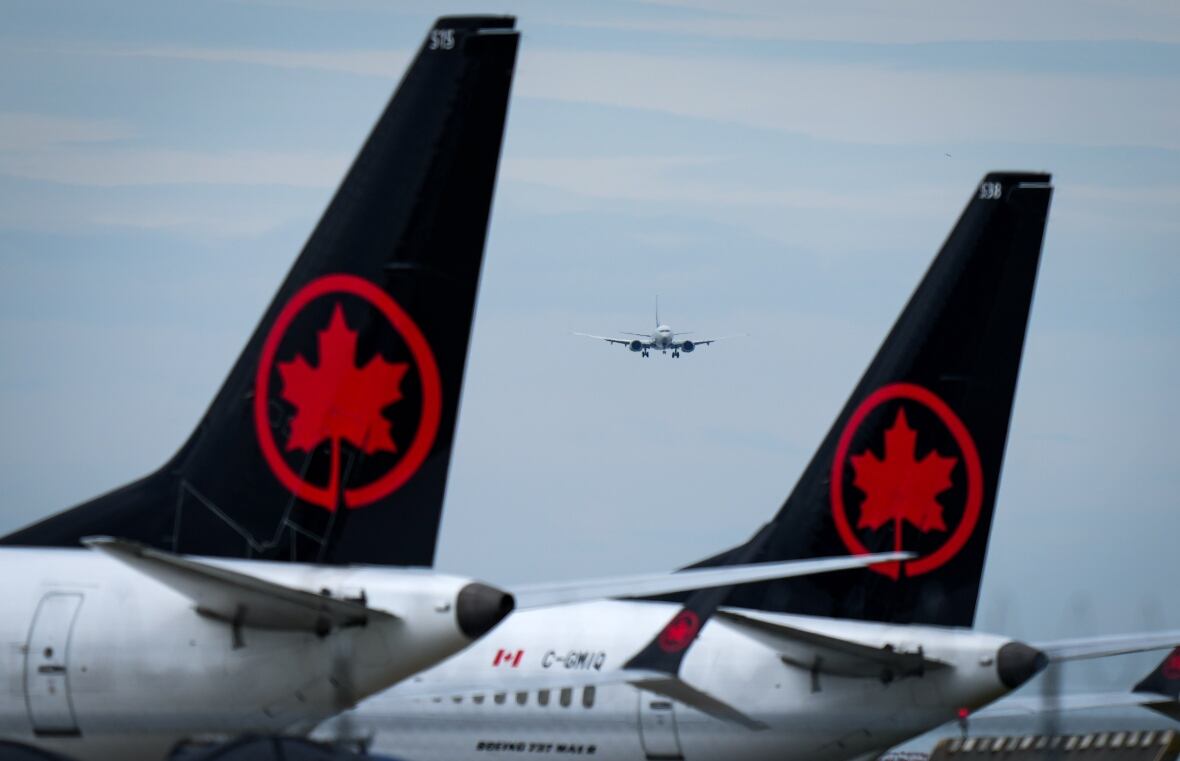
Months after Trump launched his trade broadside and prompted a national backlash with his 51st state taunts, the Canadian travel boycott is still in full swing with many shunning cross-border travel, prompting airlines to cancel U.S. flights and curb capacity.
Canadian exports to the U.S. have dropped off while those to non-U.S. foreign countries have surged — a pattern that could accelerate further as the government races to cut new trade deals and help businesses capitalize on the ones that have already been signed.
The grassroots “Buy Canadian” campaign has fundamentally reshaped parts of the retail landscape with grocers scrapping some U.S. products entirely while adding dozens of domestic suppliers to fill the void.
There are even signs Canadian cultural consumption patterns have shifted in the wake of Trump’s economic assault with viewership and sales up for homegrown content. Canadian-authored books in particular are getting a big lift.
Polls suggest support for some Canadian institutions is also on the rise as more people shun U.S.-style republicanism and back the monarchy, especially after King Charles’s high-profile visit.
Carney has described Trump’s actions as a “rupture” to the global order that demands a new way of thinking. Canadians themselves are leading the way.
And the Americans are noticing.
“All of these types of things, I’m sorry, that doesn’t tell me that Canada is passionate about this relationship in the same way that we are,” Trump’s ambassador to Canada, Pete Hoekstra, said this week.
Travel
There is one area in particular where that Canada-U.S. “rupture” has been most evident: travel.
The latest numbers suggest it’s not just a slump. Canadian visits to the U.S. are in free fall, months after some commentators said the boycott might be a blip.
According to Statistics Canada data, the number of Canadian residents coming back from the U.S. by car in August dropped a stunning 34 per cent compared to the same month last year.
That’s the eighth consecutive month of year-over-year declines — an unprecedented phenomenon outside of the COVID-19 health crisis.
And it’s not just day-trippers going by car who are turning on U.S. travel, as it was in the early days of this boycott. The number of Canadians returning by air from the U.S. fell 25.4 per cent in August.
A spokesperson for Air Canada told CBC News eight Canada-U.S. routes have been suspended so far this year and the flag carrier is deploying smaller planes to serve a number of American destinations — including to popular spots like Las Vegas.
But there’s still strong demand for non-U.S. foreign travel: Air Canada has added 28 international routes so far this year as Canadian vacationers pivot to Europe, the Caribbean and South America.
As the U.S. Travel Association noted in a research report on Canada before the trade war erupted, Canadian tourists have an “enormously positive impact on the U.S. trade balance with Canada” and, in 2024, spent some $20.5 billion US while they were there.
A spokesperson for the association said in a statement that just a 10 per cent decline in Canadian tourists could wipe out some 14,000 U.S. jobs — the drop is on pace to be much larger than that in 2025.
On Friday, Hoekstra suggested the low travel numbers were due to sentiment from Canadian politicians.
“I’m not surprised that there are Canadians who are not travelling to America when you have political leaders running national campaigns that are anti-American,” he said at an event hosted by the Fredericton Chamber of Commerce.
Trade
Trump’s decision to impose tariffs on virtually all Canadian goods — with exemptions for those that are compliant with the Canada-U.S.-Mexico Agreement (CUSMA) — has reordered the country’s export patterns.
According to a CBC News analysis of Statistics Canada data, Canadian exports to the U.S. have dropped by about two per cent this year, a figure driven in part by tariffs that have made those goods more expensive for American importers. That seemingly small decline is costly and works out to a $5-billion hit to exports.
As hope for a quick resolution to the U.S. trade dispute fades, Canadian companies have wasted no time in finding new markets or tapping old relationships that have atrophied in the years since Canada went all-in on the States.
This year, the United Kingdom has emerged as Canada’s second-largest export market — not including the European Union as a whole — displacing China.
Shopping
The Buy Canadian movement has prompted big changes in retail, too.
A spokesperson for Indigo, the country’s largest bookseller, said sales of Canadian-authored books are up 25 per cent year-over-year.
“Our uptick is especially strong in stores where we started stickering all books written by Canadian authors in February and the corresponding lift in sales was immediate,” the spokesperson said.

As for food, Canada’s counter-tariffs — which Carney just lifted to help secure a deal with Trump — pushed up the price of some U.S. goods.
According to Loblaw Companies CEO Per Bank, sales volumes of these tariffed American products are down 15 to 20 per cent on average this year — with some categories reporting an even steeper 50 per cent decline.
Sales of domestic products, meanwhile, are still up, Bank said in a social media post, “demonstrating the strong desire by consumers to continue supporting Canadian products and brands.”
A spokesperson said the supermarket giant has added more than 100 new Canadian suppliers of various food and other items since the start of the year as consumers turn on American goods out of patriotism or because of higher prices.
Culture
Canadians are generally voracious consumers of American culture — but some data points suggest people here are showing more interest in productions closer to home now that Canada-U.S. relations have hit a rough patch.
According to CBC/Radio-Canada, there has been a 34 per cent increase this year in time spent watching content on Gem, the public broadcaster’s streaming platform.
A spokesperson for the company said there’s been notable spike in viewership for homegrown programs like Wild Cards (up 200 per cent), Heartland (78 per cent), Schitt’s Creek (53 per cent) and Murdoch Mysteries (44 per cent) so far this year compared to the same period in 2024.