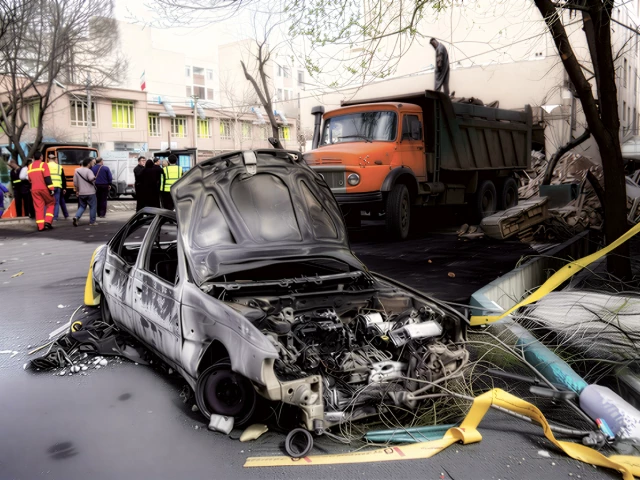
Global Leaders React as Middle East Edges Toward Wider Conflict
Nations across the Middle East and around the world were on high alert Saturday after the United States and Israel launched coordinated strikes on Iran, igniting fears of a broader regional war and prompting urgent diplomatic responses.
The long-anticipated military action marks one of the most significant escalations in recent years, with world leaders weighing the risks of retaliation, economic disruption, and deepening instability.
Trump Vows to ‘Annihilate’ Iran’s Military Capacity
US President Donald Trump declared that the strikes would devastate Iran’s military infrastructure and urged Iranians to rise up against the Islamic Republic.
“We are going to destroy their missiles and raze their missile industry to the ground. It will be totally — again — obliterated. We’re going to annihilate their navy,” Trump said in remarks delivered from his Florida residence and posted on his Truth Social platform.
Framing the operation as both a military and political turning point, Trump told the Iranian people: “The hour of your freedom is at hand.” However, he acknowledged the potential cost, warning that American forces could suffer casualties in the unfolding conflict.
Netanyahu Calls for Iranians to ‘Cast Off the Yoke’
Israeli Prime Minister Benjamin Netanyahu described the operation as an effort to eliminate what he termed an “existential threat” posed by Tehran.
“Our joint action will create the conditions for the brave Iranian people to take their destiny into their own hands,” Netanyahu said, calling on citizens of Iran to overthrow the country’s clerical leadership.
“The time has come … to cast off the yoke of tyranny and bring about a free and peace-seeking Iran,” he added.
Moscow Dismisses Diplomacy as ‘Cover’
Russia reacted sharply, urging its citizens to leave Iran and questioning the sincerity of previous negotiations. Former Russian president Dmitry Medvedev, now deputy chair of Russia’s Security Council, suggested talks had merely been a pretext.
“The peacekeeper is at it again,” Medvedev wrote on X, implying that diplomatic engagement had masked preparations for military action.
Gulf States on Alert
Qatar, which hosts a major US military base, initially described its internal situation as “stable and secure” while monitoring developments. Qatari officials later confirmed that defence systems had intercepted at least one Iranian missile and repelled additional attacks.
Jordan said its air force was conducting aerial patrols to safeguard national airspace following reports of sirens in Amman. Military sources described the sorties as precautionary measures to prevent infiltration or unauthorized activity.
Exiled Opposition Sees Opportunity
Reza Pahlavi, son of Iran’s last monarch, expressed optimism that the strikes could hasten political change. Pahlavi, who lives in exile in the United States, said Iran was “very close to final victory” and pledged to support efforts to rebuild the country.
Europe and Africa Urge Restraint
France emphasised that its priority was protecting its citizens and military personnel stationed across the Middle East, particularly in Qatar, the United Arab Emirates and Jordan.
Meanwhile, the African Union called for restraint and urgent de-escalation, warning that prolonged conflict could destabilise global energy markets and worsen food and economic insecurity, especially in vulnerable regions.
Polish Prime Minister Donald Tusk said embassy staff in Tehran were safe and that Warsaw was prepared for various contingencies. The Netherlands also urged all sides to exercise restraint to prevent further escalation.
A Region on Edge
With missile interceptions reported in multiple Gulf states and major powers issuing sharply worded statements, the Middle East stands at a precarious crossroads. While Washington and Tel Aviv argue the strikes were necessary to neutralise security threats, critics warn the confrontation could spiral into a prolonged and destabilising regional war.
As diplomatic channels strain under mounting pressure, the international community watches anxiously, aware that the coming hours and days may prove decisive for regional and global stability.