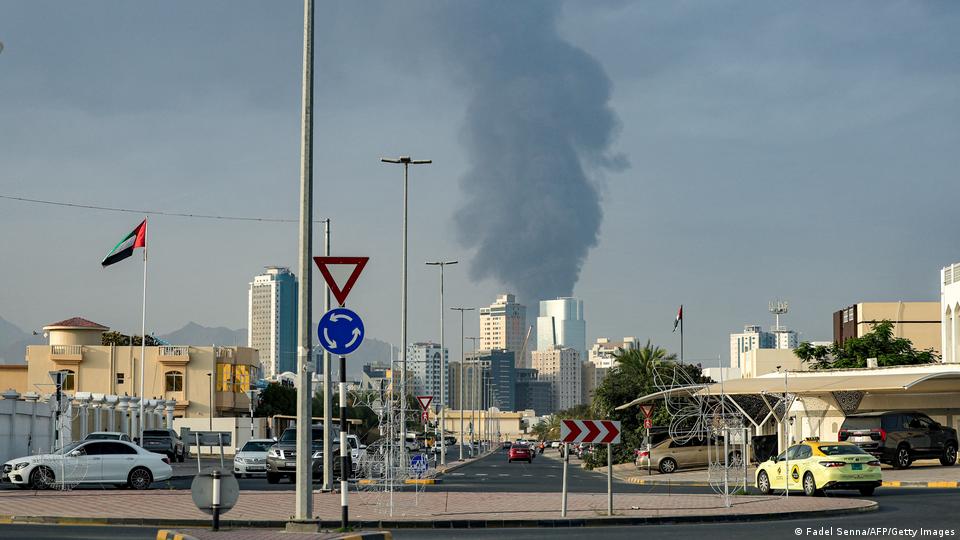
DUBAI, United Arab Emirates — One of the world’s largest oil refineries has been shut down as a precautionary measure after a drone attack set fire to a facility in its industrial complex, authorities in the United Arab Emirates said Tuesday, as the widening conflict in the Middle East threatens to unleash “catastrophic consequences” on global energy markets .
The Ruwais refinery, considered the largest single-site refinery in the Middle East and the fourth largest globally with a capacity of approximately 922,000 barrels per day, was closed following the strike on the Ruwais Industrial Complex in Abu Dhabi . The Abu Dhabi Media Office confirmed that authorities were responding to a fire caused by a drone attack, though no injuries were immediately reported . It remains unclear if the refinery itself was directly hit or affected by the blaze.
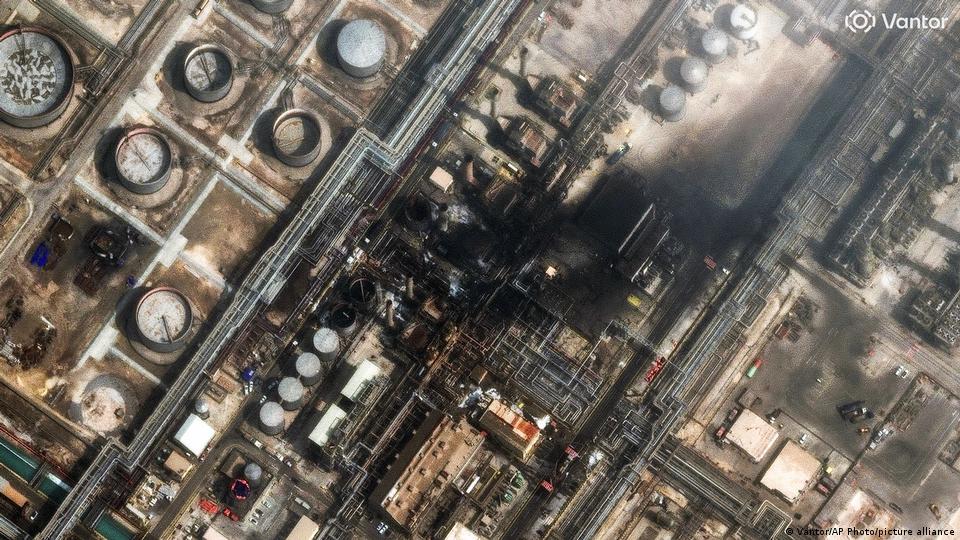
The closure comes as Iran intensifies its military campaign against Gulf energy infrastructure in retaliation for joint U.S. and Israeli strikes that began on Feb. 28 . According to the UAE’s Defense Ministry, the nation’s air defense systems have detected a staggering 262 ballistic missiles, 1,475 drones, and eight cruise missiles since the start of what it described as Iranian attacks . On Tuesday alone, six nationals from the UAE, Pakistan, Nepal, and Bangladesh were killed, and 122 residents were injured amid the escalating regional tensions .
Aramco CEO: ‘The Biggest Crisis the Region Has Faced’
The disruption extends far beyond the UAE. Saudi oil giant Aramco has warned that the continued closure of the Strait of Hormuz—a narrow chokehold through which roughly 20% of the world’s oil passes—poses an existential threat to global energy stability .
“There would be catastrophic consequences for the world’s oil markets,” Amin H. Nasser, Aramco’s President and CEO, told reporters on an earnings call. “While we have faced disruptions in the past, this one by far is the biggest crisis the region’s oil and gas industry has faced” .
Nasser warned that the disruption is not limited to shipping and insurance but threatens to trigger a domino effect across aviation, agriculture, and the automotive industry. He noted that global oil inventories are at a five-year low and could deplete more rapidly if the crisis persists . A senior official for Iran’s Revolutionary Guards previously declared that “not one litre of oil” would be shipped from the Middle East if U.S. and Israeli attacks continue .
Energy Infrastructure in the Crosshairs
Iran appears to be executing a deliberate strategy to cripple Gulf energy production. In recent days, multiple critical facilities have been targeted:
- Ras Tanura, Saudi Arabia: Aramco’s largest domestic refinery was attacked, though a resulting fire was quickly extinguished. The facility is now in the process of being restarted .
- Shaybah Oil Field, Saudi Arabia: Saudi forces intercepted drones targeting this crucial production site .
- QatarEnergy: The state-owned producer was forced to halt LNG production and declare force majeure .
- Kuwait and Iraq: Energy producers have made similar force majeure declarations, and Iraqi oil output has plummeted from over 4 million barrels per day to just 1.3 million due to the export halt .
Oil Markets in Turmoil
The attacks have sent shockwaves through global markets. Brent crude briefly skyrocketed to a three-year high of nearly $120 per barrel on Monday before retreating to around $92 following comments from U.S. President Donald Trump suggesting the war could end soon . However, with major producers effectively cut off from maritime exports and storage tanks filling rapidly, supply concerns remain acute .
Saudi Arabia, the UAE, Kuwait, and Iraq have all been forced to reduce production. While Saudi Aramco is utilizing the East-West pipeline to divert some supplies to the Red Sea port of Yanbu, the pipeline’s capacity of 7 million barrels per day cannot fully compensate for the roughly 20 million barrels per day that normally transit the Hormuz waterway .
Witness Accounts and Ongoing Threats
A driver working at the Ruwais complex told AFP that he arrived to evacuate employees who had been ordered to immediately clear the area. As he was leaving, he reported seeing two more flames rise from the complex and hearing loud explosions [citation:original article].
The threat shows no signs of abating. On Wednesday, drones fell near Dubai International Airport—one of the world’s busiest travel hubs—injuring four people, while commercial ships were hit by projectiles off the UAE and Oman . The U.N. Security Council is expected to vote on a GCC-sponsored resolution demanding Iran halt attacks on its Arab neighbors .
“We would support any actions or measures that would help to deliver our products to our customers,” Nasser stated, adding that Aramco is currently meeting most customer needs by tapping into global inventories. However, he cautioned, “that cannot be used… for an extended period of time” .