ISLAMABAD, March 16, 2026 — Prime Minister Shehbaz Sharif has ordered special arrangements to help meet food requirements in Gulf states where supply chains have been severely disrupted by the ongoing Middle East war, while ensuring that Pakistan’s own domestic food security remains fully protected through strict monitoring of supply and demand .
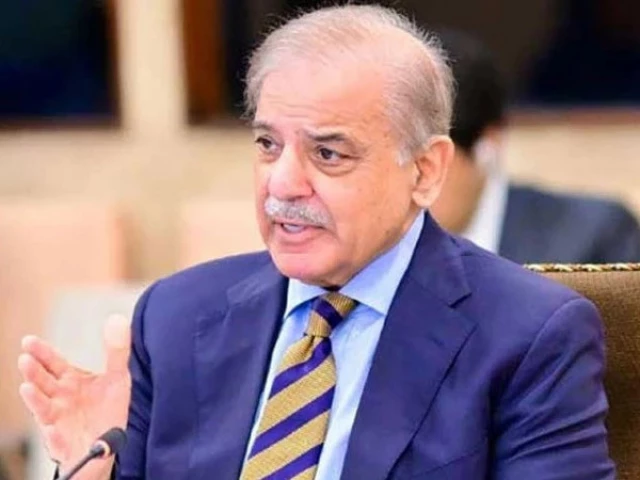
Chairing a high-level meeting in Lahore on Sunday to review the country’s food situation and export potential in light of changing regional dynamics, the prime minister directed authorities to maintain “full oversight of the supply and demand of food items” so that national requirements are met and the public faces no shortages .
Officials briefed the meeting that Pakistan currently has “abundant stocks of food items” and that there is “no shortage of any essential commodity” in the country . The briefing covered existing food reserves, domestic production capacity, and emerging export opportunities .
Seizing Regional Opportunities Amid Crisis
The prime minister noted that disruptions in global supply chains caused by the US-Israel war on Iran—now in its third week—have “increased the export potential of Pakistani products in the region,” creating new markets and opportunities for the country’s agricultural sector .
The conflict has resulted in a global fuel crunch and significant disruption to traffic in the Strait of Hormuz, a strategic maritime corridor through which nearly 25 percent of the world’s oil had been passing . These disruptions have affected food supply chains across Gulf countries, prompting Pakistan to step in as a regional food security partner.
The prime minister directed that “special attention be given to meeting the food requirements of Gulf countries and ensuring their food security” while safeguarding Pakistan’s own domestic needs .
Comprehensive Export Strategy
PM Shehbaz instructed relevant authorities to prepare a comprehensive strategy for exporting surplus food items to Gulf states without affecting Pakistan’s domestic food requirements. He emphasized that high-quality standards must be ensured for food products exported to friendly Gulf countries .
To facilitate the process, the prime minister directed the Pakistan National Shipping Corporation (PNSC) to take necessary steps to export food items to Gulf countries through maritime routes, aiming to speed up and streamline deliveries .
The meeting was informed that Pakistan’s agricultural sector has significant production capacity and export potential across multiple categories, including:
Daily Monitoring and Diplomatic Activation
The prime minister also directed the formation of a committee to monitor the situation on a daily basis . Furthermore, he instructed Pakistan’s ambassadors and trade officers posted in Gulf countries to “remain proactive in promoting exports and taking advantage of emerging opportunities” .
Meeting Attendees
The meeting was attended by senior government officials, including:
- Deputy Prime Minister and Foreign Minister Ishaq Dar
- Federal Ministers Jam Kamal Khan, Rana Tanveer Hussain, and Ahsan Iqbal
- Special Assistant to the Prime Minister Haroon Akhtar
- Senior officials, provincial chief secretaries, and representatives of relevant private associations
Context: Balancing Domestic Needs with Regional Role
The government’s initiative comes against the backdrop of the escalating conflict in the Middle East, which began with US and Israel launching strikes on Iran on February 28. The war has since widened, with Iran carrying out retaliatory strikes in Gulf countries targeting US assets and bases .
While Pakistan positions itself as a regional food supplier, authorities have emphasized that domestic food security remains the top priority. The prime minister’s directive for “full monitoring” ensures that exports will only involve surplus commodities after national requirements are fully met .
The government has also taken a series of austerity measures to curb fuel usage and reduce spending in response to the global energy crunch caused by the conflict .
Domestic Food Security Context
It is worth noting that a February 2026 UN report indicated that approximately 7.5 million people in Pakistan’s vulnerable rural districts were facing acute food insecurity during the current period (December 2025-March 2026), primarily due to residual impacts of 2025 monsoon floods, prolonged drought, and localized insecurity . The government’s emphasis on protecting domestic needs comes against this backdrop of ongoing food security challenges in certain regions.