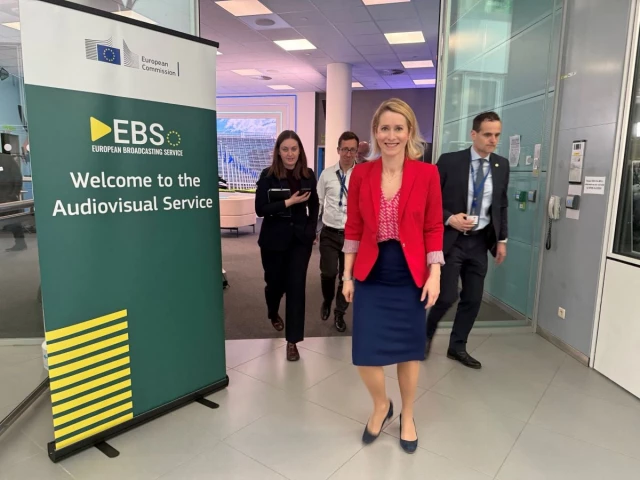
BRUSSELS — European Union foreign policy chief Kaja Kallas called on the United States and Israel on Tuesday to bring their war with Iran to an end, warning that the conflict risks spiraling out of control and destabilizing global energy and food supplies.
In an interview with Reuters, the EU’s high representative for foreign affairs said the bloc was actively consulting with Middle Eastern governments on diplomatic pathways to resolve the crisis, though she stopped short of committing European forces to any military effort to secure the Strait of Hormuz.
“Absolutely. It would be in the interest of everybody if this war stops,” Kallas said when asked whether the time had come to end the conflict. “The problem with wars is that they are easier to start than to stop, and they can quickly get out of hand.”
European Reservations
Multiple European nations have rebuffed President Donald Trump’s calls to join a mission aimed at reopening the Strait of Hormuz, a vital transit route for oil, gas, and other goods that is now largely blocked by Iran. European leaders have expressed reluctance to put their forces at risk in a war they did not initiate, despite Trump’s warnings that such hesitation could affect the NATO alliance.
Kallas acknowledged that Europe does not always understand the Trump administration’s actions or its objectives in Iran, but said European capitals have grown accustomed to the president’s unpredictability and are now “more calm” in their responses.
“The main concern of European countries is that we were not consulted before this war began,” she said. “In fact, many Europeans tried to convince the US and Israel not to start it.”
Diplomatic Efforts Underway
Kallas revealed that the EU has been consulting with regional players, including Gulf states, Jordan, and Egypt, on potential proposals that would allow all parties—Iran, Israel, and the United States—to “get out of this situation so that everybody saves face.”
She declined to provide specific details on the diplomatic initiative but emphasized the bloc’s readiness to help facilitate a resolution.
The conflict marks another strain in transatlantic relations since Trump returned to the White House in January 2025, following a campaign that promised a more assertive American foreign policy.
Strait of Hormuz and Global Impact
The war’s impact is already being felt in Europe, particularly through rising energy prices linked to Iran’s control over the Strait of Hormuz. Approximately 20 percent of global oil production passes through the strategic waterway, making its closure a threat to worldwide energy security.
“Nobody is ready to put their people in harm’s way in the Strait of Hormuz,” Kallas said. “We have to find diplomatic ways to keep it open to avoid a global food, fertiliser and energy crisis.”
A Model from the Black Sea
Kallas suggested that a potential solution could draw from the UN-brokered Black Sea grain deal, which allowed Ukraine to export food during wartime without attacks on civilian vessels. That agreement, negotiated in 2022, provided a framework for ensuring safe passage of commercial shipping through a conflict zone.
The EU foreign policy chief said she had discussed the idea with UN Secretary-General Antonio Guterres, and that the global body was actively working on the concept.
“The question now is what neighbouring countries, especially Iran, would agree to,” she said.
Broader Context
The war between the US-Israel alliance and Iran has entered its third week, with significant military operations ongoing and civilian casualties reported on multiple sides. The conflict has drawn in regional actors and raised fears of a broader Middle Eastern conflagration.
For Europe, the crisis presents a delicate balancing act: maintaining transatlantic solidarity while distancing itself from a war it did not endorse, and protecting its economic interests without committing military assets to a volatile region.
Kallas’s remarks suggest the EU is positioning itself as a potential diplomatic bridge, even as the fighting continues. Whether that role will be welcomed by Washington, Jerusalem, or Tehran remains an open question.