WARNING: This story contains details about self-harm and suicide.
For three years, Margaret Boldt hurt herself to feel some semblance of control over her life.
Now 20 years old and living in Windsor, Ont., Boldt says she grew up in an abusive household and struggled with an eating disorder. At 16, she began cutting herself.
“In the beginning, I almost wanted people to notice, because I wanted them to know how much I was really struggling,” she said. “When it became more of an addiction, then I started hiding it more.”
The cuts became so severe that she was eventually going to the hospital “every other day, if not every day some weeks” for stitches. She then turned to drugs, finding that being high kept her from cutting.
Today, Boldt says she hasn’t hurt herself in five months and is currently in a substance use recovery program.

Boldt is part of a growing number of young Canadians turning to self-harm, according to new research published Monday in the Journal of the American Medical Association (JAMA) Pediatrics.
The study, led by Dr. Natasha Saunders, found that between 2000 and 2024, the rate of self-harm among people aged 24 and younger who received medical treatment increased by an average of 3.5 per cent annually—meaning the rate more than doubled over the 25-year study period.
In 2000, there were 10.2 self-harm-related medical visits per 10,000 young people. By 2024, that number had climbed significantly.
“It says to us that our kids are not doing well, and if we don’t put the brakes on and put things in place to stop this trajectory, we’re in real trouble,” Saunders said.
Girls Hit Hardest
The increase was steepest among girls, at 3.6 per cent annually, compared to 1.2 per cent for boys. When researchers examined self-reported self-harm data, they found a 2.5 per cent yearly increase across both genders.
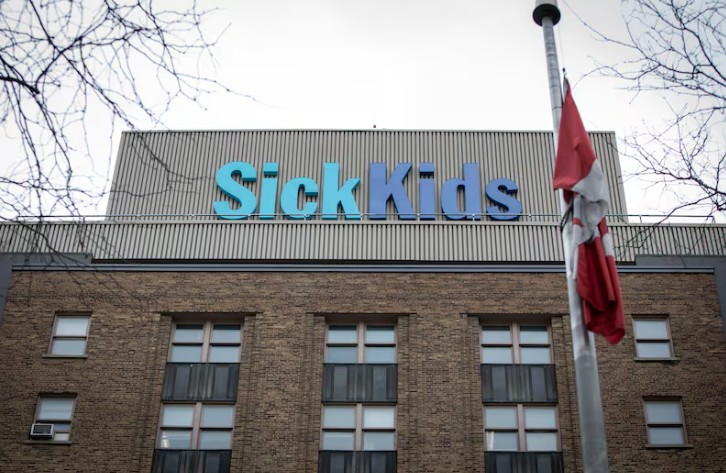
“This is what we’re seeing on the ground—I see it in my practice, at the hospital; we see it on the pediatrics wards,” said Saunders, who is also a pediatrician at the Hospital for Sick Children in Toronto. Even she was surprised by the magnitude of the trend.
The large-scale analysis reviewed 42 studies from January 2000 to December 2024, encompassing more than 234 million people across a dozen high-income countries, including Canada, Australia, and the United Kingdom.

‘The Tip of the Iceberg’
Saunders cautioned that these numbers are likely a “gross underestimate.”
“Many, many people will self-harm or have self-injury without actually presenting to health care,” she said. “This is really the tip of the iceberg.”
Dr. Rachel Mitchell, a child and youth psychiatrist at Sunnybrook Health Sciences Centre in Toronto, explained that while self-harm is not a mental illness in itself, it can be a symptom of one—and it puts people at greater risk of dying by suicide.
“If you learn to hurt yourself as a way of coping, then you constantly utilize that as a way of coping,” Mitchell said. “And eventually it just makes us more desensitized to doing something more serious, more lethal.”
This is particularly concerning, she noted, given recent data showing more young girls in North America have been dying by suicide.
While the latest research doesn’t explore causes, the study’s authors suggest social media is partly to blame. A literature review highlighted several studies linking social media use to increased mental distress and self-harming behaviours.
“Everything is being thrown at [youth] right now. There’s global events that are going on that are distressing. The information is coming at them so quickly,” Saunders said. “We’re not equipping them with the necessary means to help with their emotional regulation and help with coping.”
Despite platform restrictions aimed at limiting harmful content, Mitchell noted that young people are still exposed to self-harm and suicide-related material online. However, she cautioned that social media likely isn’t the full cause, as it can also offer a safe space to struggling individuals.
Experts aren’t certain why girls are hurting themselves more than boys, but Mitchell suggested it could be because girls spend more time online and are more prone to social comparison.
Boldt agrees that social standards and pressure to fit in play a role.
Her friend Jessica Pauli, also in recovery for substance use, recalled a time when self-harm content was more easily available and shared online.
“It’s scary that, like, suicide … really can be glorified and made into something [that’s] cool,” Pauli said. “Life gets hard sometimes, but you’ve got to find a way to deal with it healthily because you’re just going to set yourself back if you do the bad stuff.”
Coping Strategies
Mitchell emphasized the importance of reminding young people that heightened emotions are temporary and that healthy coping mechanisms exist.
“That could be listening to music, touching something cold, smelling something nice … something … just to take the intensity of that emotion away,” she said.
Policy Responses
Saunders pointed to Australia’s social media ban for those under 16, which took effect in December, as a policy worth watching to assess its effectiveness in protecting youth.
In Canada, the government had proposed an Online Harms Act to better protect young people from harmful content, but the controversial bill was shelved in January 2025 when Parliament was dissolved. Ottawa has indicated it still plans to move forward with similar legislation but has not yet announced specifics.
For young people like Boldt and Pauli, the path to recovery is ongoing. Boldt’s five months without self-harm represent hard-won progress—and a reminder that with support, healing is possible.