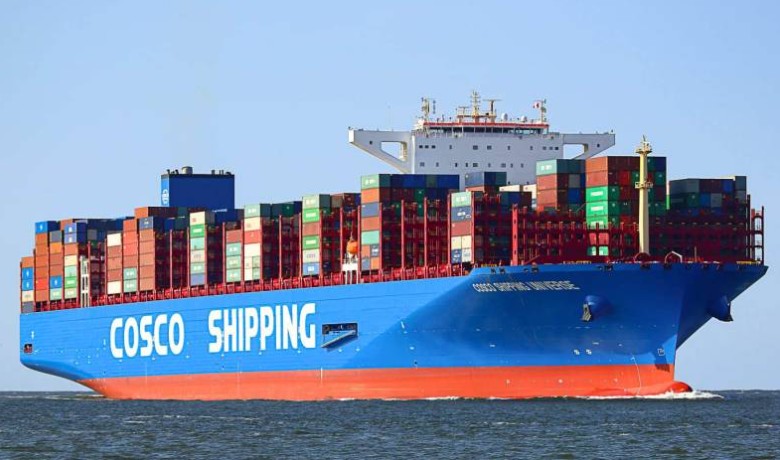
In a significant signal for global trade and supply chains, Chinese state-owned shipping giant COSCO Shipping announced it has resumed container bookings to several Gulf countries, nearly three weeks after suspending operations due to escalating conflict in the Middle East.
The move is being closely watched by global markets as a potential indicator of stabilizing conditions in a region critical to both energy exports and international shipping routes.
Shipping Routes Reopen to Key Gulf Economies
According to the company’s official statement, COSCO has resumed new bookings for general cargo shipments to major الخليج destinations, including:
- United Arab Emirates
- Saudi Arabia
- Bahrain
- Qatar
- Kuwait
- Iraq
The resumption takes effect immediately, marking a cautious return of commercial shipping activity in one of the world’s most strategically important regions.
However, COSCO emphasized that operations remain subject to rapid changes depending on the evolving security situation.
Why COSCO Halted Operations
Earlier this month, COSCO—one of the world’s largest shipping companies—suspended most bookings to the Gulf as tensions escalated following military exchanges involving Iran, the United States, and regional allies.
The conflict disrupted key maritime routes, including the Strait of Hormuz, raising concerns over the safety of cargo vessels and crew.
Shipping companies worldwide either paused operations or rerouted vessels, leading to delays, higher costs, and insurance challenges.
A Cautious Return Amid Fragile Stability
COSCO’s decision suggests that conditions may be stabilizing—at least partially—following recent diplomatic signals, including limited reopening of the Strait of Hormuz to “non-hostile” vessels.
However, the company’s warning highlights ongoing risks. The Middle East remains volatile, with military activity continuing and no comprehensive ceasefire in place.
Industry analysts say the resumption is likely a calculated risk rather than a sign of full normalization.
Impact on Global Trade and Supply Chains
The Gulf region is a vital hub for global , connecting Asia, Europe, and Africa. Any disruption to shipping routes can have widespread consequences.
COSCO’s return could help ease:
- Supply chain bottlenecks
- Rising freight costs
- Delays in delivery of goods
- Pressure on global flows
The move is particularly important for energy-importing countries, as the Gulf remains central to global oil and gas exports.
Shipping Industry Still on Alert
Despite the positive development, many shipping firms remain cautious. Insurance premiums for vessels operating in the region remain elevated, and some companies continue to avoid high-risk routes.
Security concerns include:
- Potential drone or missile attacks
- Naval mines in key waterways
- Escalation of regional conflict
Experts warn that any renewed escalation could quickly reverse recent gains.
China’s Strategic Position
China’s decision to resume shipments also reflects its broader economic and geopolitical interests in the Middle East.
As the world’s largest energy importer, China relies heavily on stable Gulf supply lines. Maintaining trade flows is critical not only for Chinese industries but also for global markets.
By restarting operations, COSCO is signaling confidence—but also reinforcing China’s role as a key economic stakeholder in the region.
Short Analysis: Economic Signal or Risky Bet?
COSCO’s move can be interpreted in two ways: as a sign of improving conditions or as a necessary risk taken to sustain global trade.
While diplomatic developments have provided some reassurance, the absence of a lasting peace agreement means uncertainty remains high.
Shipping companies are effectively balancing economic necessity against security risks—a calculation that could shift rapidly.
Global Impact: Why This Matters
The resumption of Gulf shipping has wide-reaching implications:
- Global Trade: Improved cargo movement across key الأسواق
- Energy Markets: Stabilization of oil and gas supply chains
- Inflation: Potential easing of cost pressures worldwide
- Geopolitics: Indicator of cautious de-escalation
The decision by COSCO Shipping to resume bookings to Gulf countries marks an important moment in the ongoing Middle East crisis.
While it offers a glimmer of hope for global trade stability, the situation remains fragile. For now, the world’s supply chains are moving again—but under the shadow of uncertainty.