Federal and local law enforcement agencies are investigating multiple unauthorized drone incursions detected over Barksdale Air Force Base in Louisiana during the week of March 9, the base confirmed Friday. The military installation, which hosts the US Air Force’s B-52 bomber fleet—a key asset in the ongoing US-Israeli war on Iran—said the security of the base and safety of its personnel remain top priorities as the investigation continues.
BARKSDALE AIR FORCE BASE, Louisiana – In a development that has raised security concerns at one of the US military’s most strategic installations, Barksdale Air Force Base detected multiple unauthorized drones operating in its airspace during the week of March 9. The base, which houses the US Air Force’s fleet of B-52 Stratofortress bombers—aircraft that have been heavily utilized in the ongoing conflict with Iran—confirmed the incursions in a statement to Anadolu.
“Barksdale Air Force Base detected multiple unauthorized drones operating in our airspace during the week of March 9th,” the base spokesperson said. “Flying a drone over a military installation is not only a safety issue, it is a criminal offense under federal law.”
The base is “working closely with federal and local law enforcement agencies to investigate these incursions,” the spokesperson added, emphasizing that “the security of our installation and the safety of our people are top priorities, and we will continue to vigilantly monitor our airspace.”
Strategic Significance of Barksdale AFB
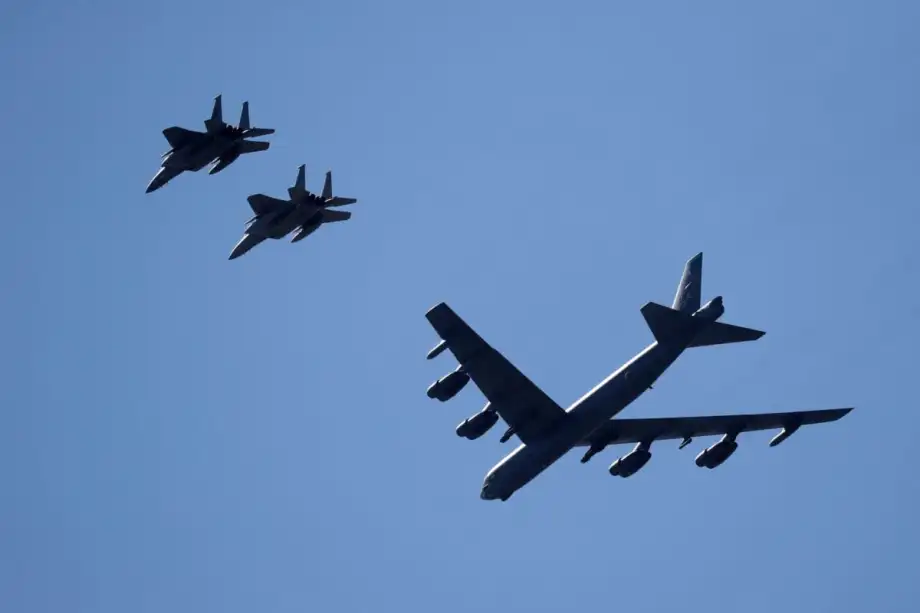
Barksdale Air Force Base is home to the 2nd Bomb Wing, which operates the B-52 Stratofortress—a long-range, heavy bomber that has been a cornerstone of US strategic bombing capabilities for decades. The B-52 fleet has played a significant role in the US-Israeli war on Iran, which began on February 28, with these bombers capable of carrying conventional and nuclear payloads over long distances.
The presence of unauthorized drones over a base hosting such critical assets raises significant security concerns. While the base did not disclose the number of drones detected or their origins, the incursions occurred during a period of heightened military activity, with US forces engaged in sustained operations against Iranian targets.
Context: Heightened Security Concerns
The drone incursions at Barksdale come amid broader concerns about the security of US military installations both domestically and abroad. In recent weeks, Iranian missile and drone strikes have targeted US bases across the Middle East, damaging aircraft and radar systems at installations in Saudi Arabia, Qatar, and Jordan. The Pentagon is reportedly preparing a $200 billion supplemental spending request to replace equipment lost or damaged in the conflict.
Domestically, unauthorized drone flights over military installations have been a recurring concern for the Department of Defense. In recent years, there have been multiple incidents of drones breaching restricted airspace around sensitive military sites, prompting the Pentagon to seek expanded authorities to counter unmanned aerial systems.
The incursions at Barksdale occurred during the week of March 9—a period when US military operations against Iran were intensifying. On March 16, an F-35 stealth jet made an emergency landing after reportedly coming under fire, with Iran claiming it targeted the aircraft. The same week, a midair collision between two KC-135 refueling planes over Iraq killed six crew members, and Iranian missile strikes damaged aircraft and radar systems at Prince Sultan Air Base in Saudi Arabia.
Federal Investigation Underway
The involvement of federal law enforcement agencies suggests that the drone incursions are being treated with the utmost seriousness. The FBI and Department of Homeland Security have previously been involved in investigating similar incidents at other military installations, and the Department of Defense has sought expanded counter-drone authorities to address the growing threat.
Flying a drone over a military installation without authorization is a federal crime, punishable by significant fines and potential imprisonment. The investigation will likely focus on identifying the operators of the drones, determining their motivations, and assessing whether the incursions were part of a coordinated effort or isolated incidents.
Potential Connections to Broader Threats
While the base has not suggested any connection between the drone incursions and the ongoing conflict with Iran, the timing raises questions. The B-52 fleet at Barksdale has been a critical asset in US operations against Iran, and any attempt to gather intelligence on these aircraft or disrupt their operations would be of significant interest to US adversaries.
Iran has demonstrated a sophisticated capability in unmanned aerial systems, with its drone and missile strikes targeting US assets across the Middle East. While there is no evidence linking the Barksdale incursions to Tehran, the incident highlights the vulnerability of even well-defended military installations to small unmanned aerial systems.
Broader Implications for Domestic Security
The Barksdale drone incursions add to a growing list of unauthorized drone flights over sensitive US military sites. In recent years, there have been similar incidents at naval bases, nuclear facilities, and other critical infrastructure, prompting calls for expanded counter-drone authorities and enhanced security measures.
The Department of Defense has been working to develop and deploy counter-unmanned aerial system (C-UAS) capabilities to protect domestic military installations. These systems include electronic jammers, directed energy weapons, and kinetic interceptors designed to detect and defeat unauthorized drones.
However, the proliferation of commercial drones, which are inexpensive and widely available, poses a persistent challenge to base security. The Barksdale incursions serve as a reminder that even the most heavily defended installations can be vulnerable to small, hard-to-detect drones.
The B-52’s Role in the Iran Conflict
The B-52 Stratofortress has been a symbol of US strategic power since its introduction in the 1950s. In the current conflict with Iran, these bombers have been deployed from Barksdale and other bases to conduct long-range strikes against Iranian targets. The B-52’s ability to carry large payloads over intercontinental distances makes it an ideal platform for sustained bombing campaigns.
The aircraft’s significance to the war effort makes the security of Barksdale—and the other bases hosting these bombers—a matter of national security. Any disruption to B-52 operations could have significant implications for US military capabilities in the region.
Analysis: A Reminder of Domestic Vulnerabilities
The unauthorized drone incursions over Barksdale Air Force Base serve as a stark reminder that the vulnerabilities exposed by the Middle East conflict extend far beyond the battlefields of Iran, Iraq, and Lebanon.
For the US military, the incident highlights the challenge of protecting domestic installations from small, commercially available drones. While the Pentagon has invested heavily in counter-drone capabilities, the sheer number of potential threats—and the difficulty of distinguishing between hobbyists, pranksters, and hostile actors—makes absolute security an elusive goal.
For the broader public, the incursions raise questions about the security of critical military assets at a time when the US is engaged in a major conflict. The B-52 fleet at Barksdale is not just a collection of aircraft; it is a cornerstone of US strategic deterrence. Any threat to these assets, whether from foreign adversaries or domestic actors, must be taken seriously.
For the investigation now underway, the focus will be on determining whether the drones were operated by individuals acting alone or as part of a coordinated effort. The involvement of federal law enforcement suggests that authorities are treating the incursions as more than a routine security matter.
As the conflict with Iran continues into its fifth week, the Barksdale drone incursions serve as a reminder that the security challenges posed by this war extend far beyond the Middle East. The investigation’s findings will likely inform the Pentagon’s ongoing efforts to protect its most critical assets—both at home and abroad.