Iran’s parliament speaker has accused the United States of pursuing a 15-point plan to achieve its war goals after failing to achieve them by military force, warning that any ground attack on the country would face a “decisive” response. The accusation comes as the US and Israel continue their air offensive on Iran, now in its sixth week, and as reports emerge of potential ground operations being prepared by the Pentagon.
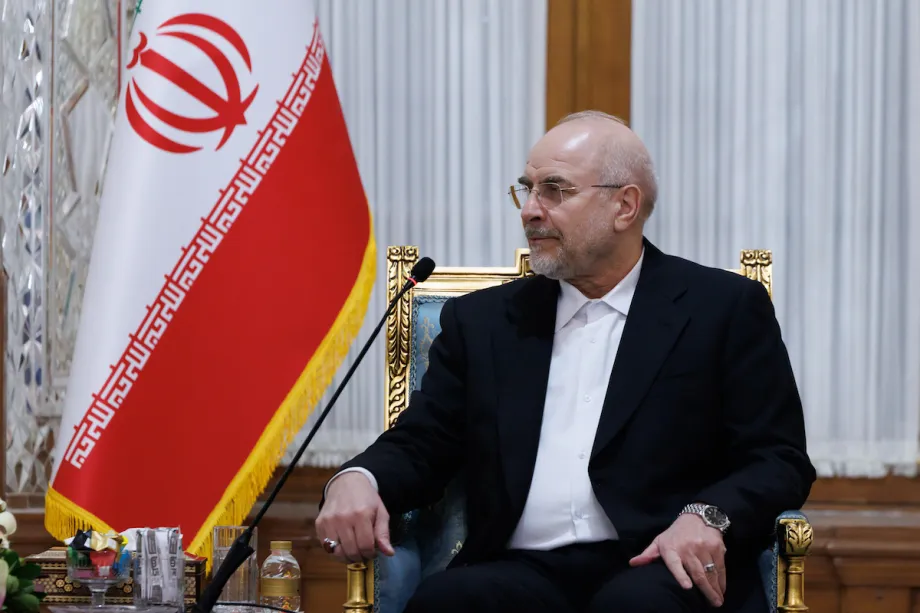
TEHRAN – In a sharply worded statement on Telegram, Iranian Parliament Speaker Mohammad Bagher Qalibaf accused the United States of pursuing through diplomacy what it has failed to achieve on the battlefield. He said the US is “openly calling for negotiations while secretly planning a ground attack,” warning that Iran is prepared for any ground operation by US forces and will deliver a “decisive response.”
“These days, different words and statements are heard from enemy officials about negotiations,” Qalibaf wrote. “America is expressing its desires and declaring what it has not achieved in war as a 15-point list and seeking it in diplomacy.”
The remarks reflect Tehran’s hardening stance as the conflict enters its sixth week. On Wednesday, Iran formally rejected a 15-point US plan to end the war, saying any ceasefire would take place only on Tehran’s terms and timeline. Iranian state television, citing an official, said Iran outlined five conditions for ending the war, including a complete halt to “aggression and assassinations.”
The 15-Point Plan: What’s at Stake
The US proposal, reportedly conveyed to Tehran through Pakistani intermediaries, addresses Iran’s nuclear and ballistic missile programs, as well as maritime security in the Strait of Hormuz. According to sources, the plan demands that Iran abandon its nuclear ambitions, curb its missile development, and accept international oversight of the strategic waterway through which approximately 20 percent of the world’s oil passes.
Iran’s counterproposal includes five key conditions:
- A complete halt to US and Israeli actions against Iran and its allies
- The establishment of concrete mechanisms to prevent the re-imposition of war
- Guaranteed payment for war damages and compensation
- An end to fighting across all fronts involving Iran and its regional allies
- Recognition of Iranian sovereignty and control over the Strait of Hormuz
The divergence between the two proposals underscores the wide gap that remains between Washington and Tehran, even as backchannel communications continue through Pakistani, Turkish, and Egyptian intermediaries.
Reports of Potential Ground Operations
Qalibaf’s warning about a potential ground attack comes amid reports that the Pentagon is preparing for weeks-long ground operations in Iran. According to recent reports, thousands of US troops have deployed to the Middle East, pending a decision by President Donald Trump on whether to escalate the conflict beyond airstrikes.
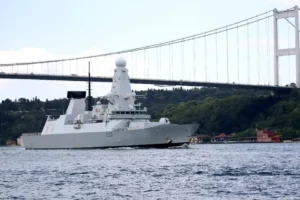
The US has already significantly bolstered its naval presence in the region, deploying a third aircraft carrier—the USS George HW Bush—to join the USS Abraham Lincoln and the USS Gerald R Ford, though the Ford is currently undergoing repairs in Crete after a fire onboard. An amphibious assault vessel carrying thousands of expeditionary forces arrived in the region on March 27.
British forces are also preparing for potential involvement, with the Royal Navy’s RFA Lyme Bay being equipped with autonomous mine-clearance systems in Gibraltar for possible deployment to the Strait of Hormuz.
The Military Situation on the Ground
Since the US-Israeli air offensive began on February 28, more than 1,340 people have been killed in Iran, according to Iranian figures, including former Supreme Leader Ayatollah Ali Khamenei. The strikes have targeted nuclear facilities, military installations, and industrial infrastructure, including Iran’s largest steel companies.
Iran has retaliated with waves of drone and missile strikes targeting Israel, as well as Jordan, Iraq, and Gulf countries hosting US military assets. These attacks have caused casualties and damaged infrastructure while disrupting global markets and aviation.
The US has also suffered significant losses. According to a Wall Street Journal report, US military equipment losses are estimated at $1.4 billion to $2.9 billion in the first three weeks alone, including downed aircraft, damaged refueling planes, and more than a dozen MQ-9 Reaper drones lost. Thirteen US service members have been killed and roughly 290 others injured since operations began.
Diplomatic Efforts Continue
Despite the hardening rhetoric, diplomatic efforts to end the conflict continue. Pakistan has positioned itself as a key mediator, with Prime Minister Shehbaz Sharif offering to host US-Iran talks in Islamabad—an offer President Donald Trump reposted on his Truth Social platform, signaling Washington’s openness to the initiative.
Over the weekend, Pakistan hosted the foreign ministers of Saudi Arabia, Turkey, and Egypt for consultations on de-escalating the conflict. The four nations have been coordinating mediation efforts, with Turkey’s foreign minister indicating that the goal is to chart out “actionable steps” to end the war before there is further destruction to the region and global economy.
China has also expressed support for Pakistan’s mediation role, with Chinese Foreign Minister Wang Yi telling his Pakistani counterpart that Beijing appreciates Islamabad’s “unremitting efforts to de-escalate the Iranian situation.”
The Strategic Calculus
Qalibaf’s accusation that the US is seeking through diplomacy what it failed to achieve through military force reflects a broader strategic calculus in Tehran. Iran has demonstrated resilience throughout the conflict, maintaining its ability to project power over the Strait of Hormuz and launch retaliatory strikes despite sustained bombing.
For the US, the calculation is more complex. President Trump has signaled openness to negotiations while also warning that he is prepared to “unleash hell” on Iran if Tehran fails to accept the “reality of the current moment.” The deployment of additional naval assets and the preparation of potential ground operations suggest that Washington is keeping military options on the table even as it pursues diplomacy.
Analysis: A Dangerous Crossroads
The Iran-US confrontation has reached a dangerous crossroads. Tehran’s rejection of the 15-point plan and its insistence on its own five conditions suggest that Iran believes time and resilience are on its side. The regime has survived the loss of its supreme leader, absorbed weeks of bombing, and maintained its strategic position in the Strait of Hormuz. For Iranian hardliners, these are signs that the US is the one seeking an exit—and that concessions are unnecessary.
For the Trump administration, the calculation is different. The war has imposed significant costs—in military equipment, in global energy prices, in America’s international standing. A global poll released over the weekend found that 89.6% of respondents believe the conflict has left the US increasingly isolated. The administration is seeking an off-ramp, but it cannot afford to appear to be retreating under Iranian pressure.
The gap between the 15-point US plan and Iran’s five conditions represents the space where diplomacy must operate. Whether that space can be bridged depends on whether both sides are willing to compromise—or whether they will continue to escalate toward a confrontation that neither may be able to control.
As Qalibaf’s warning makes clear, Iran is preparing for the possibility of ground war. The US, with three aircraft carriers in or en route to the region and thousands of additional troops deployed, is also preparing. The next moves—military or diplomatic—will determine whether the conflict ends or expands into an even more devastating phase.