In a world where more than 3 million children die each year from hunger-related causes, approximately 1.3 billion tons of food—roughly one-third of all food produced globally—is wasted annually, according to UN data. The staggering figure comes as the UN marks March 30 as International Zero Waste Day, with this year’s theme focused on food waste, urging governments, businesses, communities, and individuals to take action at all levels.
UNITED NATIONS – The paradox of global food systems has never been starker: while vast quantities of food are discarded daily in some parts of the world, millions face acute hunger in others. According to data compiled by Anadolu from the Global Report on Food Crises, more than 295 million people across 53 countries and regions faced varying levels of acute hunger in 2024—an increase of 13.7 million compared to 2023.
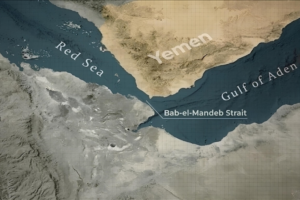
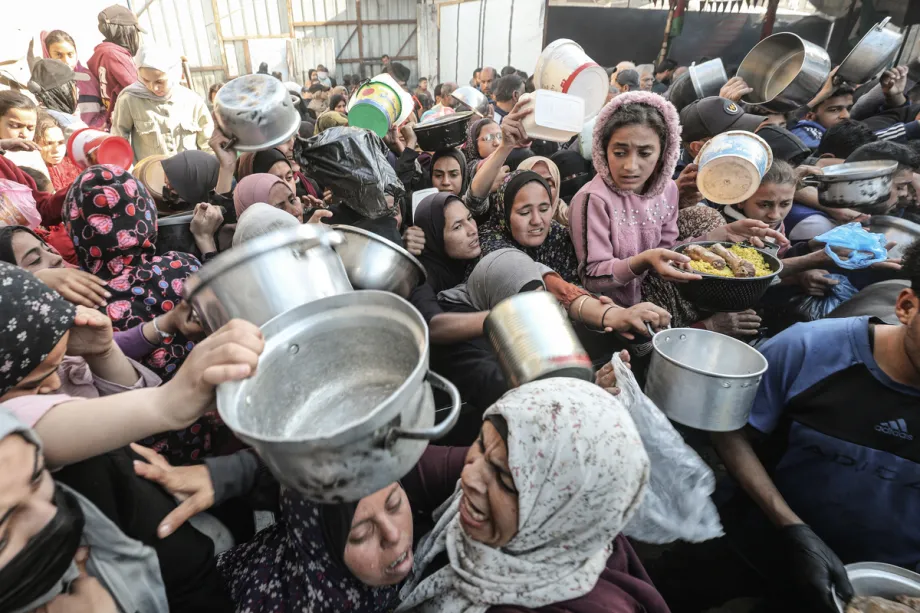
The crisis is most severe in conflict zones and regions affected by climate shocks. Gaza tops the famine list, with 640,600 people facing the most severe level of acute food insecurity—classified as famine. Sudan follows closely with 637,200 people in famine conditions, while South Sudan, Yemen, Haiti, and Mali also have populations facing catastrophic hunger.
The Global Hunger Crisis
Beyond famine-level hunger, over 30 million people worldwide are facing a Level 4 acute food crisis—one step below famine. Sudan leads this category with 8.1 million people affected, followed by Yemen with 5.5 million, the Democratic Republic of Congo with 3.9 million, Afghanistan with 3.1 million, Myanmar with 2.8 million, South Sudan with 2.4 million, Haiti with 2.1 million, Pakistan with 1.7 million, Nigeria with 1.2 million, and Gaza with 1.1 million.
Children remain among the most vulnerable in this crisis. According to UN figures, more than 3 million children lose their lives each year due to hunger-related causes. Approximately 43 million children worldwide face severe hunger, and roughly 45 percent of deaths among children under five are linked to hunger and malnutrition.
Food Waste by the Numbers
The scale of global food waste is staggering. China, the world’s most populous nation, wasted more than 108 million tons of food in 2024—approximately 76 kilograms per person. India wastes more than 78 million tons annually, or about 54 kilograms per person.
Pakistan’s annual food loss reaches around 31 million tons, equivalent to 122 kilograms per person—nearly the combined per-person waste of China and India. In Egypt, annual food waste exceeds 18 million tons, with per capita waste reaching approximately 155 kilograms—among the highest rates globally.
Nigeria wastes 24.8 million tons of food annually, about 106 kilograms per person, with inadequate storage facilities, inefficient transportation, and limited market access driving losses. In Brazil, annual food waste exceeds 20 million tons, about 95 kilograms per person, with most waste occurring during harvesting, storage, and transportation due to infrastructure gaps.
The United States wastes more than 24 million tons of food annually, about 71 kilograms per person. Unlike other countries where population size drives waste, in the US, high per capita food consumption is the main factor. Indonesia wastes around 15 million tons annually (52 kilograms per person), Bangladesh exceeds 14 million tons (82 kilograms per person), and Mexico wastes 13.4 million tons (102 kilograms per person).
The Causes of Food Waste
The drivers of food waste vary by region and economic development level. In low- and middle-income countries, food loss occurs primarily during harvesting, storage, and transportation due to inadequate infrastructure, lack of cold storage, and inefficient supply chains. In high-income countries, waste is concentrated at the retail and consumer levels, driven by aesthetic standards, overbuying, and disposal of edible food.
In Nigeria, traditional farming methods and limited market access cause large portions of harvest to spoil before reaching consumers. In Brazil, infrastructure gaps and poor product handling drive losses. In Bangladesh, limited cold storage and spoilage during transport to crowded urban markets are the main drivers. In Mexico, experts cite inefficient distribution, supply chain losses, and consumer disposal of edible food as the main drivers.
The Environmental Toll
Beyond the moral and humanitarian dimensions, food waste carries a significant environmental cost. The UN Food and Agriculture Organization estimates that food loss and waste account for approximately 8-10 percent of global greenhouse gas emissions—roughly four times the emissions from the aviation industry. Wasted food also represents wasted water, land, energy, and labor.
When food is sent to landfills, it decomposes and produces methane, a greenhouse gas more potent than carbon dioxide. Reducing food waste is therefore a critical component of climate action.
What Is Being Done
The UN’s International Zero Waste Day, observed annually on March 30, aims to raise awareness about the importance of waste management and sustainable consumption. This year’s focus on food waste reflects growing recognition that addressing the problem requires action at all levels—from government policies to business practices to individual behavior.
Some countries have made progress. France has banned supermarkets from discarding unsold food, requiring them to donate it to charities. South Korea has implemented a pay-as-you-throw system for food waste that has dramatically reduced landfill disposal. The European Union has set binding targets to reduce food waste by 50 percent by 2030.
But much more is needed. The UN estimates that reducing food waste by just 25 percent would be enough to feed all the people who are undernourished worldwide.
A Global Call to Action
As the world marks International Zero Waste Day, the numbers tell a sobering story: 1.3 billion tons of food wasted annually, 3 million children dying from hunger-related causes, 295 million people facing acute food insecurity. The gap between waste and want has never been more apparent.
The UN is urging governments to implement policies that reduce food loss and waste across supply chains, businesses to adopt practices that minimize waste and redirect edible food to those in need, and individuals to change consumption habits—buying only what is needed, storing food properly, and composting unavoidable waste.
“Food waste is not just an environmental issue—it is a moral issue,” a UN official said. “In a world where millions go to bed hungry each night, discarding edible food is an affront to our shared humanity. This Zero Waste Day, we call on everyone to take action.”
The Food Waste Paradox
The global food waste crisis reveals fundamental failures in how food is produced, distributed, and consumed. The 1.3 billion tons of food wasted annually represent not only lost calories but also wasted water, land, energy, and labor—resources that could otherwise nourish the 295 million people facing acute hunger.
The drivers of waste are systemic. In low-income countries, inadequate storage and transportation infrastructure cause food to spoil before it reaches markets. In high-income countries, cosmetic standards and overconsumption lead to edible food being discarded. The solutions are similarly systemic: investment in cold chains, reforms to date labeling, changes to retail practices, and shifts in consumer behavior.
The concentration of famine-level hunger in conflict zones—Gaza, Sudan, South Sudan, Yemen—underscores the link between war and food insecurity. In these contexts, food waste is not the primary problem; access is. But globally, the scale of waste is so vast that even partial reductions would transform food security for millions.
As climate change threatens agricultural productivity and conflict continues to displace populations, the imperative to reduce food waste becomes ever more urgent. International Zero Waste Day is a reminder that the food we waste is not just a statistic—it is a choice. And we have the power to choose differently.