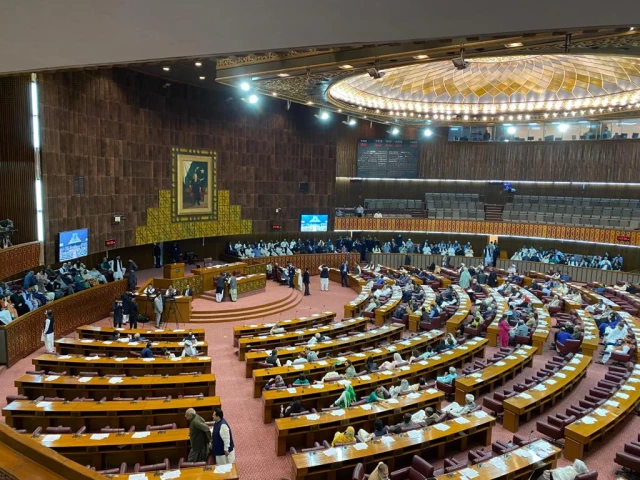
Parliamentary Secretary for Health Nelson Azeem told the National Assembly on Monday that 84,421 HIV cases have been registered in the country and that all diagnosed patients are receiving treatment according to established medical protocols. The update came during Question Hour, as lawmakers also expressed serious displeasure over the ministry’s failure to submit answers to several questions.
ISLAMABAD – In a detailed briefing to the lower house of parliament, Parliamentary Secretary for Health Nelson Azeem provided an overview of the country’s HIV situation, highlighting both the scale of the challenge and the government’s response. He emphasized that patients on dialysis are treated using separate machines to prevent cross-infection, and that once diagnosed at any facility, patients receive proper treatment with healthcare services available in hospitals nationwide.
Azeem noted that Punjab reported the highest number of HIV cases, attributing this to its stronger system of monitoring, testing, and diagnosis. Sindh, Khyber Pakhtunkhwa, and Islamabad followed in case numbers.
Prevention Requires Collective Efforts
The parliamentary secretary stressed that while the government provides treatment, prevention requires collective efforts from the public and healthcare providers. He identified unsafe blood transfusions and unregulated medical practices as major causes of HIV transmission, highlighting the urgent need for strict safety measures.
Awareness campaigns have been launched in hospitals, clinics, and among healthcare workers, while laboratories are monitored to ensure proper blood screening. Azeem said the focus remains on early diagnosis and timely treatment to improve patients’ quality of life.
International Support and Oversight
Azeem also highlighted the support of international donor agencies, stating that all initiatives follow World Health Organization (WHO) guidelines and are regularly audited to ensure transparency and effectiveness. The parliamentary secretary did not name specific agencies but noted that international cooperation has been instrumental in strengthening Pakistan’s HIV response.
Lawmakers Express Displeasure Over Ministry Performance
During Question Hour, lawmakers strongly criticized the performance of the Ministry of Health. Speaker Ayaz Sadiq expressed serious displeasure over the ministry’s failure to submit answers to five questions, stating that negligence in such a critical sector was unacceptable.
The speaker sought an explanation from Minister for Parliamentary Affairs Tariq Fazal Chaudhry, who said efforts were being made to coordinate with relevant ministries to resolve the issue. Sadiq subsequently summoned the federal health secretary to appear in his chamber immediately.
National Assembly Offers Fateha for Martyred Iranian Speaker
The National Assembly offered Fateha for Iran’s former speaker Dr. Ali Larijani and other people martyred during the ongoing war in the Gulf countries. Speaker Sadiq reminisced about his personal relationship with Dr. Larijani, who served as Iran’s national security chief and was martyred on March 17 during an Israeli strike on a residential block in eastern Tehran’s outskirts.
According to the NA speaker, Dr. Ali Larijani fell victim to Israeli aggression. Larijani was killed in the early days of the US-Israeli war on Iran, which began on February 28 and has now entered its second month.
The house also offered prayers for the daughter of Senator Sherry Rehman and for Malik Niaz Ahmed Jhakkar, father of MNA Owais Haider Jhakkar. MNA Hafiz Nauman led the collective prayers.
Bills Introduced in the Session
Several bills were also introduced in the session, including:
- The Criminal Laws (Amendment) Bill 2026
- The Electricity (Amendment) Bill 2026
- The Fiscal Responsibility and Debt Limitation (Amendment) Bill 2025
- The Financial Institutional Reforms Bill 2025
The bills were introduced and referred to relevant standing committees for further deliberation.
Analysis: Balancing Treatment and Prevention
The parliamentary secretary’s update to the National Assembly reveals both progress and persistent challenges in Pakistan’s HIV response. The registration of 84,421 cases represents a significant number of individuals receiving treatment—a testament to the expansion of healthcare services for HIV patients across the country.
However, the emphasis on Punjab’s higher case numbers being attributable to stronger monitoring suggests that actual prevalence may be undercounted in provinces with weaker diagnostic systems. The identification of unsafe blood transfusions and unregulated medical practices as major transmission vectors points to systemic issues that require regulatory intervention rather than just medical treatment.
The speaker’s summons of the health secretary over unanswered questions reflects the legislature’s frustration with bureaucratic delays in a sector where timely information is critical. As Pakistan continues to manage both the ongoing HIV epidemic and the broader health challenges exacerbated by the Middle East conflict, the need for responsive and transparent health governance has never been greater.
The house’s prayers for Dr. Ali Larijani also served as a reminder that even as the National Assembly addressed domestic health policy, the wider regional war continues to claim lives—including those of senior political figures from neighboring countries.