Pakistan and China on Tuesday launched a joint five-point initiative aimed at restoring peace and stability in the Gulf and the broader Middle East, following high-level talks between Deputy Prime Minister and Foreign Minister Ishaq Dar and Chinese Foreign Minister Wang Yi in Beijing. The initiative comes as the US-Israel war on Iran enters its second month, with regional tensions showing no signs of abating.
BEIJING/ISLAMABAD – The meeting between Dar and Wang Yi, described by the Foreign Office as “marked by traditional warmth and cordiality,” focused on the deteriorating security situation in West Asia as well as bilateral relations. Dar briefed his Chinese counterpart on Pakistan’s efforts to achieve a cessation of conflict and resume dialogue in the region, including the recent Islamabad meeting of foreign ministers from Pakistan, Saudi Arabia, Turkiye, and Egypt.
“Both sides reviewed the regional security environment and expressed deep concern over its serious socio-economic repercussions on developing countries,” the Foreign Office statement said. Wang Yi “conveyed China’s appreciation and support to Pakistan’s active diplomatic role and efforts towards ending the conflict and promoting peace in West Asia.”
The Five-Point Peace Initiative
According to a joint statement, Pakistan and China proposed a five-point initiative aimed at restoring peace and stability in the Gulf and the broader Middle East:
- Immediate cessation of hostilities: Both sides urged all parties to prevent the conflict from spreading and to ensure unhindered humanitarian access to war-affected areas.
- Early resumption of peace talks: The statement emphasized that dialogue and diplomacy remain the only viable paths to resolving disputes.
- Safeguarding sovereignty and territorial integrity: Both countries called for protecting the sovereignty, territorial integrity, and security of Iran and the Gulf states, while urging all parties to refrain from the use or threat of force during negotiations.
- Protection of civilians and critical infrastructure: Pakistan and China underscored the need to protect non-military targets, calling on all parties to strictly adhere to international humanitarian law and halt attacks on civilians and critical infrastructure, including energy facilities, desalination plants, and peaceful nuclear installations.
- Security of shipping lanes: Voicing concern over disruptions to global trade, both sides stressed the need to ensure the security of shipping lanes, particularly in the Strait of Hormuz, calling for the safe passage of commercial vessels and the restoration of normal maritime traffic at the earliest opportunity.
The statement also reaffirmed both countries’ commitment to multilateralism, emphasizing the primacy of the United Nations Charter and urging the international community to support efforts aimed at achieving a comprehensive and lasting peace framework in line with international law.
Bilateral Relations Strengthened
The ministers also discussed bilateral relations, highlighting “growing momentum” in strategic cooperation under the China-Pakistan Economic Corridor (CPEC) 2.0, high-level exchanges, and communication amid the 75th anniversary of diplomatic ties between the two countries.
Both sides exchanged views on Afghanistan, emphasizing “the importance of peace, stability, and coordinated counterterrorism efforts.”
Regional Context
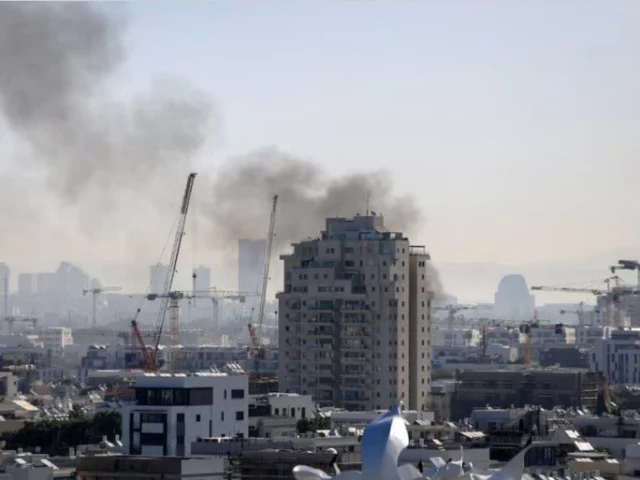
The joint initiative comes as the US-Israel war on Iran, which began on February 28, has claimed the lives of at least 1,937 civilians in Iran, according to Al Jazeera. The conflict has spread across the Middle East, with Iran-aligned Houthis entering the war by firing missiles and drones at Israel, and the United Arab Emirates reportedly preparing to support US-led efforts to reopen the Strait of Hormuz by force.
The closure of the Strait of Hormuz, through which approximately 20 percent of global oil passes, has driven up energy prices and disrupted global trade. The economic fallout has hit developing countries particularly hard, a concern explicitly highlighted in the Pakistan-China joint statement.
Analysis: A Coordinated Diplomatic Push
The Pakistan-China joint initiative represents a coordinated diplomatic push from two of Iran’s key partners. China has maintained close economic and political ties with Tehran, while Pakistan has positioned itself as a mediator between the US and Iran, hosting quadrilateral talks with Saudi Arabia, Turkiye, and Egypt over the weekend.
The five-point plan reflects a shared assessment that the conflict has gone on too long, with devastating consequences for civilians and the global economy. By calling for an immediate cessation of hostilities, the protection of civilian infrastructure, and the restoration of shipping lanes, Pakistan and China are signaling their readiness to play a constructive role in de-escalation.
The initiative also serves to counterbalance US-led efforts to reopen the Strait of Hormuz by force, offering instead a diplomatic path that emphasizes negotiations and adherence to international law. As the war enters its second month, with the US signaling it may be nearing an exit, the Pakistan-China plan provides a potential framework for a negotiated settlement.
For Pakistan, the joint initiative enhances its diplomatic profile and reinforces its “all-weather strategic cooperative partnership” with China. For China, it offers an opportunity to shape the post-conflict order in a region where it has significant economic interests. For the people of Iran, Lebanon, and the Gulf states who have borne the brunt of the fighting, it offers a glimmer of hope that the violence may soon end.