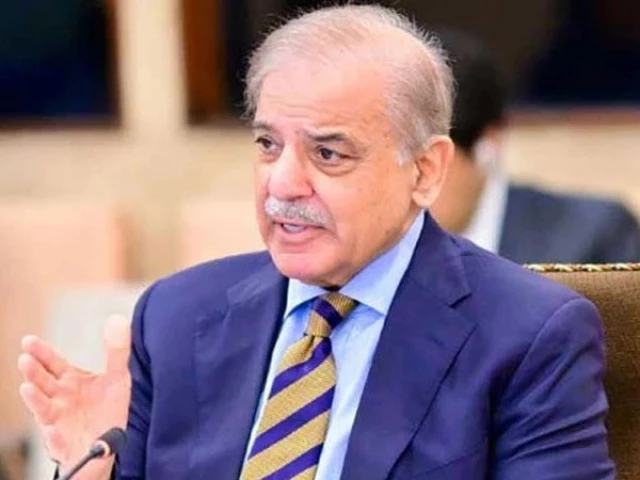
Amid escalating regional tensions and mounting economic pressures, Prime Minister Shehbaz Sharif on Thursday called for national unity, political stability and shared sacrifice, urging the country’s elite to step forward as Pakistan grapples with the fallout of ongoing conflict in the region. Addressing a high-level meeting in Islamabad, the prime minister said the prevailing war situation has posed serious economic challenges for Pakistan, making it imperative for all segments of society to act collectively to navigate the crisis.
ISLAMABAD – The meeting was attended by Deputy Prime Minister and Foreign Minister Ishaq Dar, Chief of Army Staff Field Marshal Syed Asim Munir, federal ministers, chief ministers of all four provinces, and representatives from Gilgit-Baltistan and Azad Kashmir, along with Pakistan Peoples Party Chairman Bilawal Bhutto Zardari. The rare gathering of civilian and military leadership underscored the gravity of the economic challenges facing the country.
Diplomatic Efforts Underway
The prime minister said Pakistan is actively pursuing diplomatic efforts to secure a ceasefire, noting that Foreign Minister Ishaq Dar has engaged with foreign ministers of several countries and undertaken an important visit to China as part of these efforts. He added that the army chief is also playing a key role and expressed the hope for positive developments soon.
Pakistan has positioned itself as a key mediator in the US-Israel war on Iran, hosting quadrilateral talks with the foreign ministers of Saudi Arabia, Turkiye, and Egypt, and proposing a five-point peace initiative jointly with China.
Economic Strain and Austerity Measures
Highlighting the economic strain, Shehbaz said the government has already borne a financial burden of Rs129 billion, while increases in petroleum prices have added to public hardship. The government recently raised the petroleum levy to Rs161 per litre, setting the new petrol price at Rs458 per litre.
He noted that austerity measures have been introduced, including:
- Cabinet members foregoing two months’ salaries
- Reducing fuel consumption by 50 percent
- Cutting the use of official vehicles by 60 percent
The prime minister further said that Rs100 billion has been slashed from the Public Sector Development Programme (PSDP), with the saved resources being redirected towards public relief initiatives.
Call for Provincial Austerity
The prime minister urged provincial governments to halt low-priority projects and join a nationwide austerity drive. The request reflects the federal government’s assessment that all levels of government must contribute to managing the economic fallout of the regional crisis.
Emphasising the importance of sustaining key sectors, Shehbaz said support for agriculture and public and goods transport is essential to ensure wheat harvesting and other farming activities continue uninterrupted, and to shield the public from inflationary pressures.
National Unity
Appreciating the cooperation of the president, Bilawal Bhutto Zardari and provincial leadership, the prime minister said the prevailing national unity demonstrates Pakistan’s ability to confront challenges collectively. The presence of the PPP chairman alongside the prime minister and army chief signaled a rare moment of political consensus amid the crisis.
He expressed confidence that peace would soon prevail in the region and Pakistan would succeed in its economic and diplomatic efforts.
Regional Context
The economic pressures facing Pakistan are directly linked to the ongoing Middle East conflict. The closure of the Strait of Hormuz has driven global oil prices above $100 a barrel, and Iran’s effective blockade of the strategic waterway has disrupted energy supplies worldwide.
Pakistan has managed to avoid fuel shortages through timely government interventions, but the fiscal cost has been significant. The government has allocated Rs125 billion to shield consumers from rising oil prices, funded through savings in development projects and austerity measures.
Shared Sacrifice in a Time of Crisis
The prime minister’s call for provincial governments to axe low-priority projects reflects a recognition that the economic challenges facing Pakistan cannot be addressed by the federal government alone. The Rs100 billion cut from the PSDP and the Rs129 billion fuel subsidy burden have already stretched federal finances.
The presence of all four chief ministers, the army chief, and opposition leadership at the meeting signals a rare moment of political consensus. The national unity that Shehbaz praised is essential for implementing the kind of shared sacrifice required to navigate the crisis.
For provincial governments, the decision to halt projects will be politically difficult. Development projects are often key to maintaining support from local constituencies, and pausing them could have political consequences. However, the prime minister’s appeal suggests that the federal government believes the economic situation leaves no room for business as usual.
As the Middle East conflict continues with no clear end in sight, Pakistan’s economic resilience will be tested. The diplomatic efforts to secure a ceasefire, the austerity measures already implemented, and the call for shared sacrifice from provinces all point to a government preparing for a prolonged period of economic pressure. Whether that preparation will be sufficient remains to be seen.