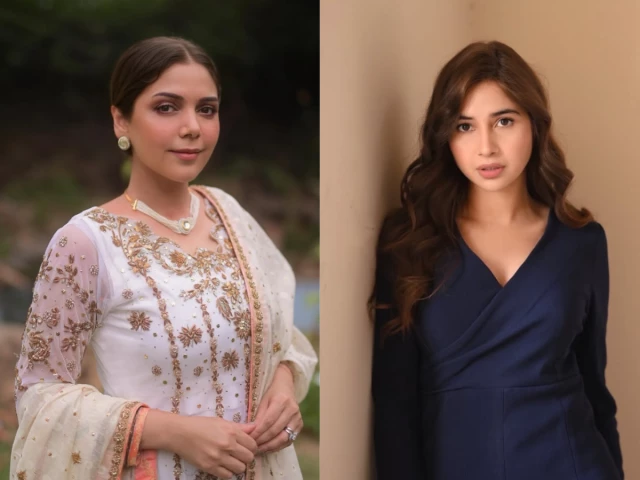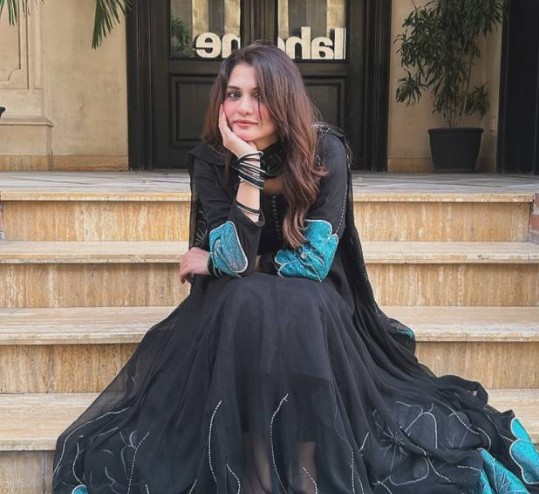
Actress Faiza Khan has ignited an online debate after sharing posts celebrating the global legacy of Pakistani music, particularly spotlighting legends like Nusrat Fateh Ali Khan and the continued use of classic tracks in international cinema. The discussion quickly evolved into a heated exchange between fans, with opinions divided on cultural ownership, recognition, and the evolving relationship between Pakistani and Indian entertainment industries.
KARACHI – Faiza Khan’s Instagram stories reflected on how timeless Pakistani music continues to resonate across generations and borders. One post highlighted how Nusrat Fateh Ali Khan’s work connects Gen X, millennials, and Gen Z alike, calling it “nothing short of a revolution of music.” Another story drew attention to the reuse of iconic Pakistani songs in Indian films, including the reported high price paid for classics like “Hawa Hawa,” originally sung by Hassan Jahangir.
While the stories celebrated the enduring power of Pakistani music, they also subtly questioned why such masterpieces often gain more recognition abroad than at home. The posts quickly triggered a wave of reactions online, with fans expressing mixed opinions.
Celebration and Frustration
Some users praised the global reach of Pakistani artistry. “Art has no boundaries. It’s good our legends are being heard internationally,” one commenter wrote, reflecting a view that cultural exchange should be celebrated regardless of political tensions.
Others, however, voiced frustration over what they saw as an imbalance. “They made billions using our songs and culture, and we’re still underappreciated,” another user responded, pointing to the commercial success of Bollywood films that have incorporated Pakistani music without always acknowledging its origins.
Meanwhile, some fans took a more balanced view, highlighting internal challenges. “No matter what artists do, people still complain—covers or originals, nothing satisfies everyone,” one commenter observed, suggesting that the debate reflects broader issues within Pakistan’s own entertainment industry.
A Shared Cultural Bridge
The discussion reignited a broader conversation about cultural ownership, creative recognition, and the evolving relationship between Pakistani and Indian entertainment industries. Despite political tensions that have at times led to bans on cross-border cultural exchanges, music continues to serve as a shared cultural bridge, transcending borders and generations.
Nusrat Fateh Ali Khan, perhaps the most globally recognized Pakistani musician, has been featured in numerous international films, including Hollywood productions. His collaborations with Peter Gabriel and Eddie Vedder, and his music’s inclusion in films like “Natural Born Killers” and “The Last Temptation of Christ,” brought qawwali to global audiences long before the current debate.
More recently, classic Pakistani pop songs from the 1980s and 1990s have found new life in Bollywood productions. Tracks like “Hawa Hawa,” “Dil Dil Pakistan,” and others have been recreated or referenced in Indian films, often without explicit acknowledgment of their Pakistani origins.
The Politics of Art
The debate over Pakistani music in Bollywood cannot be separated from the political context. Relations between India and Pakistan have remained tense for decades, with cross-border cultural exchanges often becoming casualties of diplomatic disputes. Bans on Pakistani artists in India and vice versa have been imposed and lifted multiple times.
Yet music has a way of circumventing political barriers. Pakistani qawwali, ghazal, and pop music have loyal fan bases across India, just as Indian film music is widely consumed in Pakistan. The digital age has only accelerated this cross-pollination, with streaming platforms making music accessible regardless of borders.
Faiza Khan’s posts tapped into this complex dynamic. By celebrating Pakistani music’s global reach while questioning why it often receives more recognition abroad, she highlighted a paradox familiar to many artists from smaller cultural markets: international validation sometimes precedes domestic appreciation.
Who Is Faiza Khan?
Faiza Khan has built a strong presence as both a digital content creator and a television actress, known for her engaging social media storytelling and thoughtful commentary on culture, entertainment, and lifestyle. Alongside her online influence, she has made a mark in the drama industry with notable roles in serials like Aik Dil Momin, Amanat, and Azmaish, where her performances have earned her recognition among viewers.
Her willingness to engage with culturally sensitive topics has made her a distinctive voice in Pakistan’s entertainment landscape. The debate sparked by her posts is unlikely to be resolved anytime soon, but it has succeeded in bringing attention to questions that many fans and artists grapple with: How should Pakistan’s artistic legacy be valued? What is the appropriate response to the use of Pakistani music in Bollywood? And how can Pakistani artists achieve the recognition they deserve both at home and abroad?
Art Beyond Borders
The clash of opinions following Faiza Khan’s posts reflects a deeper tension within Pakistan’s cultural discourse. On one hand, there is pride that Pakistani music has achieved global recognition, including in Bollywood. On the other hand, there is frustration that this recognition has not translated into greater appreciation—or compensation—for the original artists.
The debate also highlights the changing nature of cultural consumption. In an era of streaming and social media, music travels faster and farther than ever before. A Pakistani song can become a viral hit in India within hours, and vice versa. Borders that seem impassable in political terms become porous when it comes to art.
For fans, the question may ultimately be less about ownership and more about appreciation. Whether a Pakistani song is used in a Bollywood film or played at a wedding in Karachi, its power lies in its ability to move listeners. As one commenter noted, “Art has no boundaries.” In a region often defined by division, that may be the most hopeful takeaway from the debate.