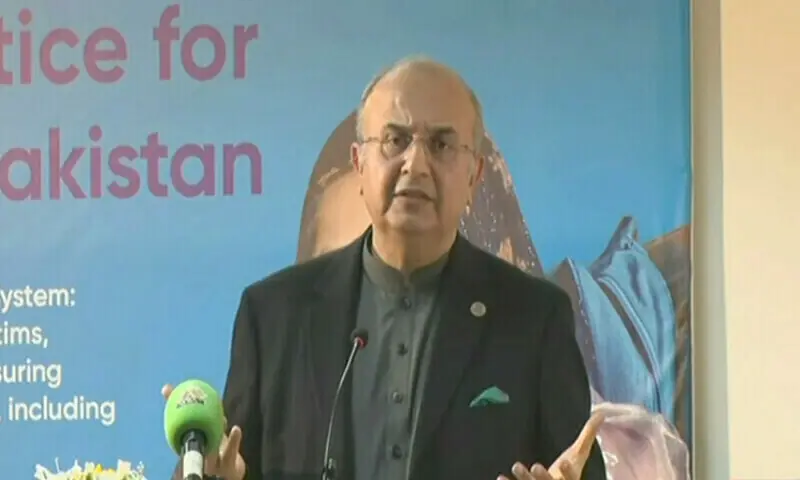
Former senior puisne judge of the Supreme Court of Pakistan, Syed Mansoor Ali Shah, has called for a fundamental shift in Pakistan’s legal system, urging the adoption of Alternative Dispute Resolution (ADR) as a solution to chronic delays and inefficiencies.
Speaking at the second national conference on ADR in Lahore, the retired judge emphasized that the country’s justice system must evolve toward dialogue-based conflict resolution rather than prolonged litigation.
‘Justice Delayed is Justice Denied’
Highlighting systemic flaws, Syed Mansoor Ali Shah described delay as the “biggest flaw” in Pakistan’s justice system.
He noted that cases can take up to 17 years to reach final resolution at the Supreme Court level, often resulting in acquittals after decades of legal battles.
“Who accounts for the suffering endured by the accused and their families during this time?” he asked, pointing to the human cost of delayed justice.
ADR as a Practical Solution
The former judge stressed that ADR mechanisms—such as mediation and arbitration—offer a more natural and efficient path to resolving disputes.
Rather than undermining the judiciary, ADR can complement it by reducing case backlogs and encouraging amicable settlements.
However, he acknowledged that arbitration in Pakistan remains difficult due to legal and procedural barriers, despite existing frameworks.
Lessons from Global Models
Drawing comparisons with international practices, Shah highlighted how countries like China prioritize reconciliation over litigation.
He noted that under Mao Zedong, millions of disputes were resolved through community-based committees rather than courts.
He also cited examples from Türkiye, United States, Italy, and India, where mediation is often mandatory before formal litigation.
Cultural and Religious Foundations
Shah pointed out that reconciliation is deeply rooted in Islamic teachings, noting that Prophet Muhammad (PBUH) frequently resolved disputes through dialogue and compromise.
He argued that Pakistan’s legal culture should align more closely with these principles, fostering a system where both parties feel satisfied with outcomes.
Concerns Over Legal Education and Implementation
The former judge criticized Pakistan’s legal education system for focusing heavily on adversarial approaches rather than negotiation and mediation skills.
He also expressed concern that while ADR laws exist, their implementation remains weak due to lack of awareness and institutional support.
“The country must move toward a culture of reconciliation,” he stressed.
Constitutional Changes and Judicial Independence
Addressing broader judicial reforms, Syed Mansoor Ali Shah raised concerns about recent constitutional amendments, particularly the 26th and 27th changes, which he said have significantly altered the structure of the justice system.
He highlighted a shift in judicial appointments toward the executive branch and questioned the establishment of a Federal Constitutional Court without clear criteria for appointing judges.
“The greatest strength of a court lies in public trust. Without it, a court becomes ineffective,” he warned.
Analysis: Reforming Justice Through ADR
Shah’s remarks underscore a growing consensus that Pakistan’s justice system requires structural reform. With millions of cases pending, ADR offers a viable path to faster, cost-effective dispute resolution.
However, transitioning to such a system will require more than legislation—it demands cultural change, legal education reform, and institutional commitment.
If implemented effectively, ADR could reduce judicial burden, restore public trust, and make justice more accessible. Without such reforms, delays and inefficiencies may continue to undermine confidence in the legal system.