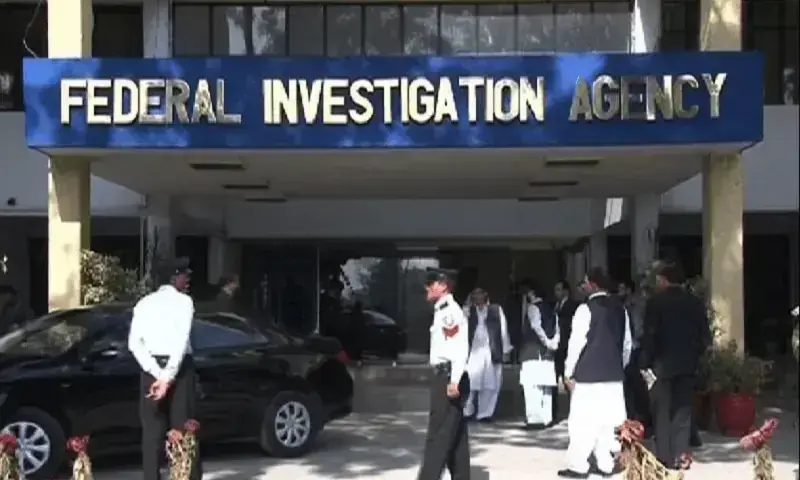
The arrest marks a significant development in ongoing efforts to curb identity fraud and illegal documentation amid broader government measures targeting undocumented foreigners.
Raid Leads to Arrests in Metroville
According to an FIA spokesperson, authorities conducted a raid in Karachi’s Metroville SITE area, where two Afghan nationals were apprehended. The suspects were found in possession of what officials described as “illegal Pakistani identity documents.”
Subsequent investigations linked the documents to internal approval processes within NADRA, leading authorities to identify an official allegedly involved in facilitating the issuance.
NADRA Official Detained
The FIA later arrested Furqan Ahmed Khan Durrani during a follow-up operation in the Nursery area of Karachi.
Officials allege that Durrani approved CNIC applications for the detained Afghan nationals, raising concerns about internal oversight and the integrity of identity verification systems.
Legal action has been initiated under the Foreigners Act, 1946 and the Prevention of Corruption Act, 1947.
Investigation Expands
The FIA confirmed that it has secured physical remand of the suspects for further questioning, though it remains unclear whether the NADRA official is included in the remand.
Authorities say investigations are ongoing and may uncover a wider network involved in issuing fraudulent identity documents.
Context: Crackdown on Illegal Documentation
The arrest comes amid Pakistan’s intensified efforts to address undocumented migration through the Illegal Foreigners’ Repatriation Plan (IFRP), launched in 2023.
Since its implementation, over 1.82 million Afghan nationals have returned to Afghanistan, reflecting the scale of the government’s repatriation drive.
In recent years, concerns have grown over the misuse of national identity systems, prompting joint operations by NADRA and the FIA to identify and dismantle such networks.
Previous Cases Highlight Systemic Risks
In 2024, authorities uncovered a similar scheme involving unauthorized issuance of CNICs to foreign nationals. An internal review identified multiple NADRA employees allegedly involved in the operation.
The recurrence of such cases has raised questions about internal controls and the need for stricter verification mechanisms within the national identity framework.
Analysis: A Test for Institutional Accountability
The latest arrest underscores the challenges Pakistan faces in safeguarding its identity management systems. While NADRA is widely regarded as one of the country’s most advanced institutions, cases of internal collusion pose serious risks to national security and governance.
Experts suggest that stronger oversight, digital tracking, and accountability measures will be critical in preventing future breaches.
As investigations continue, the case is likely to serve as a key test of institutional transparency and the government’s commitment to tackling corruption within critical state bodies.