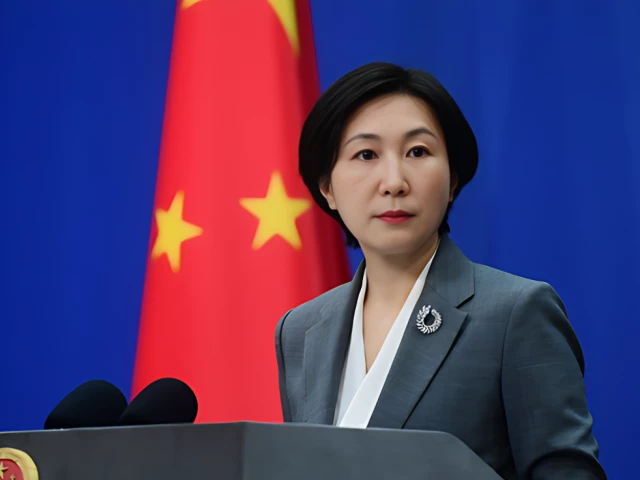
BEIJING – China’s foreign ministry said on Wednesday that Afghanistan and Pakistan agreed during peace talks in Urumqi to explore a comprehensive solution to the conflict that broke out between the two countries last October. Foreign Ministry spokesperson Mao Ning told a daily press briefing that both countries agreed at the meetings in China not to take actions that would escalate or complicate the situation.
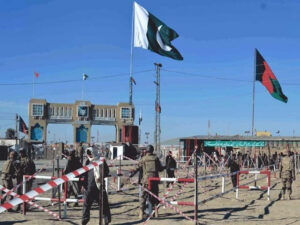
Mao added that China would continue to communicate with both countries and provide a platform for dialogue. The talks, facilitated by Beijing, represent a significant diplomatic effort to de-escalate tensions along the Pakistan-Afghanistan border, which have seen intense military exchanges in recent months.
Pakistan’s Three Demands
Pakistan conveyed three core demands to the Afghan Taliban during the talks in Urumqi, as China tried to convince both sides to agree on a five-point framework to resolve issues. The three demands put forward by Islamabad at the outset include: Kabul formally declaring the Tehreek-e-Taliban Pakistan (TTP) a terrorist organisation, dismantling its infrastructure, and providing verifiable proof of the action.
These demands form the basis of Pakistan’s negotiating position, which sources say has hardened amid persistent security concerns. The TTP has launched numerous attacks on Pakistani soil from safe havens in Afghanistan, and Islamabad has repeatedly called on the Afghan Taliban to take action against the group.
Agreement on Multiple Points
An official also told The Express Tribune over the phone that Afghanistan and Pakistan agreed to seek a comprehensive solution to their tensions and issues, with an announcement soon on topics such as the TTP, Afghan sovereignty breaches, and trade. They said Beijing officially facilitated Islamabad and Kabul to ink an agreement on multiple points, including a permanent ceasefire, trade, and the TTP.
Reliable sources told The Express Tribune that members of the Afghan negotiating team would arrive in Kabul at 6:30pm today. The sources said that the talks were positive and both sides submitted their demands to each other, according to members of the technical team. They added that both sides agreed to seek a comprehensive solution to the ongoing conflict and not take any steps that would further complicate the situation.
Technical Meetings
The technical teams on both sides held five meetings. The first was introductory; the second and third focused on TTP, Afghan sovereignty, and non-use of each other’s soil against each other; and the fourth was on TTP and modalities for addressing the issues. The Pakistani team will also be in the capital by today, the sources confirmed.
The framework includes border de-escalation, cooperation against terrorism, phased restoration of trade routes, orderly and dignified management of refugees, and a rapid communication mechanism. The next meeting will be held at the end of this month.
Afghan Statement
Abdul Qahar Balkhi, spokesperson for the Afghan Ministry of Foreign Affairs, stated that the official negotiations between the Afghan and Pakistani delegations in Urumqi, China, were conducted in a constructive and collaborative environment. According to the ministry’s press release, the discussions comprehensively addressed bilateral relations, security concerns, and issues pertaining to regional stability.
It further emphasised that the country appreciated China’s hosting and demonstrated goodwill, expressing hope that this process would foster trust, strengthen sustainable relations, enhance mutual understanding, and promote effective cooperation.
Operation Ghazab Lil Haq
Last week, Information Minister Attaullah Tarar said that 796 Afghan Taliban operatives have been killed and more than 1,043 injured during the ongoing “Operation Ghazab Lil Haq,” launched in response to “unprovoked action” from across the Afghan border. The operation resumed following a temporary pause in deference to Eidul Fitr celebrations and requests from Islamic countries. The pause concluded at midnight between March 23 and 24.
It was launched over a month ago in retaliation for the Afghan Taliban forces’ firing on multiple locations. Islamabad said its February air strikes that sparked the escalation were targeting terrorists. Islamabad accused Afghanistan of failing to act against terrorist groups that carry out attacks in Pakistan, which the Taliban government rejected.
Providing a summary of the Afghan Taliban regime’s losses on his X account, the information minister said that 286 check posts had been destroyed and 44 others captured by Pakistani security forces. “Two hundred and forty-nine tanks, armoured vehicles and artillery guns have also been destroyed during the operation,” he said. He added that air strikes effectively targeted 81 locations across Afghanistan.
“As part of these operations on night 2/3 April, an attempt to physically attack a border post in Ghulam Khan Sector by Afghan Taliban/FAK (Fitna al-Khawarij) was comprehensively foiled in which they suffered heavy casualties, including up to 37 sent to hell and 80+ injured,” Tarar said.
Analysis: A Diplomatic Breakthrough?
The Urumqi talks represent the most significant diplomatic effort to de-escalate the Pakistan-Afghanistan conflict since hostilities intensified. China’s role as a facilitator is notable, reflecting Beijing’s growing influence in the region and its desire to maintain stability along its western border.
The agreement to explore a comprehensive solution is a positive step, but the devil will be in the details. Pakistan’s demand that the Afghan Taliban declare the TTP a terrorist organisation and dismantle its infrastructure is a major ask. The Afghan Taliban have historically resisted taking action against the TTP, viewing them as ideological allies.
The five-point framework — including border de-escalation, counter-terrorism cooperation, trade restoration, refugee management, and a rapid communication mechanism — provides a roadmap for negotiations. The next meeting at the end of the month will test whether both sides can translate goodwill into concrete action.
For Pakistan, the talks offer a potential off-ramp from a costly military engagement. For Afghanistan, they offer an opportunity to stabilize its eastern border and focus on internal challenges. For China, successful mediation would enhance its diplomatic credentials and secure its regional interests.
As the technical teams continue their work, the world will watch to see whether the Urumqi talks produce lasting peace or merely a temporary pause in hostilities.