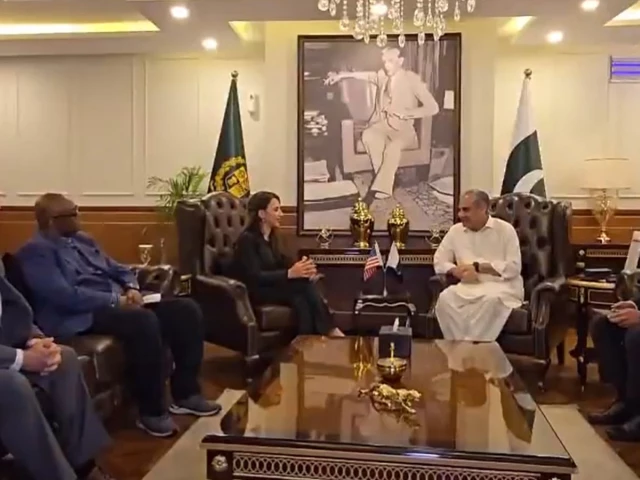
ISLAMABAD – Interior Minister Mohsin Naqvi assured US Ambassador to Pakistan Natalie Baker on Thursday of foolproof security ahead of the arrival of high-level foreign delegations in Islamabad on Friday for the US-Iran ceasefire talks. The meeting came a day after Pakistan brokered a two-week ceasefire between the two nations.
Prime Minister Shehbaz Sharif announced that Iran and the US, along with their allies, had agreed to an immediate ceasefire “everywhere, including Lebanon,” effective immediately. He invited delegations from both nations to Islamabad on April 10 to negotiate a conclusive settlement.
High-Level Delegations
Later, the White House announced that US President Donald Trump was sending Vice President JD Vance and other negotiators to Islamabad for talks with Iran beginning on Saturday. Iran’s Parliament Speaker Mohammad Bagher Ghalibaf and Foreign Minister Abbas Araghchi will represent Tehran.
According to a statement issued by the Ministry of Interior on X, Ambassador Baker met with Naqvi, where both discussed the upcoming talks and the Middle East situation.
Security Arrangements
“We have made extensive arrangements to ensure foolproof security for all international guests attending these crucial negotiations,” Naqvi said. The interior minister outlined that US Vice President JD Vance, Special Envoy for Middle East Affairs Steve Witkoff, and Jared Kushner would attend as special guests.
The statement further added that the US Ambassador expressed her appreciation for Pakistan’s efforts in mediating the peace talks.
Context
The Islamabad talks represent the culmination of weeks of intense diplomatic efforts by Pakistan to broker a ceasefire between the United States and Iran. The two-week truce, announced on Tuesday, came just hours before a deadline set by President Trump for Iran to reopen the Strait of Hormuz or face further military action.
However, the fragile ceasefire has already come under strain following Israeli strikes on Lebanon that killed hundreds. While the US has insisted that its agreement with Iran did not apply to Israeli operations in Lebanon, Iran has warned that continued attacks on Hezbollah could jeopardise the truce.
Significance
The arrival of Vice President JD Vance — the highest-ranking US official to visit Pakistan in years — underscores the significance Washington places on the talks. Iran’s delegation, led by Parliament Speaker Ghalibaf, reflects Tehran’s commitment to the process.
For Pakistan, hosting these talks is a diplomatic triumph. The country has positioned itself as a key mediator between the US and Iran, leveraging its relationships with both nations. The success of the talks could cement Pakistan’s status as a regional peacemaker.
Analysis: A Test for Pakistani Diplomacy
The Islamabad talks are a test of whether Pakistan can translate its diplomatic success into a lasting peace agreement. The two-week ceasefire was a significant achievement, but the underlying issues — Iran’s nuclear program, the Strait of Hormuz, and the role of proxies like Hezbollah — remain unresolved.
The security arrangements for the talks are extensive, reflecting the high stakes involved. The presence of JD Vance, Steve Witkoff, and Jared Kushner indicates that the US is taking the negotiations seriously. Iran’s delegation, led by its parliament speaker, signals the same.
But the strain on the ceasefire from events in Lebanon is a reminder that peace in the Middle East cannot be separated into isolated compartments. An attack on Hezbollah is seen by Iran as an attack on its interests. A ceasefire between the US and Iran that does not address Lebanon may not hold.
As the delegations arrive in Islamabad, the world will be watching. Pakistan has brought the parties to the table. Now comes the harder part: keeping them there.