TOKYO – Japan has relaxed decades-old restrictions on its arms exports, clearing the way for it to sell weapons to more than a dozen countries. The announcement on Tuesday marks a milestone in Tokyo’s shift away from the pacifism that has characterised its post-war defence policy. It also comes at a time of heightened tensions in the region.
Restrictions that limit arms exports to just five categories — rescue, transport, warning, surveillance, and minesweeping — will be lifted. This means Japan can now sell lethal weapons to the 17 countries with which it has defence agreements, including the US and the UK.
Exceptions to Conflict Ban
A ban on arms sales to countries involved in conflict will stay. But authorities say they will allow for exceptions “in special circumstances.”
Prime Minister’s Statement
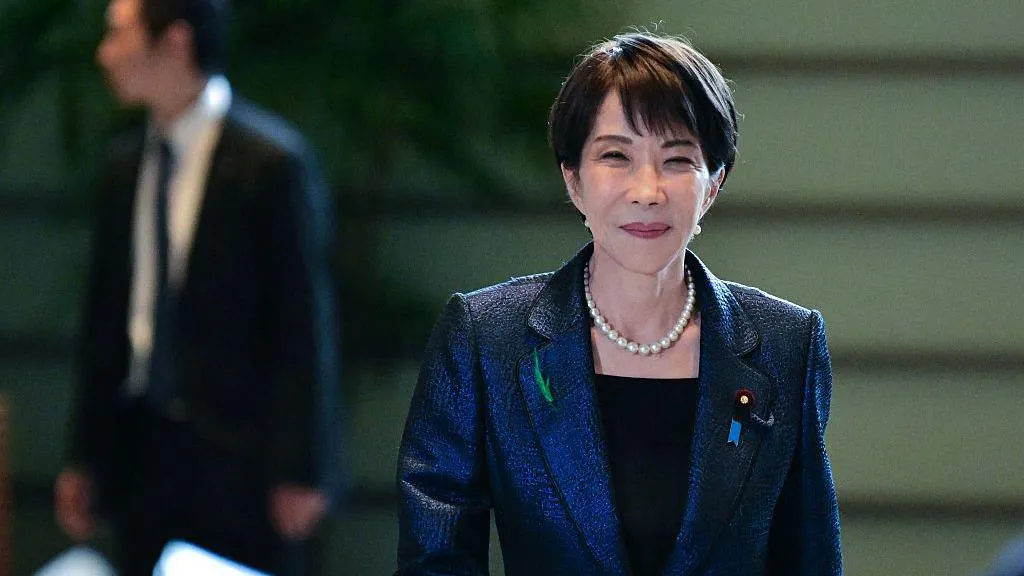
“In an increasingly severe security environment, no single country can now protect its own peace and security alone,” Japanese Prime Minister Sanae Takaichi wrote on X on Tuesday. However, she also said there was “absolutely no change in our commitment to upholding the path and fundamental principles we have followed as a peace-loving nation for over 80 years since the war.”
“Under the new system, we will strategically promote equipment transfers while making even more rigorous and cautious judgments on whether transfers are permissible,” she wrote.
Government Justification
Chief Cabinet Secretary Minoru Kihara said in a press briefing that the move was “intended to safeguard Japan’s security and further contribute to the peace and stability of the region.”
China’s Reaction
China has said it is “seriously concerned” about what it described as Japan’s “reckless militarisation.” “China will remain highly vigilant and resolutely opposed [to the move],” Beijing’s foreign ministry said in a routine media briefing on Tuesday.
Military Exercises
The new arms export rules were announced as Japan’s Self-Defence Forces took part in annual war games between the US and the Philippines. Japan is joining the war games as combatants for the first time, instead of mere observers. China has opposed the drills, claiming that it would deepen divisions in the region. The exercises take place in parts of the Philippines that are near waters and islands claimed by Beijing, including Taiwan.
Taiwan Comments
Last year, Takaichi drew Beijing’s ire after she suggested in parliament that Japan could respond with its Self-Defence Force if Beijing attacked Taiwan.
South Korea’s Response
South Korea’s foreign ministry said Japan’s defence policy “should ideally be carried out in a manner that upholds the spirit of the Peace Constitution while contributing to peace and stability in the region.” South Korea was colonised by Japan from 1910 until the end of World War Two.
The Shift from Pacifism
Japan’s defence posture was written into its post-World War Two constitution in 1947. It renounced war as a way to settle international disputes and stated that Japan will never maintain war potential. For decades, pacifism has become part of Japan’s identity. But that mindset has been shifting gradually.
In 2014, then Prime Minister Shinzo Abe relaxed a blanket ban on all military sales, allowing Japan to jointly develop arms with allies and give its defence industry access to new markets and technology. In 2023, then Prime Minister Fumio Kishida took it a step further to allow exports of finished lethal weapons for the first time since World War Two.
Constitutional Revision
Takaichi has supported revising the pacifist constitution. While she has not specified the proposed changes, many think it will involve amending Article 9, which renounces war. Takaichi’s supporters say Japan needs to face a new reality where old rules no longer apply for a country that sits surrounded by China, Russia, and North Korea. But critics worry that Japan is becoming a war-capable country. To them, Takaichi’s stand on constitutional reform could mean Japan might be drawn into military conflicts.
Analysis: A Historic Shift
Japan’s decision to relax arms export rules is a historic shift in its post-war defence policy. For nearly eight decades, Japan has adhered to a pacifist constitution that renounced war. But the security environment in East Asia has changed dramatically.
The new rules allow Japan to sell lethal weapons to 17 countries, including the US and the UK. While a ban on sales to countries involved in conflict remains, the “special circumstances” exception creates a loophole.
China’s strong opposition is predictable. Beijing views Japan’s militarisation as a threat, particularly given the ongoing tensions over Taiwan and the South China Sea.
South Korea’s cautious response reflects the complex history between the two countries. While Seoul acknowledges Japan’s right to defend itself, the legacy of Japanese colonialism remains sensitive.
The shift is incremental — from joint development in 2014 to finished lethal weapons in 2023, and now to broader exports. But the direction is clear. Japan is becoming a normal military power.