HONG KONG – With the end of a two-week ceasefire approaching, the White House said Vice President JD Vance was ready to return to Pakistan for fresh negotiations to end a conflict that has sent crude soaring and revived inflation fears. However, the Islamic Republic’s position remained uncertain as it accused Washington of violating their fragile truce through its blockade of the country’s ports and seizure of a ship.
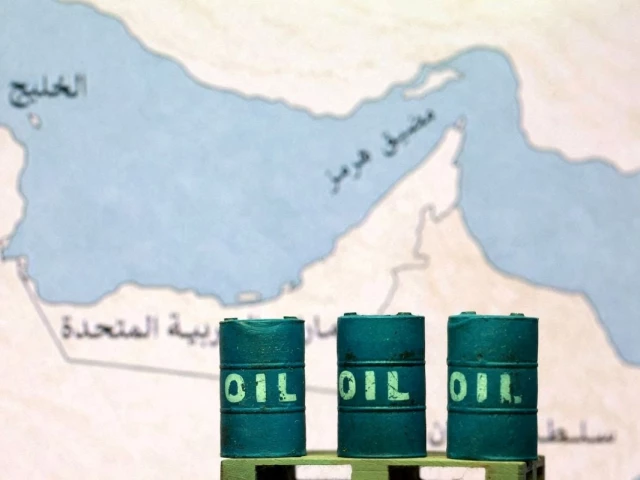
Crude plunged on Friday after Tehran said it would allow ships to transit the Strait of Hormuz, which had been effectively closed since the war began on February 28. But the commodity rebounded on Monday as Iran closed the waterway again, citing the blockade and seizure.
Trump’s Stance
Donald Trump has similarly accused Tehran of violating the ceasefire by harassing vessels in the Strait of Hormuz, the transit passage for about one-fifth of global oil. The US president said the blockade would not be lifted until an agreement had been reached.
“THE BLOCKADE, which we will not take off until there is a ‘DEAL,’ is absolutely destroying Iran,” Trump said on social media. “They are losing $500 Million Dollars a day, an unsustainable number, even in the short run.”
He told PBS News that Iran was “supposed to be there” at the talks in Pakistan. “We agreed to be there,” he said, warning that if the ceasefire expired “then lots of bombs start going off”. He separately told Bloomberg News it was “highly unlikely” he would extend the truce.
Iranian Response
The Middle Eastern country’s parliament speaker, Mohammad Bagher Ghalibaf, said “Trump wants to turn this negotiating table into a surrender table or justify renewed hostilities, as he sees fit”. “We do not accept negotiations under the shadow of threats, and in the last two weeks we have been preparing to show new cards on the battlefield,” he wrote on X.
Market Reaction
Still, investors remained largely upbeat that the two sides will eventually come to a deal that will reopen the strategic strait. US benchmark crude West Texas Intermediate rose more than 1%, while Brent was also higher.
Tech Rally
Seoul led the equity market gains thanks to a resumption of the tech rally that had pushed the Kospi to multiple records before the war, while Tokyo and Taipei were also well up. Hong Kong, Singapore and Manila also advanced, although Shanghai and Sydney fluctuated.
That came even after a down day on Wall Street, where the S&P 500 and Nasdaq Composite retreated from Friday’s record closes.
Analyst Perspective
Asia had opened “with a gentle lean into risk as signs Iran may join talks with the US offer a pathway, however narrow, toward easing tensions ahead of the ceasefire deadline,” wrote SPI Asset Management’s Stephen Innes.
“Markets are pricing the possibility of progress rather than its certainty,” he said. “Trump’s remark that a ceasefire extension is ‘highly unlikely’ if no deal is reached has effectively put a clock on the market. However, traders recognise the playbook. Hard deadlines and firm rhetoric often soften as negotiations evolve, but the presence of a timeline still sharpens positioning and raises the stakes around each headline.”
Japanese Arms Stocks Rise
In company news, Japanese arms firms enjoyed healthy buying after Tokyo said on Tuesday it would ease decades-old export rules, paving the way for the sale of lethal weapons overseas. The policy shift, which ends Tokyo’s self-imposed restraint on the sale of lethal arms, comes as it seeks to enter the international arms market, hoping to bolster national defence as well as boost economic growth.
Fujitsu climbed 2.4%, NEC added 3.7%, and Mitsubishi Electric was up 0.9%, while Mitsubishi Heavy gained 0.4%.
Key Figures
- West Texas Intermediate: DOWN 1.2% at $88.50 a barrel
- Brent North Sea Crude: DOWN 0.4% at $95.12 a barrel
- Tokyo – Nikkei 225: UP 1.3% at 59,596.10
- Hong Kong – Hang Seng Index: UP 0.3% at 26,427.75
- Shanghai – Composite: DOWN 0.2% at 4,073.82
Analysis: Markets Price Hope, Not Certainty
As the ceasefire deadline approaches, markets are pricing the possibility of progress rather than its certainty. Oil prices remain volatile, responding to every signal from Tehran and Washington.
Trump’s threat not to extend the truce has put a clock on the market. But traders recognise the playbook: hard deadlines often soften as negotiations evolve.
The fate of the ceasefire — and of global oil prices — now depends on whether Iran agrees to send a delegation to Islamabad. The next 24 hours will be decisive.