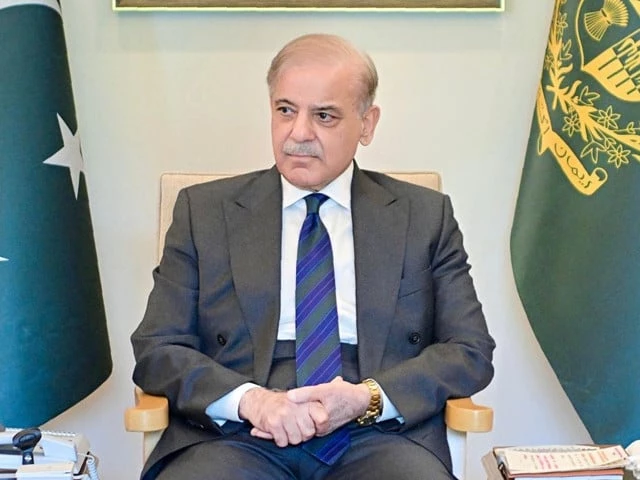
ISLAMABAD – Prime Minister Shehbaz Sharif, expressing concern over rising global crude oil prices, on Wednesday noted that new prices were expected to be determined on Friday. Chairing a federal cabinet meeting in Islamabad, the prime minister said this was a very challenging situation, but he expressed confidence that collective wisdom and coordinated efforts would keep matters under control.
The prime minister said the war in the Middle East had impacted Pakistan’s growth, with the oil bill surging to 800millionweekly.”Beforethewar,ourweeklyoilbillwasapproximately300 million, which has now surged to $800 million,” he informed the cabinet.
Growth Trajectory Impacted
The prime minister said that Pakistan was heading towards a growth trajectory after achieving macro-level stability, but the US-Iran war had impacted the collective efforts of the past two years. He stated that crude oil prices were once again soaring.
Price Determination Challenge
“We have to determine new prices by this coming Friday. The current global market situation presents a major challenge. However, thanks to collective foresight and joint efforts, we have made significant attempts to manage this situation more effectively.”
Appreciation for Petroleum Team
“I would like to congratulate Minister of Petroleum Ali Pervez Malik and the entire team for their collaborative efforts in implementing effective measures. As a result, unlike other countries, we did not face long queues or the need for rationing. Overall, the situation has been satisfactory,” he said.
Consumption Reduction
“We are continuing our efforts to save, and in recent days, we have seen positive progress, with our consumption significantly reduced compared to last week.”
Debt Repayment and Reserves
Speaking about payments to the UAE, the prime minister said, “Our outstanding external debts (including approximately $3.5 billion in bilateral loans) have, thank God, been paid off. Our foreign exchange reserves are also stable at their current level, and we have made our debt repayments.”
Gratitude to Saudi Leadership
“We are extremely grateful to King Salman bin Abdulaziz and Crown Prince Mohammed bin Salman for playing a key role in this matter. I am confident that these major issues will also be resolved. Pakistan’s efforts for peace continue, and there has been no reduction in them,” he added.
Subsidy Consultations
He further mentioned that he had directed the committee working with the provinces to continue consultations for a month to ensure that the subsidies being provided could be maintained.
Update on Diplomatic Engagement
The prime minister also updated the cabinet on Pakistan’s diplomatic engagement, which led to talks between Washington and Tehran in Islamabad. “The talks between Iran and the US that took place on the night of April 11 lasted nearly 21 hours. It was a long marathon session. Pakistan made sincere and concerted efforts to bring peace to the region.”
He also commended the Chief of Army Staff and Chief of Defence Forces, Field Marshal Asim Munir, Deputy Prime Minister and Foreign Minister Ishaq Dar, and other key figures who played a significant role in these efforts. “As a result of these efforts, the ceasefire was extended, and it remains in effect.”
Iran FM’s Visit
Regarding Iran’s Foreign Minister Abbas Araqchi’s visit with his team for the second round of talks, PM Shehbaz said, “Important meetings were held during his visit. Before his trip to Russia, I had a phone conversation with him in which he assured me that all his meetings in Oman were conducted with sincerity, and after consulting with their leadership, they will give a positive response soon.”
Cabinet Approvals
According to a statement issued by the Prime Minister’s Office (PMO), several important policies were approved during the meeting.
National Vaccine Production Policy: The cabinet approved the national vaccine production policy, aimed at reducing reliance on vaccine imports, saving foreign exchange, and making Pakistan self-sufficient in vaccine production. “A special committee under DRAP will be set up to ensure pricing and quality control,” it added.
National Agriculture Biotechnology Policy: The cabinet also approved the first-ever National Agriculture Biotechnology Policy, which aimed “to ensure national food security, boost agricultural productivity, and advance research and development in the sector.”
National Seed Policy 2025: The National Seed Policy 2025, which aimed to increase agricultural production by 15 to 20 per cent and empower farmers, was also approved. “The policy includes steps to partner with global seed companies,” it said.
National Skills Development Policy: Additionally, the cabinet granted approval for the National Skills Development Policy, which focuses on aligning the workforce with industry needs and modern requirements. “It also includes provisions for international training and certification for Pakistanis going abroad for work. Cooperation between the federal government, provinces, and the private sector will be essential for implementing this policy.”
FDE Visiting Faculty Regulations: Furthermore, the cabinet approved the FDE (Visiting Faculty) Regulations 2025, allowing teachers serving on daily wages in grades 1 to 15 to be hired as visiting faculty based on their qualifications, in line with a Supreme Court decision.
NEPRA Reports: “The meeting also reviewed the NEPRA Annual Report 2025 and the State of Industry Report 2025,” it added.
Analysis: A Nation Under Pressure
The prime minister’s cabinet meeting highlighted the dual pressures on Pakistan: economic and diplomatic. The weekly oil bill has surged from 300millionto800 million — a nearly 170% increase. The war in the Middle East has directly impacted Pakistan’s growth trajectory.
Yet, the prime minister expressed confidence that collective wisdom and coordinated efforts would keep matters under control. The praise for the petroleum team — and the fact that Pakistan avoided long queues and rationing — is a testament to the government’s crisis management.
The debt repayments to the UAE ($3.5 billion) have been made, and foreign exchange reserves remain stable. But the oil bill surge will put pressure on reserves.
The diplomatic efforts continue. The ceasefire remains in effect. The prime minister’s phone conversation with the Iranian foreign minister — and the assurance of a positive response soon — suggests that Pakistan is still hopeful of a breakthrough.
The cabinet approvals — on vaccine production, agriculture biotechnology, seed policy, and skills development — indicate that the government is not solely focused on the crisis. Long-term planning continues.
But the immediate challenge is clear: oil prices are soaring, and the war shows no signs of ending. Pakistan’s growth trajectory, hard-won over two years, is at risk.