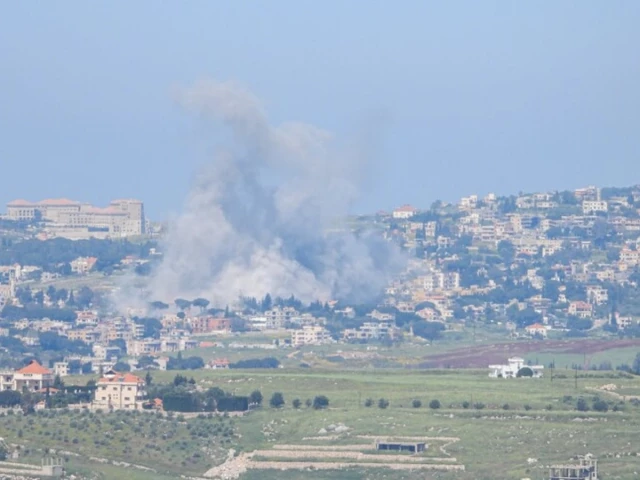
BEIRUT – Three people were killed and six others injured on Monday in Israeli strikes in southern Lebanon despite an ongoing ceasefire, Lebanese media reported. The attacks come just days before the United States is set to host peace talks between Israel and Lebanon in Washington on May 14–15.
The state news agency NNA said two people were killed and five others injured in an airstrike in the town of Ebba in Nabatieh. In a separate incident, a drone strike on a car in the town of Haris in the Bint Jbeil district killed one person and injured his brother.
Israeli warplanes also targeted the home of a former municipal chief in Sajd, while another strike was reported in Kfar Rumman. No casualty information was immediately available from those locations.
Ceasefire Violations Mount
The Israeli army continues to conduct daily strikes in Lebanon and exchange fire with Hezbollah despite a ceasefire in place since April 17, which was later extended to mid-May. The continuation of strikes raises questions about the durability of the truce and the prospects for the upcoming Washington talks.
Rising Casualties
Since March 2, Israeli attacks in Lebanon have killed 2,846 people, injured 8,693, and displaced more than 1 million, according to the latest official figures. The death toll continues to rise as strikes persist despite the ceasefire agreement.
Upcoming Washington Talks
The escalation comes as the United States prepares to host peace talks between Israel and Lebanon in Washington on May 14–15. The talks, which would be the first direct negotiations between the two countries in decades, are intended to focus on a ceasefire and the disarmament of Hezbollah. However, Monday’s strikes have cast a shadow over the prospects for a successful dialogue.
Analysis: A Fragile Ceasefire
Monday’s strikes are the latest in a series of ceasefire violations by both sides. Despite the US-brokered truce, Israel has continued to strike what it says are Hezbollah targets, and Hezbollah has continued to fire rockets into Israel.
The timing of the strikes — just days before the Washington talks — is significant. Israel may be seeking to strengthen its negotiating position by demonstrating its military capabilities. Hezbollah, for its part, has rejected direct negotiations with Israel and insists that the Lebanese government should demand a ceasefire as a precondition for any talks.
The death toll — 2,846 killed since March 2 — is a stark reminder of the human cost. The displacement of over 1 million people has created a humanitarian crisis.
As the Washington talks approach, the question is whether the strikes will derail the diplomatic process or whether the talks will proceed despite the violence. The United States has invested significant diplomatic capital in arranging the talks; a collapse would be a setback.
For the people of southern Lebanon, Monday’s strikes are another day of fear. For the families of the three killed, it is a day of mourning.