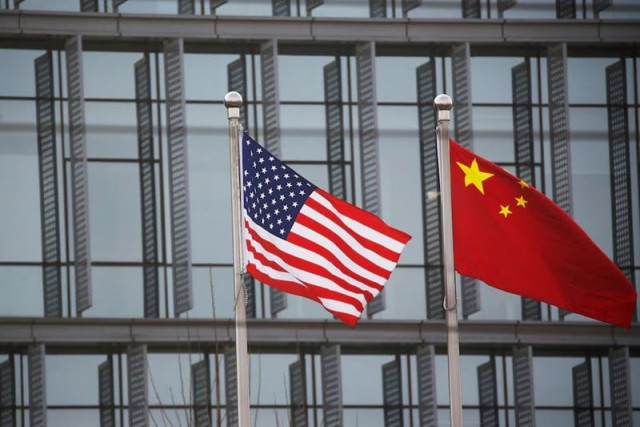
China and the United States are set to begin a new round of high-level economic and trade talks in South Korea next week, as both countries seek to stabilise bilateral relations ahead of President Donald Trump’s upcoming state visit to Beijing.
Beijing confirmed on Sunday that Chinese Vice-Premier He Lifeng will lead the country’s delegation during consultations with American officials in Seoul from May 12 to 13. The talks are being viewed as a significant diplomatic step amid continuing efforts by both global powers to prevent renewed economic tensions and strengthen cooperation on major international issues.
According to China’s Ministry of Commerce, the discussions will be based on the “important consensus” reached during previous engagements between Chinese President Xi Jinping and President Trump, including meetings held in Busan and several recent phone conversations between the two leaders.
The upcoming negotiations are expected to focus heavily on trade stability, tariff-related concerns, market cooperation, and broader economic coordination. Since 2018, tariff disputes and trade restrictions between Washington and Beijing have repeatedly shaken global financial markets and disrupted international supply chains.
Officials from both countries are now attempting to maintain open channels of communication to avoid further escalation and build a more predictable economic relationship.
The latest round of consultations is part of a broader diplomatic mechanism established after earlier high-level meetings between the two sides. The framework was designed to encourage continuous dialogue on trade and economic matters rather than relying on temporary or crisis-driven negotiations.
The renewed diplomatic activity also comes as South Korea and China signed 14 memoranda of understanding aimed at expanding cooperation in digital technology, investment, and economic development. Seoul continues to balance its long-standing security alliance with Washington while increasing commercial engagement with Beijing.
Meanwhile, China’s Foreign Ministry officially confirmed that President Trump will visit China from May 13 to 15 at the invitation of President Xi Jinping. The visit is expected to include discussions on bilateral trade, regional security, and global geopolitical tensions, particularly amid the ongoing US-Israel conflict involving Iran.
In a statement shared online, a Chinese foreign ministry spokesperson said President Xi and President Trump would exchange views on “major issues concerning bilateral relations and world peace and development.”
The spokesperson added that both nations should work toward expanding cooperation while managing disagreements through “equality, respect and mutual benefit” in order to bring greater stability to an increasingly uncertain global environment.
Ahead of Trump’s visit, senior Chinese officials also met with a bipartisan delegation of US senators in Beijing to discuss ways to improve communication and strengthen economic cooperation.
Chinese Premier Li Qiang said Beijing was prepared to implement the understandings reached during the February phone conversation between Xi and Trump, describing the exchange as an important strategic guide for future relations between the two countries.
During meetings with the American delegation led by Senator Steve Daines, Li stressed the importance of improving dialogue at all levels and pursuing practical cooperation that benefits both nations.
He said China remained committed to contributing “certainty and positive energy” to the international community while improving the well-being of both peoples through stronger bilateral cooperation.
Li also urged Washington to prioritise dialogue and mutually beneficial partnerships over confrontation and zero-sum competition. He emphasised the importance of maintaining stable trade and economic relations despite ongoing political differences.
On the sensitive Taiwan issue, Li reaffirmed Beijing’s long-standing position, describing Taiwan as a “core interest” and a “red line” in China-US relations. He expressed hope that the US Congress would handle matters related to China carefully and responsibly.
Chinese Foreign Minister Wang Yi also held separate talks with the visiting senators, stating that peaceful coexistence between the world’s two largest economies depends on mutual understanding and respect.
“China-US relations concern not only the well-being of both peoples but also global stability,” Wang said, reiterating Beijing’s commitment to peaceful coexistence and win-win cooperation.
For his part, Senator Steve Daines praised China’s economic achievements and expressed support for improving stability in relations between the two countries.
“We very much appreciate the importance of mutual respect, peaceful cooperation and stability. We seek the same outcomes,” Daines said during the discussions.
Both sides also exchanged views on broader regional and international issues, signalling cautious optimism that the upcoming talks and Trump’s Beijing visit could help reduce tensions and improve diplomatic engagement between Washington and Beijing.