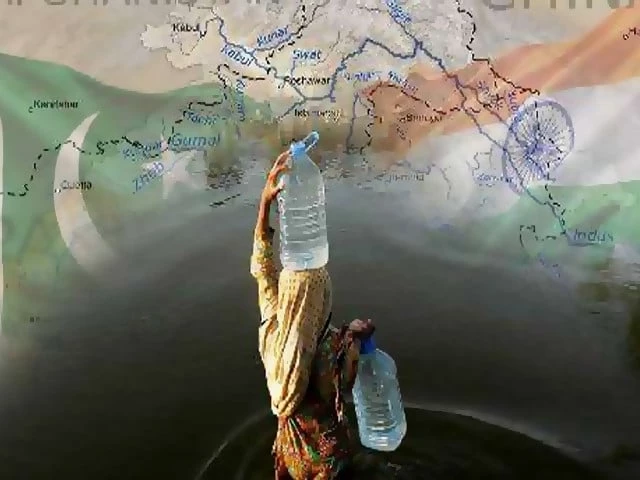
Pakistan has secured a significant international legal victory after the Permanent Court of Arbitration in The Hague ruled in Islamabad’s favor in a long-running dispute with India over hydroelectric projects on the western rivers governed by the Indus Waters Treaty (IWT).
The supplemental award, delivered after nearly a decade of proceedings, reinforced restrictions on India’s ability to control or manipulate water flows from rivers allocated primarily to Pakistan under the landmark 1960 treaty.
The ruling is being viewed in Islamabad as a major diplomatic and strategic success at a time of heightened tensions between the two nuclear-armed neighbors following the 2025 regional crisis.
Hague Court Upholds Pakistan’s Position
The dispute centered on India’s Kishenganga and Ratle hydroelectric projects being developed on rivers in the Indus basin flowing into Pakistan.
Pakistan had approached the Permanent Court of Arbitration in 2016, arguing that certain design features of the projects violated provisions of the Indus Waters Treaty.
The court’s latest supplemental award upheld Pakistan’s interpretation regarding “maximum pondage” limits — the amount of temporary water storage permitted for run-of-river hydroelectric projects.
According to the ruling, India cannot justify expanded water storage capacity using inflated technical assumptions or unsupported operational projections.
The decision strengthens Pakistan’s long-standing argument that hydroelectric projects on western rivers must strictly comply with treaty limitations from the planning stage onward.
Why the Indus Waters Treaty Matters
The Indus Waters Treaty, brokered by the World Bank in 1960, remains one of the world’s most important water-sharing agreements.
Under the treaty:
- India received control over the eastern rivers — Ravi, Beas, and Sutlej.
- Pakistan retained primary rights over the western rivers — Indus, Jhelum, and Chenab.
These western rivers are critical to Pakistan’s agriculture, hydropower generation, drinking water supply, and overall economic stability.
Experts estimate that Pakistan’s agricultural sector, which supports millions of livelihoods, depends heavily on uninterrupted water flow from the Indus basin.
Court Rejects Broad Indian Interpretation
The Hague tribunal ruled that operational limitations alone are insufficient to satisfy treaty obligations.
Instead, India must provide detailed technical and hydrological evidence demonstrating why specific pondage levels are necessary for actual project operations.
The award emphasized that:
- Installed power capacity must reflect realistic operational needs.
- Water storage assumptions must be scientifically justified.
- Project designs cannot rely on artificial load curves or exaggerated peaking requirements.
The ruling also strengthened Pakistan’s review rights by requiring India to provide sufficient technical information for treaty compliance assessments.
Legal experts say this significantly increases scrutiny over future Indian hydroelectric projects in disputed river systems.
India’s Boycott Did Not Halt Proceedings
One of the most striking aspects of the case was India’s refusal to participate in the proceedings.
Despite New Delhi’s boycott, the arbitration process continued, and the court ultimately delivered its ruling after nearly ten years of legal deliberations.
The development comes amid worsening bilateral tensions following India’s controversial move in 2025 to place the Indus Waters Treaty “in abeyance” after the Pahalgam attack.
Pakistan has repeatedly argued that the treaty contains no legal mechanism allowing unilateral suspension.
Analysts believe the Hague ruling indirectly reinforces the treaty’s binding nature and limits attempts to politically reinterpret its provisions.
Pakistan Calls Verdict a Strategic Success
Pakistan’s government welcomed the ruling with what officials described as “utmost satisfaction,” calling it a major consolidation of the country’s legal and treaty position.
Officials stated that the award confirmed substantive and enforceable restrictions on India’s ability to interfere with western river flows.
Islamabad also stressed that treaty compliance cannot depend on post-project assurances but must be integrated into the initial engineering and design framework.
The government indicated it would now use the ruling within ongoing Neutral Expert proceedings under the treaty mechanism.
Regional and Global Implications
The decision carries major implications for South Asian water security, regional diplomacy, and future infrastructure development in disputed river territories.
Water disputes between Pakistan and India have increasingly become intertwined with broader geopolitical tensions, especially after recent military confrontations and deteriorating diplomatic relations.
Climate experts warn that shrinking glaciers, population growth, and rising water demand are making the Indus basin one of the world’s most strategically sensitive river systems.
International observers say the Hague ruling could influence future cross-border water disputes globally by reinforcing principles of transparency, evidence-based engineering, and treaty accountability.
Analysis: A Diplomatic and Strategic Win for Pakistan
The ruling represents more than a technical legal decision — it is a strategic diplomatic victory for Pakistan at a time when regional tensions remain high.
For Islamabad, the verdict strengthens international recognition of its interpretation of the Indus Waters Treaty while reaffirming that disputes must be resolved through legal and diplomatic mechanisms rather than unilateral actions.
The decision may also complicate India’s future hydropower planning on western rivers by increasing the legal burden for demonstrating treaty compliance.
Experts believe the ruling reinforces the idea that international treaties governing shared natural resources cannot be easily bypassed during periods of political tension.
At a broader level, the case highlights how water security is emerging as one of the most critical geopolitical challenges facing South Asia in the coming decades.
With both Pakistan and India heavily dependent on the Indus river system, maintaining treaty mechanisms and communication channels will remain essential to preventing future regional crises.