A rare sporting encounter between North Korea and South Korea has captured international attention as Naegohyang Women’s FC prepares to face Suwon FC Women in the semi-finals of the Asian Women’s Champions League.
The visit marks the first time in eight years that a North Korean sports team has travelled to South Korea, underscoring the unusual diplomatic and symbolic significance surrounding the match.
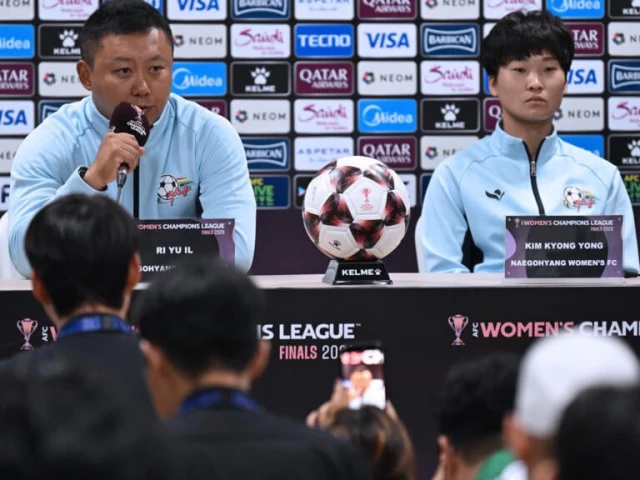
Despite intense media focus and emotional public interest, North Korean coach Ri Yu Il insisted his team’s sole objective was football.
“We are here solely to play football,” Ri told reporters during a press conference in London-style reserved fashion at the tournament venue in Suwon.
Rare North-South Sports Encounter Draws Attention
The match between Naegohyang Women’s FC and Suwon FC Women has generated significant public interest in South Korea.
More than 7,000 tickets reportedly sold out within hours after going on sale last week.
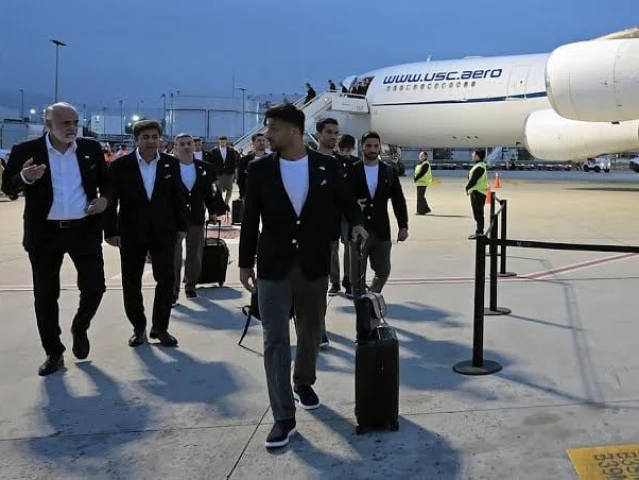
When the North Korean delegation arrived at Incheon International Airport on Sunday, players and officials were met by reporters and South Korean supporters carrying welcome banners and signs.
The event has become one of the most visible moments of inter-Korean sports interaction in recent years.
Civic Groups Plan Joint Support
According to organizers, approximately 3,000 spectators from South Korean civic groups are expected to attend the semi-final and cheer for both teams.
The initiative reportedly received support from Seoul’s unification ministry as part of broader people-to-people engagement efforts.
However, no official North Korean supporters will attend because North Korean citizens are generally prohibited from freely entering South Korea.
South Korean civic organizations have also reportedly coordinated with authorities regarding cheering practices due to legal restrictions surrounding the public display of North Korean national symbols.
Instead of North Korean flags, previous inter-Korean events have often used flags depicting the entire Korean Peninsula.
North Korean Team Avoids Political Questions
During Tuesday’s press conference, coach Ri Yu Il repeatedly avoided political questions and focused strictly on football.
“I’m not sure whether similar questions will continue to come up,” he said.
“For us, our focus is simply on doing our best to achieve a good result.”
Team captain Kim Kyong Yong also remained reserved during the media appearance.
“We will give our all to repay the trust and expectations of our people and our parents and families,” Kim stated.
Observers noted that both the coach and captain maintained highly disciplined and emotionless public demeanors throughout the press conference, with answers translated through a North Korean interpreter.
North Korea Dominated Earlier Match
The two clubs previously met during the tournament’s group stage, where Naegohyang secured a convincing 3-0 victory over Suwon FC Women.
However, Ri dismissed suggestions that the earlier result guaranteed an advantage in the semi-final.
“It would be absolutely wrong to say that one team is stronger or weaker based solely on those results,” he said.
The winner of the match will advance to the final against either:
- Melbourne City FC Women
- Tokyo Verdy Beleza
Women’s Football Remains North Korea’s Strongest Sport
Women’s football has long been one of North Korea’s most successful international sports programs.
FIFA currently ranks North Korea’s women’s national team 11th globally — significantly higher than the country’s men’s team, which sits far lower in world rankings.
North Korean women’s football teams have historically achieved success in:
- Asian competitions
- Youth World Cups
- International regional tournaments
Sports analysts say the country continues investing heavily in women’s football as one of its most internationally competitive sports.
Match Carries Broader Political Symbolism
Although officials on both sides have emphasized sportsmanship, the match inevitably carries political symbolism because relations between the two Koreas remain tense.
The Korean Peninsula technically remains in a state of war because the 1950–53 Korean War ended with an armistice rather than a formal peace treaty.
Seoul Pursuing Softer Engagement Approach
The sporting exchange comes as South Korean President Lee Jae Myung has pursued a relatively softer approach toward Pyongyang compared to his conservative predecessor.
However, North Korea has largely remained unresponsive to Seoul’s repeated proposals for unconditional dialogue.
Analysts say sports diplomacy has historically served as one of the few channels capable of easing tensions between the two sides during periods of political deadlock.
Analysis: Football Becomes Rare Space for Inter-Korean Contact
The Naegohyang visit demonstrates how sports continue functioning as a rare platform for interaction between North and South Korea despite ongoing geopolitical tensions.
While the North Korean delegation carefully avoided political discussion, the emotional response from South Korean fans reflects the powerful symbolic importance of even limited cultural exchanges across the divided peninsula.
The disciplined messaging from North Korean officials also illustrates Pyongyang’s continued caution regarding public engagement abroad.
At the same time, the enthusiasm surrounding the match suggests that sports diplomacy still retains the ability to temporarily soften political divisions that remain deeply entrenched at the governmental level.
As regional tensions persist, the semi-final represents more than a football match — it has become a symbolic moment of cautious human connection between two nations technically still at war.