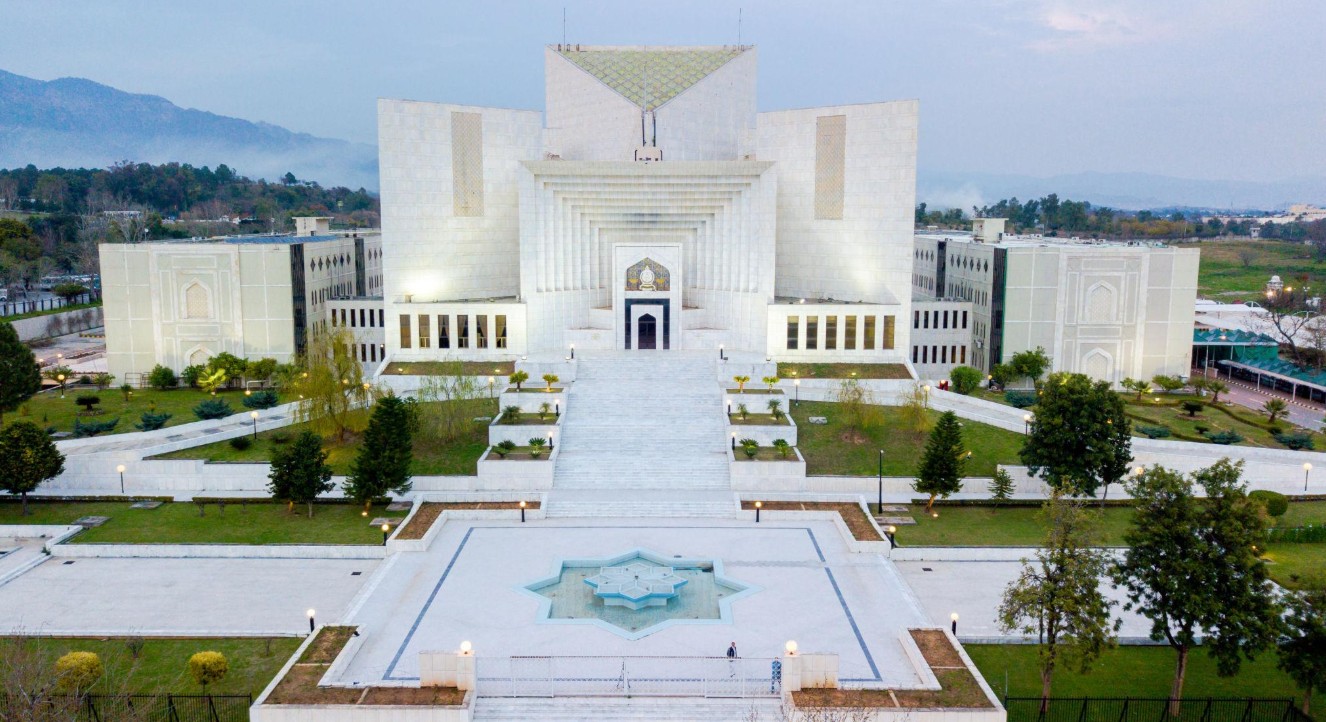
A significant legal and constitutional debate has emerged in Pakistan after the Supreme Court of Pakistan and the newly established Federal Constitutional Court issued sharply different interpretations regarding the government’s wedlock policy for civil servants.
The conflicting judgments have sparked growing discussion within Pakistan’s legal community about:
- Judicial hierarchy
- Constitutional authority
- Administrative rights of civil servants
- The binding nature of court rulings after constitutional reforms
Supreme Court Declares Wedlock Policy Creates Legitimate Expectation
In a recent 16-page judgment authored by Justice Muhammad Ali Mazhar, the Supreme Court held that the wedlock policy creates a “legitimate expectation” for married civil servants seeking transfers to remain stationed with their spouses.
The ruling emphasized that beneficial policies intended to support employees should be interpreted liberally to achieve their purpose.
“The policy creates a legitimate expectation for married civil servants that they will be accommodated rather than subjected to arbitrary deviation from the policy,” the judgment stated.
Female Civil Servant Wins Transfer Case
The ruling came during a case involving a female official from the Punjab Revenue Department whose transfer request under the wedlock policy had been rejected.
The Supreme Court overturned the decision of the Federal Service Tribunal and directed implementation of the policy.
The court also ordered the Registrar’s Office to forward a copy of the judgment to the Punjab chief minister for enforcement.
According to the judgment, the policy was originally introduced to reduce:
- Psychological stress
- Economic burden
- Family separation hardships faced by married government employees
The court noted that provincial authorities failed to justify why the policy directives had been ignored in the petitioner’s case.
Federal Constitutional Court Takes Opposite View
However, the Federal Constitutional Court recently adopted a different interpretation.
The FCC ruled that the wedlock policy is fundamentally an administrative and facilitative arrangement rather than a legally enforceable right.
According to the FCC:
- The policy cannot guarantee indefinite posting at a specific station
- Transfer powers remain under administrative authority
- Employees cannot claim permanent placement as a vested right
The court emphasized that workforce management and operational requirements remain within the lawful discretion of government authorities.
Legal Experts Note Growing Judicial Conflict
Senior lawyer Hafiz Ahsaan Ahmed Khokhar stated that the contradictory judgments have created a serious jurisprudential conflict between the country’s top constitutional forums.
He explained that:
- The Supreme Court views the policy as binding and expectation-based
- The FCC sees it as an administrative convenience without enforceable permanence
According to Khokhar, this divergence raises major constitutional questions about:
- Judicial consistency
- Institutional coherence
- Constitutional interpretation
- Precedential authority
Debate Intensifies After Constitutional Reforms
The issue has gained additional significance following Pakistan’s recent constitutional restructuring and the establishment of the Federal Constitutional Court.
Legal observers say the dispute now directly intersects with amended Article 189 of the Constitution of Pakistan, which governs the binding authority of judicial decisions.
Questions Over Which Court’s Interpretation Prevails
One of the biggest emerging legal debates concerns whether FCC rulings now supersede or bind Supreme Court jurisprudence in constitutional matters after the 27th Amendment.
Some lawyers argue:
- FCC constitutional interpretations may now carry greater authority
- Supreme Court administrative rulings could face limitation in constitutional conflicts
Others maintain that the relationship between the two courts remains legally unsettled.
This uncertainty is expected to generate further constitutional litigation in the coming months.
Wedlock Policy Long Considered Employee Welfare Measure
Pakistan’s wedlock policy was originally introduced as a welfare-oriented administrative mechanism aimed at allowing married civil servants to work in the same city or station whenever possible.
The policy particularly affects:
- Female civil servants
- Dual-government-employed couples
- Teachers
- Provincial administrative officers
- Health sector employees
Supporters argue the policy:
- Protects family stability
- Improves mental wellbeing
- Reduces financial hardship
- Increases workplace productivity
Critics, however, argue unrestricted implementation could:
- Disrupt administrative efficiency
- Limit transfer flexibility
- Create staffing imbalances
Supreme Court Emphasizes Beneficial Interpretation
Justice Mazhar’s ruling strongly endorsed the doctrine of beneficial construction, under which welfare-oriented policies should be interpreted in favor of intended beneficiaries.
The judgment stated:
“Any ambiguity should be resolved in the best interest of the intended beneficiaries.”
The court further noted that authorities had not demonstrated:
- That the policy had expired
- That it had been lawfully withdrawn
- That operational reasons justified ignoring it
Analysis: Judicial Divergence Signals Constitutional Uncertainty
The conflicting rulings reflect a broader transformation underway within Pakistan’s judicial and constitutional structure following recent institutional reforms.
Beyond the wedlock policy itself, the dispute raises larger questions about:
- Division of judicial authority
- Constitutional supremacy
- Administrative discretion
- The evolving balance between courts
For civil servants, the uncertainty creates practical concerns over whether the wedlock policy can still be relied upon as a protected expectation.
For Pakistan’s legal system, the disagreement may become one of the first major tests of:
- The FCC’s constitutional role
- Post-amendment judicial hierarchy
- Institutional coordination between superior courts
Analysts believe the issue could eventually require:
- A larger constitutional bench
- Legislative clarification
- Formal interpretation under Article 189
Until then, the wedlock policy is likely to remain legally contested between two competing judicial philosophies — welfare protection versus administrative flexibility.