Iran has strongly condemned what it described as a new US military strike near Bandar Abbas in southern Iran, accusing United States of repeatedly violating the fragile ceasefire and escalating instability across the Gulf region.
Iranian Foreign Ministry spokesperson Esmaeil Baghaei called the strike a “flagrant violation” of international law and the UN Charter, warning that Tehran reserves the right to respond under Article 51 of the United Nations Charter.
Iran Accuses US of Repeated Ceasefire Breaches
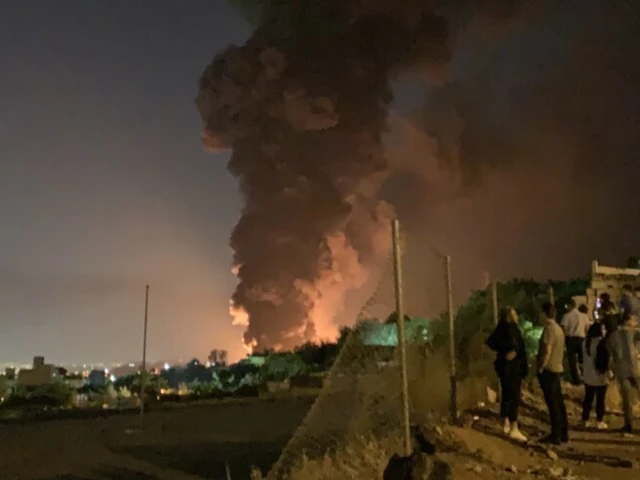
According to Iranian officials, the alleged US attack near Bandar Abbas occurred early Thursday and targeted areas close to the strategic port city and airport facilities.
Baghaei accused Washington of:
- Violating Iran’s territorial sovereignty
- Undermining regional stability
- Threatening neighbouring countries
- Escalating tensions despite ceasefire commitments
He further claimed the United States had repeatedly breached the ceasefire that took effect on April 8 through:
- Airstrikes in southern Iran
- Maritime actions in Gulf waters
- Pressure on commercial shipping routes
Tehran Demands UN Action
Iran urged the United Nations Security Council to intervene and hold Washington accountable for what Tehran described as aggression against Iranian sovereignty.
Baghaei said:
“The UN Security Council is obligated to fulfil its legal responsibility.”
Iran also condemned what it described as threatening rhetoric by American officials toward regional countries, including Oman, which has played a mediating role in ongoing diplomatic efforts.
IRGC Claims Strike on US Base in Kuwait
The situation escalated further after Iran’s Islamic Revolutionary Guard Corps (IRGC) claimed responsibility for a retaliatory strike targeting a US airbase in Kuwait.
According to Iran’s semi-official Tasnim News Agency, the IRGC said the operation was launched in response to the American aerial attack near Bandar Abbas Airport.
“This response is a serious warning so that the enemy knows that aggression will not go unanswered,” the IRGC statement said.
There was no immediate official confirmation from the US military regarding the Iranian claim.
US Says Operations Were Defensive
A US official quoted in reports said American forces:
- Shot down four Iranian drones
- Struck a drone control station near Bandar Abbas
- Acted to protect forces near the Strait of Hormuz
The official described the operations as:
- “Measured”
- “Purely defensive”
- Intended to maintain the ceasefire
Strait of Hormuz Crisis Deepens
The latest confrontation has again placed global attention on the Strait of Hormuz, one of the world’s most strategically important energy chokepoints.
Iranian authorities also claimed:
- An IRGC naval unit forced a US tanker to retreat
- Warning shots were fired near the strait
- The vessel allegedly had its radar switched off
Oil Markets React to Escalation
The renewed military tensions caused:
- Oil prices to rise again
- Stock markets to weaken
- Investors to fear disruption to Gulf shipping routes
Analysts warn any sustained conflict near Hormuz could severely impact:
- Global oil supplies
- Maritime trade
- Energy prices worldwide
EU Warns Strait of Hormuz in “Strange State”
Kaja Kallas said Thursday that the Strait of Hormuz remains in a “strange state between war and peace,” emphasizing that freedom of navigation is essential for global economic stability.
European officials continue urging:
- Diplomatic engagement
- De-escalation
- Protection of maritime routes
Iran Refuses to Retreat on “Red Lines”
Senior Iranian lawmaker Ibrahim Azizi said Tehran would not compromise on key issues despite pressure from President Trump.
Iran’s stated “red lines” include:
- Uranium enrichment rights
- Control over the Strait of Hormuz
- Removal of sanctions
- Retention of enriched uranium stockpiles
Hezbollah-Israel Tensions Also Intensify
The broader regional situation remains volatile as clashes continue between Hezbollah and Israeli forces.
According to reports:
- Hezbollah carried out dozens of attacks over 24 hours
- Israeli soldiers were killed and injured in drone strikes
- Israel is seeking additional US support against drone threats
Analysis: Ceasefire Appears Increasingly Fragile
The latest exchange between Tehran and Washington highlights how unstable the current ceasefire environment remains.
While both sides publicly claim to support diplomacy, military actions continue escalating across:
- Southern Iran
- Gulf waters
- Regional proxy fronts
Iran’s warnings suggest Tehran is attempting to:
- Deter further US operations
- Demonstrate military capability
- Strengthen negotiating leverage
Meanwhile, Washington appears focused on:
- Protecting naval routes
- Limiting Iranian military activity
- Maintaining regional deterrence
Analysts warn that repeated “defensive” strikes and retaliatory responses risk triggering:
- A broader Gulf conflict
- Maritime disruption
- Expanded regional warfare involving proxy groups
With tensions rising simultaneously in:
- The Gulf
- Lebanon
- Israel
- The Black Sea
global powers are increasingly concerned that isolated confrontations could evolve into a wider international security crisis.