Pakistan and Saudi Arabia have agreed to expand bilateral security cooperation, including specialised training for 200 personnel from Pakistan’s Federal Constabulary (FC) Special Diplomatic Protection Unit in Saudi Arabia.
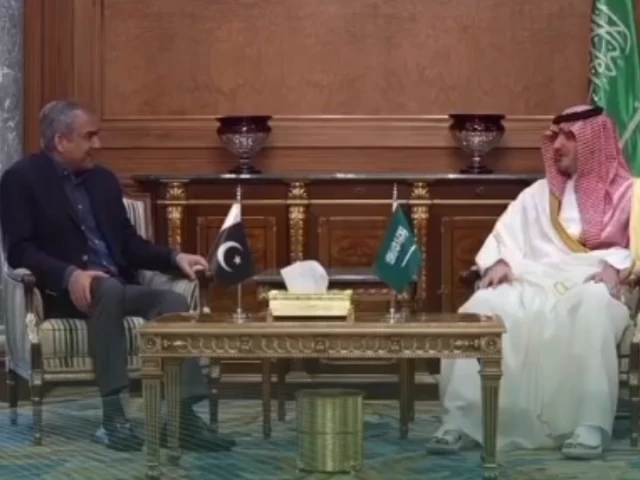
The decision was reached during a high-level meeting between Pakistan’s Interior Minister Mohsin Naqvi and Saudi Interior Minister Abdulaziz bin Saud Al Saud, according to Pakistan’s Interior Ministry on Thursday.
Pakistan-Saudi Security Cooperation Expands
The agreement marks another step in deepening strategic and security collaboration between Islamabad and Riyadh at a time of heightened regional instability across the Middle East and South Asia.
According to the Interior Ministry:
- 200 FC Special Diplomatic Protection Unit personnel will undergo training in Saudi Arabia
- Both countries discussed internal security cooperation
- Regional security developments were reviewed
- Further institutional coordination was agreed upon
High-Level Saudi Delegation to Visit Pakistan
Officials also confirmed that a senior delegation from Saudi Arabia’s Ministry of Interior will soon visit Pakistan to strengthen cooperation mechanisms and advance bilateral security coordination.
The upcoming visit is expected to focus on:
- Counterterrorism cooperation
- Diplomatic security training
- Intelligence coordination
- Capacity-building initiatives
- Regional security consultations
Mohsin Naqvi Praises Saudi Hajj Arrangements
During the meeting, Naqvi congratulated Saudi authorities on what he described as successful and well-organised Hajj arrangements for millions of pilgrims.
The two ministers also exchanged:
- Eidul Azha greetings
- Best wishes
- Diplomatic messages of goodwill
Saudi Interior Minister Prince Abdulaziz bin Saud also congratulated Naqvi on completing Hajj.
Regional Security Situation Discussed
The ministers held detailed discussions on the latest regional developments, including ongoing tensions in the Middle East.
According to the Pakistani Interior Ministry, the Saudi side appreciated Pakistan’s:
- Diplomatic engagement
- Mediation efforts
- Role in reducing regional tensions
The acknowledgment comes as Pakistan has increasingly positioned itself as a diplomatic intermediary in ongoing regional disputes involving:
- Iran
- Gulf states
- The United States
- Broader Middle East tensions
Strategic Importance of Security Partnership
Pakistan and Saudi Arabia have long maintained close defence and security relations based on:
- Military cooperation
- Religious ties
- Economic partnerships
- Regional strategic coordination
Saudi Arabia has historically supported Pakistan through:
- Financial assistance
- Energy cooperation
- Security collaboration
- Defence partnerships
Meanwhile, Pakistan has provided:
- Military expertise
- Security training
- Defence support
- Counterterrorism cooperation
FC Diplomatic Protection Unit Gains International Role
The Federal Constabulary’s Special Diplomatic Protection Unit plays a key role in:
- Protecting diplomatic missions
- Securing foreign delegations
- Supporting high-risk security operations
- Assisting in sensitive internal security assignments
Training in Saudi Arabia is expected to enhance:
- Tactical capabilities
- VIP protection standards
- Counterterrorism readiness
- Crisis response operations
Pakistan Increasingly Active in Regional Diplomacy
The development comes amid Pakistan’s growing diplomatic engagement across the region.
In recent weeks, Islamabad has:
- Held talks with Iranian leadership
- Coordinated with Gulf states
- Participated in ceasefire diplomacy
- Engaged major international stakeholders
Officials say Pakistan is attempting to position itself as:
- A regional stabiliser
- A mediator
- A trusted diplomatic actor
Saudi Arabia Strengthening Regional Alliances
For Riyadh, strengthening security ties with Pakistan aligns with broader efforts to:
- Enhance regional security partnerships
- Counter emerging threats
- Improve defence preparedness
- Expand cooperation with key Muslim-majority allies
Saudi Arabia continues to play a major role in:
- Gulf security architecture
- Counterterrorism coordination
- Regional diplomatic initiatives
Analysis: Security Cooperation Reflects Wider Regional Realignment
The agreement between Pakistan and Saudi Arabia reflects a broader regional trend toward deeper strategic coordination amid rising geopolitical uncertainty.
With tensions continuing across:
- The Gulf region
- Iran-US relations
- Red Sea shipping routes
- Regional proxy conflicts
countries are increasingly prioritising:
- Security partnerships
- Military readiness
- Intelligence cooperation
- Diplomatic coordination
For Pakistan, the partnership strengthens ties with one of its most important strategic and economic allies while enhancing professional security capabilities.
For Saudi Arabia, closer coordination with Pakistan provides access to:
- Experienced security personnel
- Counterterrorism expertise
- Reliable regional defence cooperation
Analysts say the agreement also signals continued alignment between Islamabad and Riyadh at a time when regional diplomacy and security dynamics are rapidly evolving.