
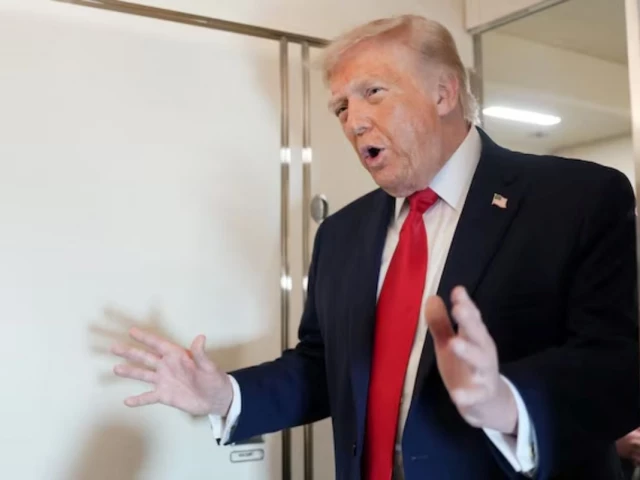
WASHINGTON/TEHRAN: Tensions between the United States and Iran escalated sharply on Wednesday after US President Donald Trump warned that Tehran would “pay the price” for delaying negotiations, while both countries exchanged accusations and military actions amid growing instability in the Gulf region.
The latest developments come after US forces launched strikes against Iranian military targets in southern Iran, which Washington described as a “self-defence” response following the reported downing of a US Apache helicopter near the Strait of Hormuz.
Trump Issues Strong Warning
In a series of posts on Truth Social, President Donald Trump claimed that Iran had failed to reach a diplomatic agreement in time and would now face the consequences.
Trump asserted that Iran’s military capabilities had been severely weakened and described the country as facing increasing economic and military pressure.
He also praised the US naval presence in the Gulf, calling it one of the most effective maritime blockades in history and claiming that Iran’s economic activities had been significantly disrupted.
The remarks signal a further hardening of Washington’s stance toward Tehran at a time when diplomatic efforts remain fragile.
US Launches Strikes on Iranian Targets
According to the US Central Command (CENTCOM), American forces carried out what it described as “self-defence strikes” against Iranian air defence systems, radar installations, command facilities and surveillance sites near the Strait of Hormuz.
US officials said the operation was launched after an Apache helicopter was allegedly brought down during a patrol mission in the strategic waterway.
The Pentagon stated that the strikes were limited and proportional, targeting facilities linked to threats against US personnel and international maritime traffic.
House Speaker Mike Johnson also described the operation as defensive in nature, saying congressional leaders had been informed before the action began.
Iran Vows Retaliation
Iran strongly condemned the US attacks, describing them as a violation of its sovereignty and international law.
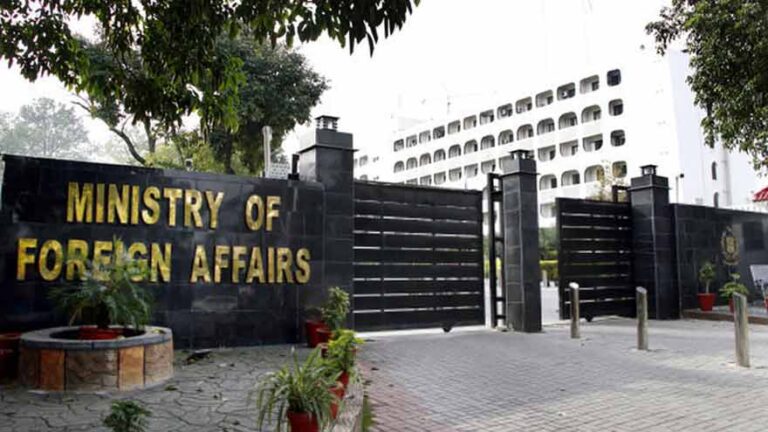
The Iranian Foreign Ministry stated that Tehran would not hesitate to exercise its right to self-defence and warned that any attack on Iranian territory would receive a decisive response.
Foreign Minister Abbas Araghchi said Iran preferred diplomacy but stressed that the country would defend itself against any aggression.
“Our powerful armed forces will leave no attack or threat unanswered,” Araghchi declared.
Iran also warned regional countries against allowing their territories or military facilities to be used for operations against Tehran.
Revolutionary Guard Claims Regional Attacks
Iran’s Islamic Revolutionary Guard Corps (IRGC) claimed it launched retaliatory strikes against multiple American military targets across the region.
According to Iranian statements, missiles and drones targeted installations in Jordan, Kuwait and Bahrain, while an MQ-9 drone was reportedly shot down over southern Iran.
The IRGC further claimed that operations had been conducted against the US Fifth Fleet in Bahrain and warned of stronger responses if hostilities continued.
Authorities in Jordan, Kuwait and Bahrain confirmed that air defence systems had been activated and that several aerial threats were intercepted.
Pezeshkian Calls for Dignity and Unity
Iranian President Masoud Pezeshkian said the country must move beyond the current situation of “no war, no peace” and seek a path that protects national dignity and stability.
Speaking in Tehran, he said war was not in Iran’s interest but stressed that the nation would never surrender under military pressure.
“We must move forward with dignity in a way that saves the future of our country from crises and storms,” he said.
The president acknowledged that sanctions, economic restrictions and regional instability had created serious challenges for Iran but urged national unity in the face of external pressure.
Russia and China Call for Restraint
The latest confrontation has triggered concern among major world powers.
Russia said it was “extremely concerned” about the growing conflict and urged all parties to immediately halt military actions and return to diplomacy.
China also expressed deep concern over the escalation, calling on Washington and Tehran to exercise restraint and pursue political and diplomatic solutions.
Beijing stressed the importance of achieving a comprehensive and lasting ceasefire to prevent a wider regional crisis.
Diplomacy Under Pressure
Iranian officials accused both the United States and Israel of undermining diplomatic efforts through repeated military actions and ceasefire violations.
Foreign Ministry spokesperson Esmaeil Baghaei said meaningful negotiations could not progress without a stable environment and accused Washington of sending contradictory signals regarding diplomacy.
Despite the renewed violence, officials from both sides have suggested that indirect negotiations remain possible.
Reports indicate that discussions regarding a broader agreement covering regional security and Iran’s nuclear programme remain under consideration, although significant differences continue to separate the two sides.
Regional Stability at Risk
The latest military exchanges have raised fears of a wider conflict across the Middle East, particularly around the Strait of Hormuz, one of the world’s most important energy shipping routes.
Any prolonged disruption in the region could impact global energy markets, trade routes and international security.
As diplomatic efforts continue behind the scenes, international observers warn that further escalation could undermine regional stability and make a negotiated settlement increasingly difficult to achieve.
For now, the situation remains highly volatile, with both Washington and Tehran maintaining strong rhetoric while the international community urges restraint and renewed dialogue.