RIYADH: Saudi Arabia’s ambitious football revolution has transformed the country into one of the sport’s biggest global talking points, but as the FIFA World Cup approaches, questions remain about whether massive investment in the domestic game has truly strengthened the national team.
Despite spending billions of dollars to attract some of football’s biggest stars and securing hosting rights for the 2034 FIFA World Cup, Saudi Arabia enters the tournament under pressure after a series of disappointing performances and managerial changes.
Football Investment Captures Global Attention
Over the past three years, Saudi Arabia has invested heavily in football as part of its broader Vision 2030 strategy aimed at diversifying the economy and increasing global influence through sports.
The Saudi Pro League attracted worldwide headlines after signing international superstars including Cristiano Ronaldo, Neymar and Karim Benzema on lucrative contracts.
The spending spree elevated the league’s international profile and helped Saudi Arabia secure hosting rights for the 2034 FIFA World Cup.
However, while club football has flourished commercially, the national team has struggled to maintain its competitiveness on the international stage.
From Argentina Upset to Recent Decline
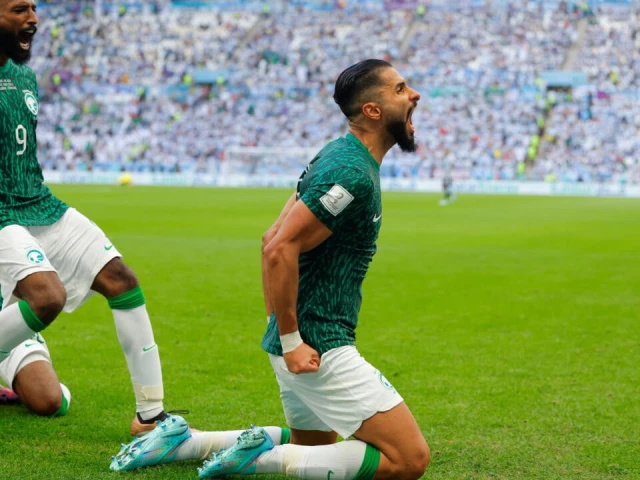
Saudi Arabia earned worldwide praise during the 2022 FIFA World Cup after producing one of the greatest upsets in tournament history by defeating eventual champions Argentina National Football Team in the group stage.
The victory became a defining moment in Saudi football history and raised expectations for future tournaments.
Since then, however, results have been inconsistent.
The Green Falcons narrowly secured qualification for the expanded 2026 World Cup through the playoff route, advancing from a qualifying group that included Indonesia and Iraq.
Heavy defeats, including a 4-0 loss to Egypt and another setback against Serbia earlier this year, ultimately led to the departure of French coach Herve Renard.
New Coach Faces Immediate Challenge
Saudi Arabia appointed Greek manager Georgios Donis just two months before the World Cup.
The new coach has acknowledged the challenges facing the national side, particularly the reduced playing opportunities available to local players.
“The Saudi players are learning from experienced international players, which is positive,” Donis said.
“On the other hand, they do not have the same chances to play as they did before.”
According to the coach, regular playing time remains crucial for player development and national team success.
“We need players to have rhythm and match fitness. That is very important in football,” he added.
Foreign Stars Impact Local Development
Football analysts believe the rapid influx of foreign talent has unintentionally limited opportunities for Saudi players.
According to sports analyst Amro Elserty, Saudi football previously benefited from a highly competitive domestic league dominated by local talent.
“Saudi clubs began replacing local players with foreign signings across multiple positions,” he explained.
“Not only world-class stars but also experienced international professionals who now occupy positions where Saudi players previously developed.”
As a result, many domestic players have seen reduced playing time, affecting the national team’s depth and competitiveness.
Tough Group Awaits Saudi Arabia
Saudi Arabia faces a difficult challenge at the World Cup after being drawn into Group H alongside strong opponents.
The Green Falcons will compete against:
- Spain National Football Team
- Uruguay National Football Team
- Cape Verde National Football Team
Despite the tough draw, the tournament’s expanded format provides additional hope.
For the first time in World Cup history, 48 teams will participate, and several third-placed teams will advance to the knockout stage.
Donis remains optimistic.
“The Saudi players have talent. They must continue working, continue believing, and show they deserve their opportunity,” he said.
“It’s not easy, but we can make the best of it.”
Pressure Builds Ahead of 2034 World Cup
Saudi Arabia’s participation in this World Cup is being viewed as an important milestone on the road to hosting the 2034 tournament.
Experts believe the country’s football leadership will closely evaluate the team’s progress over the coming years.
Sports business expert Simon Chadwick noted that expectations are significantly higher following Saudi Arabia’s football investments.
“The pressure is on,” he said.
“This World Cup is a checkpoint on the journey toward 2034.”
The tournament will offer valuable insight into whether Saudi Arabia’s football transformation is producing long-term benefits beyond club-level success.
National Team Still Searching for Balance
While Saudi Arabia has successfully established itself as a major player in global football through investment and infrastructure development, challenges remain in balancing commercial ambitions with national team development.
Only one player in the current squad, full-back Saud Abdulhamid, currently plays club football outside Saudi Arabia, highlighting the limited international exposure among the team’s core players.
As the Green Falcons prepare for another World Cup campaign, fans will be hoping that the nation’s football revolution can finally translate into success on the sport’s biggest stage.
For Saudi Arabia, the upcoming tournament is more than a competition—it is a crucial test of whether billions invested in football can ultimately deliver results where it matters most: on the field.