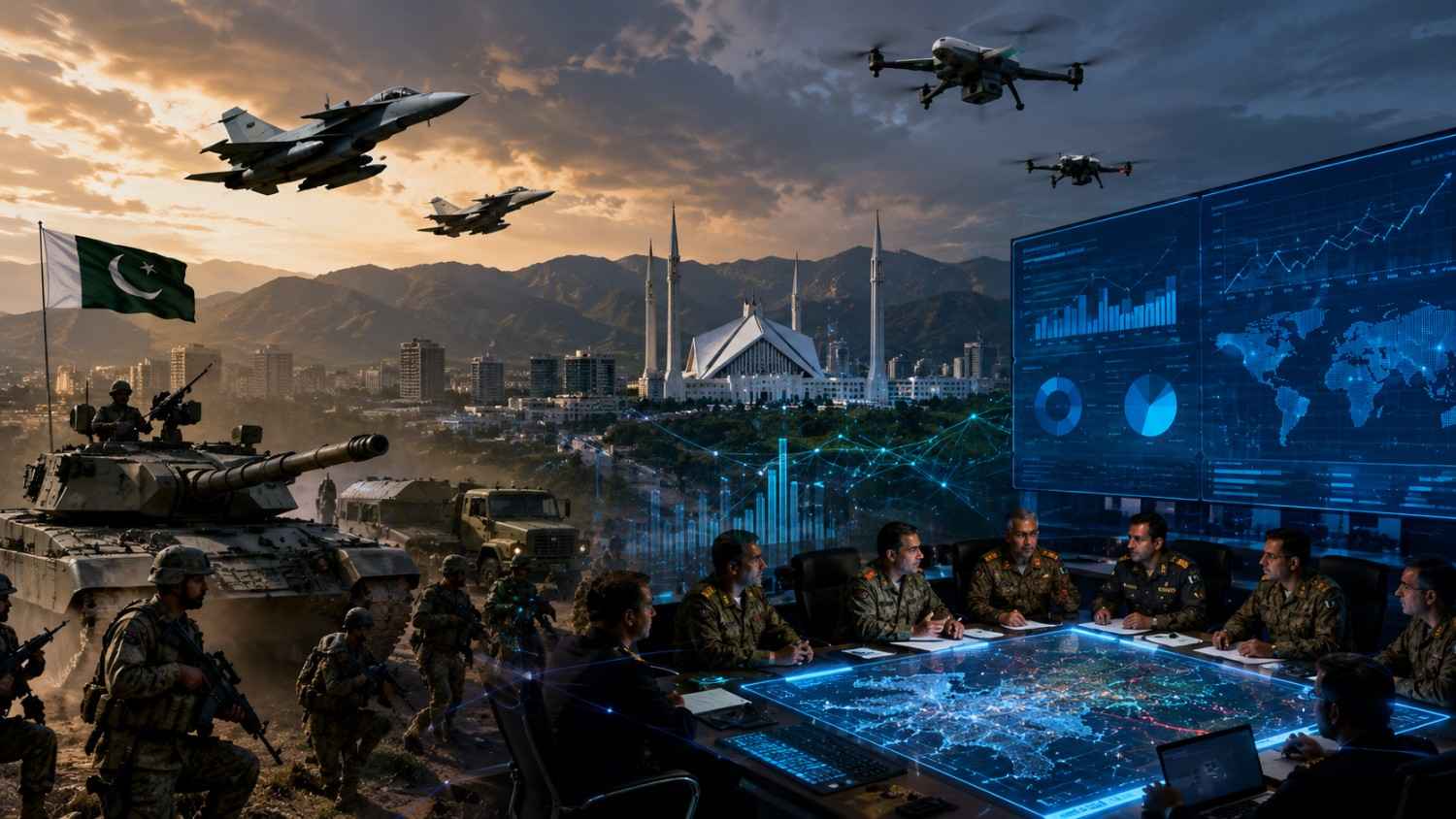
ISLAMABAD: The federal government has proposed a significant increase in Pakistan’s defence budget for the fiscal year 2026-27, allocating Rs3.01 trillion to strengthen national security amid growing regional tensions, terrorism threats, and evolving warfare technologies.
The new allocation represents a 17.6 percent increase compared to the previous year’s defence budget and reflects Islamabad’s determination to maintain military readiness in an increasingly volatile security environment.
Defence Allocation Crosses Rs3 Trillion
According to the federal budget presented in the National Assembly, defence spending has been increased from Rs2.557 trillion in the outgoing fiscal year to Rs3.01 trillion for FY2026-27.
The revised defence expenditure for the current fiscal year reached Rs2.595 trillion due to additional operational requirements and emerging security concerns.
Government officials said the increase was necessary to address both conventional and non-conventional security threats facing Pakistan on multiple fronts.
Growing Security Concerns Shape Budget Priorities
Pakistan continues to face a complex security environment characterized by regional instability, border tensions, and rising terrorist activities.
Relations with Afghanistan remain strained amid concerns over cross-border militant activity, while tensions with India continue despite the absence of active military conflict following recent confrontations.
Security experts note that Pakistan’s defence planners are now required to prepare for a broader spectrum of threats, including:
- Cross-border terrorism
- Drone warfare
- Cyber attacks
- Information warfare
- Electronic warfare
- Artificial intelligence-based military systems
- Space-based surveillance technologies
Officials believe modern conflicts increasingly rely on technological superiority rather than conventional troop deployments alone.
Defence Minister Calls Increase a National Necessity
Defence Minister Khawaja Muhammad Asif defended the increase in military spending, describing it as a vital requirement under current circumstances.
Speaking after the budget presentation, he said Pakistan’s armed forces had demonstrated exceptional professionalism during recent security challenges and regional tensions.
According to the minister, the regional environment has become more uncertain due to ongoing geopolitical developments involving Iran, Israel, the United States, and India’s evolving military posture.
He stressed that maintaining a strong and modern defence capability remains essential for safeguarding Pakistan’s sovereignty and national interests.
Defence Spending to Remain Around 2% of GDP
Budget documents show that defence expenditure will account for approximately 2 percent of Pakistan’s Gross Domestic Product (GDP), slightly higher than last year’s 1.97 percent.
The allocation does not include:
- Rs822 billion allocated for military pensions
- Rs319 billion reserved under the Armed Forces Development Programme
These expenditures are accounted for separately within the overall federal budget framework.
Breakdown of Defence Expenditure
According to official budget documents, the proposed defence allocation includes:
Salaries and Employee-Related Expenses
Rs967 billion has been allocated to cover salaries, allowances, and other employee-related expenditures for military personnel.
Operating Costs
A total of Rs743 billion has been earmarked for operational expenses, including logistics, maintenance, training, and readiness activities.
Weapons and Equipment
Rs925 billion has been allocated for weapons procurement, ammunition, military equipment, and modernization programs.
Infrastructure and Civil Works
Rs363 billion has been reserved for military infrastructure projects, facility upgrades, and construction activities.
Focus on Military Modernization
Security analysts believe the increased budget will support Pakistan’s ongoing military modernization efforts.
Recent conflicts in Ukraine and the Middle East have highlighted the importance of emerging technologies such as drones, cyber capabilities, advanced air defence systems, and artificial intelligence-driven battlefield operations.
Pakistan is expected to continue investing in:
- Next-generation fighter aircraft
- Advanced drone systems
- Cyber warfare capabilities
- Integrated air defence networks
- Electronic warfare platforms
- Intelligence and surveillance systems
Experts suggest that future military preparedness will increasingly depend on technological adaptation rather than traditional force structures alone.
Regional Defence Spending Continues to Rise
Pakistan’s defence budget increase comes amid rising military expenditures across the region.
India recently announced a defence allocation of approximately $86 billion for FY2026-27, reflecting a 15 percent increase from the previous year.
The widening gap in defence spending remains a concern for Pakistani security planners, who emphasize the importance of maintaining credible deterrence capabilities and preserving strategic stability in South Asia.
Balancing Security and Development
Traditionally, increases in defence spending have generated debate regarding resource allocation between security and social welfare sectors.
However, analysts note that criticism has been relatively limited this year due to growing concerns about terrorism, regional instability, and emerging security threats.
Government officials maintain that economic development and national security are closely linked, arguing that a secure environment is essential for investment, growth, and long-term prosperity.
Looking Ahead
The proposed defence budget reflects Pakistan’s effort to adapt to a rapidly changing security landscape marked by regional tensions, technological transformation, and unconventional threats.
As the country navigates challenges on both its eastern and western borders, policymakers believe strengthening military preparedness and modernizing defence capabilities remain critical priorities for safeguarding national security and ensuring regional stability.