ISLAMABAD: Defence Minister Khawaja Asif on Tuesday said Pakistan’s economy has emerged from a period of severe financial distress and is now showing signs of recovery, expressing optimism that the country could achieve a growth rate of 6 to 7 percent within the next few years.
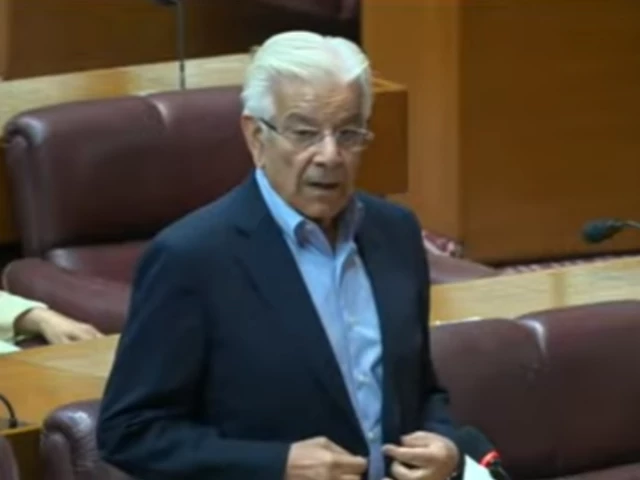
Speaking during a session of the National Assembly, Asif said the government inherited an economy on the verge of insolvency but managed to stabilize it through difficult reforms and support from the International Monetary Fund (IMF).
Economy Moving Out of Crisis
Addressing lawmakers, the defence minister described the country’s current economic situation as a significant improvement compared to three years ago.
“Pakistan’s economy was in the ICU when we took office. Today, it is breathing again,” he said.
Asif clarified that while Pakistan had not fully recovered, key economic indicators suggested gradual progress.
“We were suffering, but from insolvency we are now solvent,” he remarked, adding that the country’s economic direction was encouraging.
“Our trajectory shows that within one or two years Pakistan can achieve a growth rate of 6 to 7 percent,” he stated.
Inflation and Fuel Prices Linked to Global Markets
The minister acknowledged public concerns regarding inflation and fuel prices but stressed that domestic energy costs remain closely linked to international market trends.
“When people demand lower petrol prices, they should understand that prices in global markets have not decreased significantly,” he said.
He noted that international economic developments continue to influence Pakistan’s domestic economy, particularly energy imports and inflationary pressures.
Expanding the Tax Base
Discussing taxation reforms, Asif emphasized the need to broaden the country’s tax net instead of placing additional burdens on existing taxpayers.
“We know there are multiple taxes embedded in daily transactions. There are around 25 different types of levies built into purchases,” he said.
The defence minister argued that sustainable economic growth requires greater participation in the tax system.
“The only solution is for all 250 million Pakistanis to contribute taxes according to their capacity,” he said.
He added that the government must create an environment where paying taxes becomes a source of pride rather than a burden.
Pakistan’s Role in US-Iran Understanding
Khawaja Asif also highlighted Pakistan’s diplomatic efforts in facilitating recent progress between the United States and Iran, describing it as a significant foreign policy achievement.
He praised both the civilian and military leadership for their role in helping create conditions for dialogue.
“Pakistan’s role was recognized internationally,” he said.
“These moments come once in generations and become golden chapters in a nation’s history.”
The minister thanked Pakistan’s leadership and institutions involved in diplomatic efforts, saying they had successfully helped achieve what many considered impossible.
He also noted that improved relations between Iran and the international community could create new economic opportunities for Pakistan.
Potential Economic Benefits from Improved Iran Relations
Asif said the easing of sanctions on Iran could open doors for greater regional cooperation and trade.
“Pakistan can benefit immensely from developments involving Iran, particularly in the energy sector,” he said.
According to the minister, Balochistan stands to gain significantly from enhanced regional connectivity and economic cooperation.
“The biggest beneficiary of these developments could be Balochistan,” he added.
Security Challenges Remain
While discussing the economy, the defence minister also addressed Pakistan’s security situation, particularly in Balochistan and Khyber-Pakhtunkhwa.
He stressed that terrorism should be viewed as a national challenge rather than a political issue.
“If roads in Balochistan are unsafe and terrorist incidents continue, then it is the collective responsibility of all of us,” he said.
Asif acknowledged the sacrifices made by security personnel and highlighted the human cost of ongoing counterterrorism operations.
“I have attended 21 funerals in recent days. Many young soldiers leave behind families and children while protecting the country,” he stated.
Afghanistan and Regional Security
The minister said Pakistan had repeatedly engaged with Afghan authorities to address cross-border security concerns but had struggled to obtain firm guarantees regarding militant activity.
“We wanted one assurance—that Afghan soil would not be used against Pakistan,” he said.
According to Asif, Pakistan remained open to dialogue but expected practical outcomes from future engagements.
He also reflected on the long-term consequences of regional conflicts and Pakistan’s involvement in previous international wars, saying the country continues to face the fallout of those decisions.
Call for National Unity
Concluding his address, the defence minister urged political parties to rise above partisan differences and focus on national interests.
“This House represents the entire federation. We must speak the language of Pakistan rather than engage in political point-scoring,” he said.
Asif maintained that economic recovery, improved diplomacy and national security require collective efforts and political stability to ensure long-term progress.