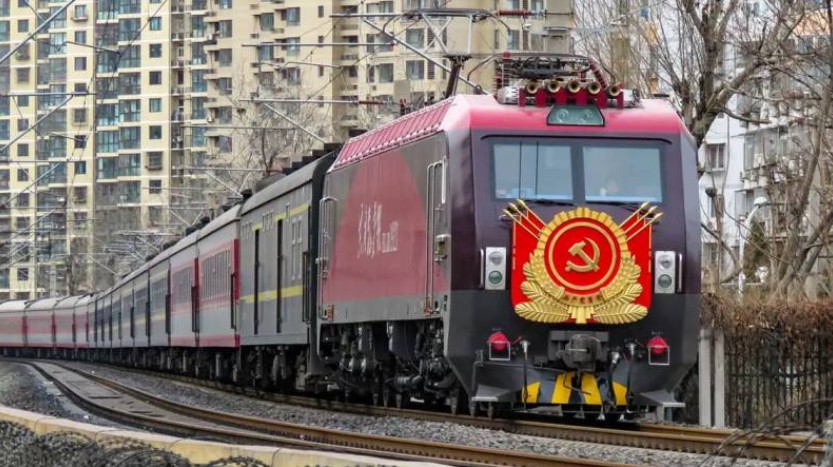
BEIJING/PYONGYANG: Passenger train services between China and North Korea resumed on Thursday after a six-year hiatus, with the first train departing Beijing Railway Station bound for Pyongyang, marking the end of a suspension that began during the Covid-19 pandemic in 2020 .
The K27 train departed Beijing at 5:26 p.m. local time and is scheduled to arrive in the North Korean capital at 6:07 p.m. on Friday, completing a journey of approximately 25 hours . The train makes stops in Tianjin, Shanhaiguan, Shenyang, and the border city of Dandong, where passenger cars are transferred for crossing into North Korea at Sinuiju before continuing to Pyongyang .
Service Details
According to China’s National Railway Group, the resumption includes two routes:
- Beijing-Pyongyang: Operates four days weekly (Monday, Wednesday, Thursday, Saturday) in both directions
- Dandong-Pyongyang: Operates daily in both directions
Ticket prices for the Beijing-Pyongyang route start at approximately 1,000 yuan (about $138) for sleeper accommodations .
Passengers complete entry and exit procedures at the Dandong border crossing in China and at Sinuiju in North Korea . Tickets are currently available for offline purchase at designated sales points in Beijing, Tianjin, Shanhaiguan, Shenyang, and Dandong, as well as at Pyongyang station .
Restricted Access
Travel agencies report that tickets are currently restricted to travelers holding business visas, primarily including Chinese nationals working or studying in North Korea, North Koreans engaged in cross-border business, government officials, and journalists . A Beijing travel agency confirmed that tickets for Thursday’s inaugural departure sold out, though seats for March 18 remain available .
Historical Significance
The cross-border passenger train service between China and North Korea first began operations in 1954 and has long been regarded as a symbol of friendship between the two neighboring countries . The service was suspended in 2020 when North Korea implemented strict border closures to prevent the spread of Covid-19 .
China’s foreign ministry described the resumption as facilitating “people-to-people exchanges” between the “friendly neighbours” .
Geopolitical Context
Observers note the resumption comes at a significant diplomatic moment, ahead of US President Donald Trump’s planned visit to China later this month . Analysts suggest the move may signal strengthening China-North Korea ties as both countries seek to reaffirm their relationship following a period of relative coolness amid Pyongyang’s growing military cooperation with Russia .
China is North Korea’s largest trading partner and most important diplomatic ally, and the restored rail link is expected to boost economic exchanges and people-to-people contacts after years of pandemic-related isolation .
China has also been expanding infrastructure along the North Korean border, including new roadway markings on the yet-to-be-opened new Yalu River Bridge, suggesting broader efforts to deepen economic integration .