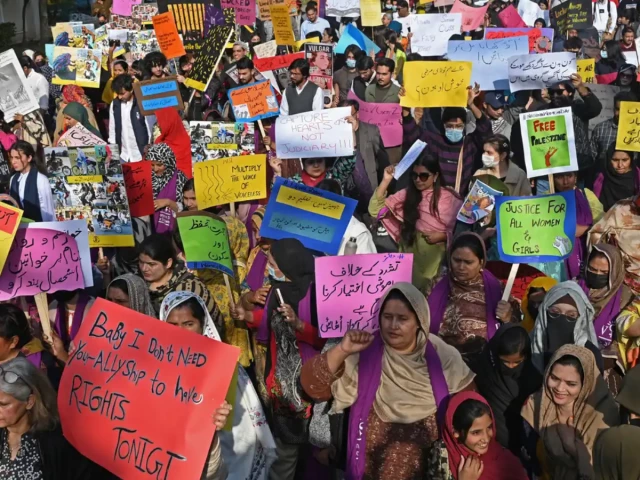
Concerns over civil liberties in Pakistan are intensifying after participants of an International Women’s Day march in Islamabad alleged detention and mistreatment by police, prompting rights organizations to warn of a widening crackdown on dissent and freedom of expression.
The incident, which took place on March 8 during events marking International Women’s Day, has reignited debate over the balance between public order and fundamental rights in the country.
Protest Turns Into Detention
Eyewitness Accounts Raise Alarms
Participants say what began as a peaceful gathering quickly escalated into a distressing experience. Among those detained was sociologist Mavra Bari, who reported being held for nearly 12 hours.
She described overcrowded and unsanitary conditions in detention facilities, where women, men, and even children were reportedly confined together. Allegations of physical abuse have further heightened concerns, with witnesses claiming that several detainees showed visible signs of bruising upon release.
More than 30 individuals were reportedly taken into custody, including bystanders. One parent outside the police station stated that his daughter had only come to observe the march, underscoring claims of indiscriminate detentions.
Official Position vs. Ground Reality
Government Support for Women’s Rights
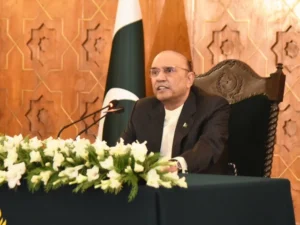
The incident appears to contrast with the public stance of Prime Minister Shehbaz Sharif, who on the same day reiterated that women’s rights are essential to national development.
However, activists argue that such statements are undermined by actions on the ground. They say the lack of clear explanations for arrests reflects systemic issues in law enforcement practices.
Law Enforcement Justification
Police reportedly informed detainees that they had violated regulations restricting gatherings of more than four individuals. Authorities often cite public order and security laws in such situations, though critics argue these measures are inconsistently applied.
Rights Groups Sound the Alarm
Growing Concerns Over Civil Liberties
International watchdog Amnesty International has raised concerns about what it describes as a “shrinking space for dissent” in Pakistan. The organization points to arbitrary detentions and increasing restrictions on peaceful assembly as evidence of a broader trend.
Similarly, Human Rights Watch has documented cases involving intimidation, enforced disappearances, and legal pressure on activists, journalists, and lawyers.
Harris Khalique of the Human Rights Commission of Pakistan described recent measures as “draconian,” highlighting concerns within domestic rights circles.
National Security vs. Free Expression
A Contentious Balance
Digital rights advocate Usama Khilji argues that authorities increasingly frame dissent as a national security issue. According to him, this approach broadens the scope for action against individuals expressing criticism.
Critics say such practices risk blurring the line between legitimate security concerns and the suppression of free speech, creating an environment of uncertainty for activists and citizens alike.
High-Profile Cases and Legal Pressure
Spotlight on Activists
Among notable cases cited by rights groups is that of Imaan Mazari, a lawyer known for handling sensitive human rights cases. She is currently facing legal proceedings alongside her husband over alleged anti-state social media activity.
Observers say such cases reflect a broader pattern of legal challenges faced by individuals engaged in advocacy and dissent.
Media Under Increasing Pressure
Journalists Face Rising Risks
Press freedom organizations have also highlighted growing risks for journalists in Pakistan. The Committee to Protect Journalists reported that at least seven journalists were killed in 2024, while others faced harassment, detention, or legal action.
Journalist Sehrish Qureshi recounted her own experience of detention when she visited a police station to inquire about colleagues held during the march. She stated that she was detained without explanation, reinforcing concerns about arbitrary enforcement.
Meanwhile, Reporters Without Borders has warned of increasing restrictions on independent media and tighter control over information flows.
Contrasting Enforcement Raises Questions
Selective Application of Laws?
Activists have pointed to apparent inconsistencies in law enforcement. Just days after the detentions, a large rally marking Al-Quds Day reportedly took place in Islamabad without similar police intervention.
This contrast has fueled criticism that restrictions on gatherings may be applied selectively, raising questions about fairness and intent.
Activists Remain Defiant
Fear Fails to Silence Voices
Despite the arrests and alleged mistreatment, many participants say they remain committed to activism. Mavra Bari described the experience as frightening, noting that detainees were unsure why they had been arrested or what might happen next.
However, she and others emphasized that the incident would not deter them from speaking out in the future. Their resilience highlights a broader determination among civil society groups to continue advocating for rights and freedoms.
Global Context: A Wider Debate on Freedoms
Pakistan’s situation reflects a global trend where governments are increasingly balancing security concerns with civil liberties. From Asia to Europe, debates over freedom of assembly, digital rights, and press independence are intensifying.
International observers say maintaining this balance is critical for democratic stability, with transparency and accountability playing key roles in building public trust.