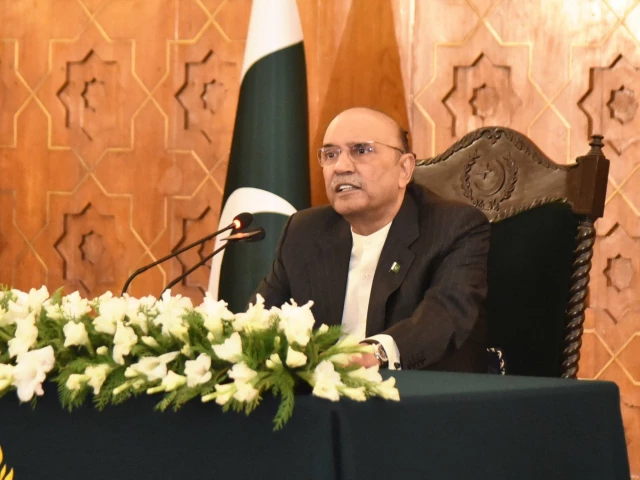
In a strongly worded statement on World Water Day, President Asif Ali Zardari has urged India to fully restore the implementation of the Indus Waters Treaty (IWT), warning that the “weaponisation” of shared water resources could have far-reaching consequences for regional stability and international law.
Addressing growing concerns over water security, Zardari criticized what he described as unilateral actions by India that undermine one of the world’s longest-standing transboundary water agreements.
Rising Tensions Over Shared Water Resources
Pakistan Raises Alarm on Treaty Violations
Zardari accused India of disrupting key provisions of the Indus Waters Treaty, including hydrological data-sharing and established dispute resolution mechanisms. He said such steps threaten not only the spirit of the agreement but also the livelihoods of millions who depend on the Indus River system.
“The deliberate weaponisation of shared water resources is deeply concerning,” he stated, warning that such actions set a dangerous precedent for the management of international water systems.
The Indus Waters Treaty, brokered by the World Bank in 1960, governs the distribution of water from the Indus River and its tributaries between Pakistan and India. It has long been considered a rare example of sustained cooperation despite political tensions between the two nations.
Economic and Food Security at Risk
Lifeline for Agriculture Under Threat
Zardari emphasized that any disruption to water flows could directly impact Pakistan’s agricultural sector, which relies heavily on the Indus basin. Reduced water availability could jeopardize crop production, food security, and rural livelihoods.
Experts note that Pakistan is among the most water-stressed countries globally, making the stability of transboundary water agreements critical to its economic survival.
The president warned that undermining such treaties could destabilize not only bilateral relations but also global norms governing shared natural resources.
Water and Gender: Unequal Burden Highlighted
Women Bear the Brunt of Water Scarcity
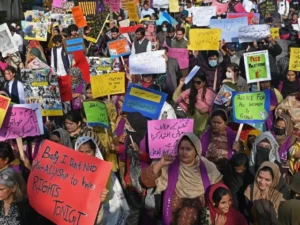
Referring to the theme of World Water Day—“Water and Gender”—Zardari highlighted the disproportionate impact of water shortages on women and girls.
In many rural areas of Pakistan, women are responsible for collecting water, often traveling long distances daily. This limits their access to education and economic opportunities while exposing them to health risks.
He stressed that ensuring access to clean water is not only a development issue but also a matter of social justice and gender equality.
Government Response: Reforms and Infrastructure Push
PM Shehbaz Outlines Water Strategy
Prime Minister Shehbaz Sharif echoed similar concerns, describing access to clean water as a fundamental human right. He highlighted the government’s ongoing efforts to address water scarcity through infrastructure development and policy reforms.
Pakistan’s per capita water availability has dropped dramatically—from over 5,000 cubic metres at independence to less than 1,000 today—placing the country in the category of water-scarce nations.
Major Dam Projects Underway
The government is currently working on multiple projects under the Public Sector Development Programme, including:
- Diamer-Bhasha Dam
- Mohmand Dam
- Naulong Dam
- Nai Gaj Dam
These initiatives aim to increase water storage capacity, improve irrigation, and ensure sustainable supply for urban and rural populations.
Additionally, projects like the Greater Karachi Water Supply Scheme K-IV are designed to address urban water shortages.
Climate Change Worsens Water Crisis
Glacial Melt and Erratic Rainfall
Officials warn that climate change is further exacerbating Pakistan’s water challenges. Unpredictable rainfall patterns and changes in glacier systems in the northern regions are disrupting traditional water cycles.
This volatility makes long-term planning more difficult and increases the urgency of efficient water management.
The government aims to reduce water wastage by 33% and improve efficiency by 30% through canal system upgrades and better resource management.
Technology and Transparency in Water Management
IRSA Telemetry System
To improve transparency, the Indus River System Authority is installing a nationwide telemetry system to monitor water flows in real time.
Expected to be completed by 2027, this system will help resolve inter-provincial water disputes and ensure equitable distribution.
Global Context: Water as a Strategic Resource
Growing International Concerns
Water security is increasingly becoming a global issue, with countries worldwide facing shortages due to population growth and climate change. Disputes over transboundary rivers—from South Asia to Africa—highlight the strategic importance of water.
Zardari’s warning reflects a broader international concern: the risk of water being used as a geopolitical tool. Experts caution that such practices could escalate tensions and undermine cooperation frameworks.
Analysis: A Critical Moment for Regional Stability
Diplomacy vs. Escalation
The Indus Waters Treaty has survived multiple conflicts between Pakistan and India, making it a cornerstone of regional stability. Any disruption to its implementation could have serious diplomatic consequences.
Zardari’s call for restoration signals Pakistan’s intent to resolve the issue through international norms and legal frameworks, while also warning of the risks of continued unilateral actions.
The Way Forward
Sustainable water management will require not only bilateral cooperation but also domestic reforms. Investments in infrastructure, technology, and conservation practices will be key to addressing long-term challenges.
President Asif Ali Zardari’s World Water Day message underscores the growing urgency of water security in Pakistan and the region. By calling for the full restoration of the Indus Waters Treaty and warning against the weaponisation of water, he has highlighted a critical issue with far-reaching implications.
As climate pressures intensify and demand rises, the need for cooperation, sustainability, and equitable resource management has never been greater.