Japan has indicated it could consider deploying its military for minesweeping operations in the strategically vital Strait of Hormuz, but only if a ceasefire is reached in the ongoing conflict involving the United States, Israel, and Iran.
Foreign Minister Toshimitsu Motegi made the remarks during a televised interview, stressing that any such move remains hypothetical and contingent upon improved security conditions in the region.
Conditional Military Role in a Critical Oil Corridor
Minesweeping Tied to Ceasefire Scenario
Motegi clarified that Japan would only consider minesweeping if a “complete ceasefire” is achieved and maritime navigation is obstructed by naval mines. His comments highlight Tokyo’s cautious approach to military involvement in overseas conflicts.
“This is purely hypothetical,” he noted, emphasizing that the primary goal is to ensure safe passage for commercial shipping through one of the world’s most critical energy routes.
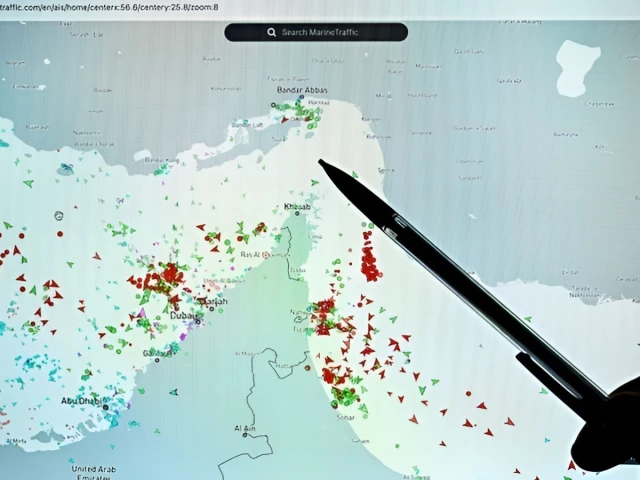
The Strait of Hormuz handles nearly 20% of global oil shipments, making any disruption a major concern for energy markets and global trade.
Energy Security Drives Japan’s Calculations
Heavy Dependence on Middle East Oil
Japan’s interest in maintaining open shipping lanes is closely tied to its energy security. Approximately 90% of the country’s oil imports pass through the Strait of Hormuz, leaving it highly vulnerable to disruptions.
The ongoing conflict has already led to a spike in global oil prices, prompting Japan and other nations to tap into strategic reserves to stabilize supply.
Motegi stressed the importance of creating conditions that allow all vessels to navigate freely, underlining the economic stakes involved.
Legal Constraints on Military Deployment
Pacifist Constitution Limits Action
Japan’s potential involvement is complicated by its post-World War II pacifist constitution, which restricts the use of military force abroad. However, reforms introduced in 2015 allow the Japan Self-Defense Forces to operate overseas under specific conditions.
These include scenarios where Japan’s survival is threatened or when close allies are under attack and no alternative solutions are available.
Any decision to deploy forces for minesweeping would likely require careful legal and political consideration within Japan.
Diplomatic Engagement with Iran
Talks on Safe Passage for Vessels
In parallel with its cautious military stance, Japan is actively pursuing diplomatic channels. Iranian Foreign Minister Abbas Araqchi recently confirmed discussions with Motegi regarding the possibility of allowing Japanese-related vessels to pass through the strait.
These talks reflect Japan’s preference for negotiation over confrontation, as it seeks to protect its economic interests without escalating tensions.
🇺🇸 Pressure from Washington
Allies Urged to Take Greater Role
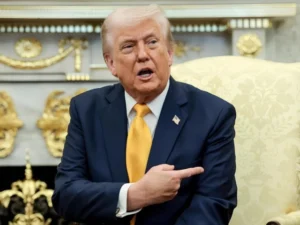
The issue of securing the Strait of Hormuz has also become a point of discussion between Japan and the United States. Donald Trump reportedly urged Japanese Prime Minister Sanae Takaichi to increase Japan’s involvement in ensuring maritime security.
During a recent meeting in Washington, Takaichi briefed Trump on the limits of Japan’s legal framework and what forms of support Tokyo could realistically provide.
So far, U.S. efforts to rally allies into deploying naval forces in the region have met with mixed responses, reflecting the حساس geopolitical environment.
Regional Conflict and Global Impact
Strait Closure Raises Alarm
The conflict involving Iran has significantly disrupted maritime traffic in the Strait of Hormuz, with Tehran reportedly restricting access amid escalating tensions.
Such actions have immediate global consequences, given the strait’s role as a critical chokepoint for oil exports from the Middle East.
Countries across Asia and Europe are closely monitoring the situation, as prolonged disruptions could trigger wider economic instability.
Analysis: A Delicate Balancing Act for Japan
Between Alliance and Autonomy
Japan finds itself navigating a complex geopolitical landscape. On one hand, it faces pressure from its key ally, the United States, to contribute more actively to regional security. On the other, domestic legal constraints and public sentiment favor a cautious approach.
Motegi’s statement reflects this balancing act—signaling willingness to contribute while avoiding premature commitments.
Strategic Importance of Minesweeping
Minesweeping is considered a defensive and humanitarian operation, often framed as ensuring safe navigation rather than direct combat involvement. This makes it a more politically acceptable option for Japan compared to deploying combat forces.
However, even such limited roles carry risks, particularly in a volatile conflict zone.
Global Context: Energy, Security, and Stability
The situation underscores the interconnected nature of global energy markets and regional security. A disruption in the Strait of Hormuz can ripple across continents, affecting fuel prices, supply chains, and economic stability.
Japan’s cautious stance highlights the broader dilemma faced by many nations: how to safeguard national interests without becoming entangled in escalating conflicts.
Japan’s indication that it could consider minesweeping in the Strait of Hormuz—if a ceasefire is achieved—signals both concern and restraint. As tensions in the region continue to impact global energy flows, Tokyo is carefully weighing its options within legal and diplomatic boundaries.
The coming weeks will be critical in determining whether diplomacy can restore stability or whether further international involvement becomes necessary to secure one of the world’s most vital waterways.