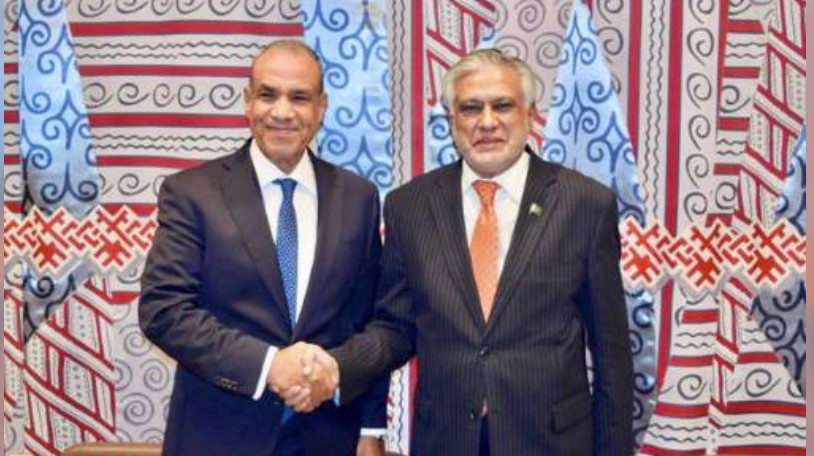
As Pakistan prepares to finalize domestic energy conservation measures amid surging fuel prices, its diplomatic machinery is working overtime on the regional front. Deputy Prime Minister and Foreign Minister Senator Mohammad Ishaq Dar held late-night telephone conversations with his Egyptian and Iranian counterparts on Monday, underscoring Islamabad’s commitment to de-escalation and sustained dialogue as the Middle East crisis enters its fifth week.
ISLAMABAD – In a flurry of diplomatic activity that stretched into the night, Pakistan’s top diplomat engaged with two key regional powers, reinforcing the country’s emerging role as a central mediator in the escalating US-Iran conflict. The calls with Egypt’s Foreign Minister Badr Abdelatty and Iran’s Foreign Minister Abbas Araghchi came as global pressure mounts for a negotiated settlement to a war that has disrupted energy supplies and threatened to plunge the region into broader chaos.
According to a Foreign Office post on X, Ishaq Dar and Abdelatty reviewed the evolving regional situation, with Dar emphasizing the urgent need for de-escalation and sustained dialogue to ensure peace and security. Both agreed to remain in close contact—a commitment that mirrors Pakistan’s parallel engagement with Iranian leadership.
Earlier, Dar held a separate telephone conversation with Araghchi, discussing recent regional developments. In that call, the deputy prime minister emphasized the importance of dialogue and diplomacy to promote peace, security, and stability in the region and beyond. Both sides agreed to remain in close contact on the evolving situation.
A Coordinated Diplomatic Offensive
The back-to-back calls with Cairo and Tehran represent the latest salvo in Pakistan’s coordinated diplomatic offensive to end the hostilities. Over the past week, Islamabad has positioned itself as the lead mediator in backchannel communications between Washington and Tehran, with Army Chief Field Marshal Asim Munir engaging directly with President Trump and Iranian leadership.
Pakistan’s diplomatic outreach now extends across the region. Foreign Minister Dar’s conversation with his Egyptian counterpart follows a pattern of intensive engagement that has included calls with Turkish and Iranian officials in recent days. Egypt, which maintains diplomatic relations with both the United States and Iran, has also been involved in mediation efforts, with its foreign minister speaking with Iranian and Pakistani counterparts as well as Trump envoy Steve Witkoff on Sunday.
The coordination between Islamabad and Cairo suggests a broadening coalition of regional powers seeking to contain the conflict. Turkey and Qatar have also been active in mediation, creating a multi-layered diplomatic infrastructure that could support formal negotiations if the conditions ripen.
Pakistan’s Dual Role: Mediator and Crisis Manager
The diplomatic push comes as Pakistan confronts the domestic economic fallout of the very conflict it seeks to resolve. With the Strait of Hormuz effectively closed and global oil prices surging above $100 a barrel, Islamabad is preparing to impose a weekly one-day nationwide lockdown to conserve fuel—a measure that reflects the severity of the energy crisis gripping the country.
This dual role—mediator on the regional stage and crisis manager at home—places Pakistan in a unique position. The country’s credibility as an honest broker depends in part on its ability to demonstrate stability and competence. Yet the proposed lockdown, reminiscent of pandemic-era restrictions, underscores the vulnerability of Pakistan’s energy-dependent economy to external shocks.
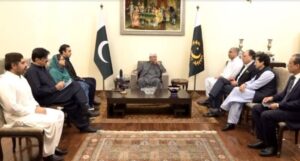
For the government, the diplomatic engagement offers a potential pathway to relief. A successful mediation that reopens the Strait of Hormuz and stabilizes oil prices would directly benefit Pakistan’s economy, easing the pressure that has necessitated domestic conservation measures. The high-level consultations with political stakeholders, including the PPP leadership, reflect an understanding that the country’s economic and foreign policy challenges are inextricably linked.
The Egyptian Dimension
Egypt’s involvement in the mediation efforts adds a significant dimension to the diplomatic landscape. As a major Arab state with longstanding ties to both Washington and Tehran, Cairo brings substantial political weight to de-escalation efforts. Foreign Minister Abdelatty’s engagement with Dar, as well as his earlier conversations with Iranian officials and Trump envoys, positions Egypt as a key partner in the push for negotiations.
The Egypt-Pakistan coordination also reflects a broader realignment of regional diplomacy. Both countries have maintained channels of communication with Iran even as tensions with the United States have fluctuated. Their ability to facilitate dialogue between adversaries has made them indispensable intermediaries in the current crisis.
Iran’s Hardening Stance
Despite the flurry of diplomatic activity, significant obstacles remain. Iran’s leadership has hardened its negotiating stance in recent days, demanding substantial concessions from the United States as a precondition for any serious mediation. According to senior sources cited by Reuters, Tehran is now demanding firm guarantees against future military action, compensation for wartime losses, and formal recognition of its control over the Strait of Hormuz.
The appointment of Mohammad Baqer Zolghadr—a former Revolutionary Guards commander and hardline political figure—as secretary of Iran’s Supreme National Security Council further underscores the consolidation of power within Tehran’s most uncompromising factions. The move came just days after his predecessor, Ali Larijani, was killed in US-Israeli strikes.
For Pakistan’s mediators, these developments present a formidable challenge. The gap between Iran’s demands and what the United States is prepared to concede appears wide, and the five-day pause on US strikes ordered by President Trump is set to expire soon. Whether the backchannel communications facilitated by Islamabad can bridge this divide remains uncertain.
Analysis: A Critical Moment for Pakistan’s Mediation Ambitions
As Ishaq Dar engages with Cairo and Tehran, Pakistan finds itself at a pivotal moment in its diplomatic history.
The country’s emergence as the lead mediator in the US-Iran conflict represents an opportunity to reshape its international standing. Success would cement Pakistan’s status as an indispensable regional power, strengthen its relationship with the United States, and potentially open new avenues for economic cooperation. The backchannel communications facilitated by Field Marshal Munir have already demonstrated that Islamabad can move between Washington and Tehran in ways few other capitals can.
Yet the obstacles are formidable. Iran’s hardened negotiating stance, the appointment of a hardline security chief, and the mounting civilian toll of the conflict all point toward a prolonged struggle rather than a swift resolution. The domestic measures under consideration—a weekly lockdown, restricted commercial hours—suggest that Pakistan’s leadership does not expect an immediate breakthrough.
The coordination with Egypt offers a potential pathway forward. By building a coalition of regional powers committed to de-escalation, Pakistan can distribute the diplomatic burden and create a broader framework for negotiations. The involvement of Cairo, Ankara, and Doha provides multiple channels for communication and multiple sources of pressure on both Washington and Tehran.
For now, Pakistan’s diplomats continue their shuttle diplomacy, carrying messages between capitals and laying the groundwork for potential talks. The high-level meeting scheduled for Wednesday will finalize domestic energy measures, but the outcome of the conflict—and with it, Pakistan’s economic fate—ultimately depends on whether the backchannel communications can translate into formal negotiations.
As the war enters its fifth week, with 82,000 civilian structures destroyed in Iran and global energy markets on edge, the window for diplomacy is narrowing. Pakistan has positioned itself at the center of efforts to prevent a wider conflagration. Whether that position translates into a breakthrough will be determined in the days ahead.