Facing mounting economic pressure from the closure of the Strait of Hormuz and surging global oil prices, Pakistan’s federal government is set to hold a high-level meeting Wednesday to finalize a proposal for a nationwide one-day weekly lockdown. The measure, reminiscent of pandemic-era restrictions, aims to conserve fuel as the country grapples with the ripple effects of the US-Israeli war against Iran.
ISLAMABAD – As Pakistan positions itself as the lead mediator in the escalating Middle East conflict, the government is simultaneously bracing for the economic fallout of the very crisis it is trying to resolve. Sources told local media that federal authorities are preparing to impose a one-day nationwide lockdown each week—a drastic step designed to reduce fuel consumption amid disruptions to global energy supplies.
The proposal, which draws on measures implemented during the COVID-19 pandemic, would involve a complete shutdown of activities for at least one day per week. The plan is part of a broader strategy to manage the country’s energy resources more efficiently in the wake of ongoing US and Israeli strikes on Iran and the effective closure of the Strait of Hormuz—the vital waterway through which approximately one-fifth of the world’s oil normally transits.
The high-level meeting, expected to bring together federal ministers and provincial representatives, will also consider restricting commercial activity hours across the country as an additional measure to curb fuel usage. The discussions come as Pakistan’s diplomatic machinery works overtime to facilitate backchannel communications between Tehran and Washington, hoping to broker a ceasefire that would ease the supply constraints.
Building Political Consensus
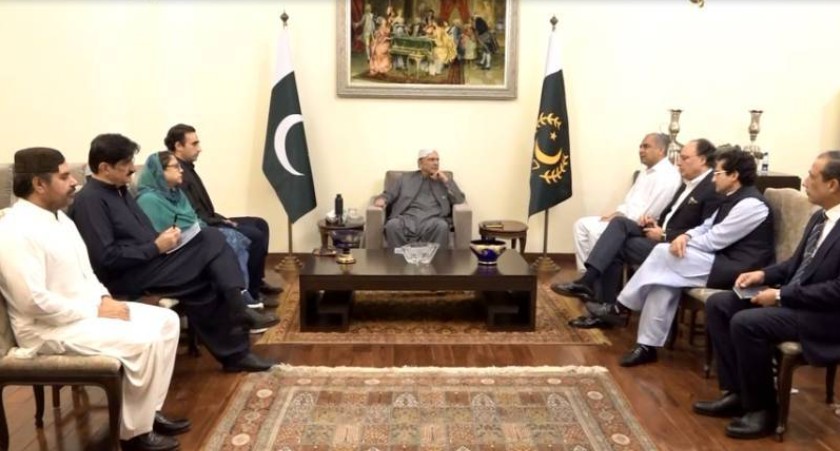
In a sign of the proposal’s significance, federal authorities have already held consultations with key political stakeholders, including the leadership of the Pakistan Peoples Party (PPP) and the Sindh government, to build consensus on potential implementation. A key meeting was held Tuesday at Bhutto House in Karachi, where Interior Minister Mohsin Naqvi, Finance Minister Muhammad Aurangzeb, and Petroleum Minister Ali Pervaiz Malik met with PPP Chairman Bilawal Bhutto Zardari and Sindh Chief Minister Murad Ali Shah to discuss the evolving energy situation.
The discussions covered national financial challenges, the distribution of resources, and the anticipated challenges related to fuel prices and supply in the coming days. Federal ministers briefed provincial authorities on the broader economic pressures facing the country, emphasizing the need for coordinated policy decisions to address the emerging fuel crisis.
The Sindh government is already reviewing similar measures, including limiting the operating hours of commercial centers, indicating that provincial authorities are preparing to align with federal policies.
Presidential Directive: Public Relief First
The push for energy conservation follows a high-level meeting chaired by President Asif Ali Zardari, in which he directed the government to prioritize public relief and minimize the burden of rising petroleum prices on ordinary citizens. The meeting reviewed the country’s overall law and order situation, the economic outlook, and key developments in the energy sector.
During the session, the interior minister briefed participants on ongoing counterterrorism efforts and border security while also outlining regional security challenges, including tensions involving neighboring countries. The finance and petroleum ministers presented updates on economic indicators, the energy sector, and measures being considered to manage fuel prices.
President Zardari emphasized that economic policies must remain focused on providing relief to the public, urging authorities to ensure that increasing fuel costs do not disproportionately affect ordinary citizens. His remarks reflect growing concern within the government about the political and social implications of rising energy costs.
The Economic Calculus
For Pakistan, the stakes could not be higher. The country is already navigating a delicate economic recovery, with inflation pressures and external account vulnerabilities that have required repeated international financial support. The closure of the Strait of Hormuz and the resulting surge in global oil prices threaten to undo hard-won gains.
The International Energy Agency has warned that the world is facing an energy crisis worse than both 1970s oil shocks combined. For oil-importing nations like Pakistan, the impact is immediate and severe. The proposed one-day lockdown represents an acknowledgment that the country cannot absorb sustained high energy prices without significant demand-side interventions.
The measure also reflects the limited options available to policymakers. Unlike wealthier nations that can draw on strategic reserves or absorb higher prices through subsidies, Pakistan’s fiscal space is constrained. The government has already been forced to pass on some of the increase in global oil prices to consumers, adding to inflationary pressures.
Balancing Diplomacy and Domestic Realities
The lockdown proposal comes at a particularly sensitive moment for Pakistan’s diplomatic ambitions. As the country positions itself as the lead mediator in the Iran-US conflict, with Army Chief Field Marshal Asim Munir engaging directly with President Trump and Iranian leadership, the government must also demonstrate to its citizens that it is taking concrete steps to manage the domestic fallout.
There is an inherent tension in this dual role. Pakistan’s credibility as a mediator depends in part on its ability to present itself as a stable and capable partner. Yet the proposed lockdown—a measure associated with crisis management—underscores the severity of the economic pressures the country faces.
For ordinary Pakistanis, the lockdown would represent a return to the kind of restrictions that defined life during the pandemic, but for very different reasons. While COVID-19 lockdowns were aimed at containing a public health crisis, the proposed fuel conservation measures are a direct consequence of a war thousands of miles away—one that Pakistan is now trying to help end.
Analysis: A Nation Caught Between Diplomacy and Crisis
Pakistan’s simultaneous pursuit of mediation and domestic energy conservation reflects the interconnected nature of the current global crisis.
On one hand, Islamabad’s diplomatic engagement with Tehran and Washington offers a potential pathway to de-escalation. Success in brokering a ceasefire would not only stabilize the Middle East but also reopen the Strait of Hormuz, easing the very supply pressures that now threaten Pakistan’s economy. The backchannel communications facilitated by Field Marshal Munir have created a rare opportunity for dialogue.
On the other hand, the domestic measures under consideration—a weekly lockdown, restricted commercial hours—signal that Pakistan’s leadership does not expect an immediate resolution. The government is preparing for a scenario in which the conflict persists, and with it, the energy supply disruptions that have driven oil prices above $100 a barrel.
The political calculus is equally complex. The proposed lockdown would impose significant costs on businesses and workers already struggling with inflation. Yet failure to act could leave the country vulnerable to even more severe economic disruption if the conflict escalates further.
The involvement of President Zardari and PPP leadership in the consultations suggests that the government is seeking broad political cover for difficult decisions. With provincial governments being brought into the planning process, any eventual lockdown would likely be implemented with a degree of consensus—though whether that consensus will hold in the face of public frustration remains to be seen.
As Wednesday’s high-level meeting approaches, Pakistan finds itself at a crossroads. The country’s diplomatic efforts in the Middle East offer a potential exit from the crisis, but the domestic measures under consideration suggest a recognition that the path forward will require sacrifice. For now, Islamabad is preparing for both possibilities—hoping for a diplomatic breakthrough while bracing for a prolonged struggle.