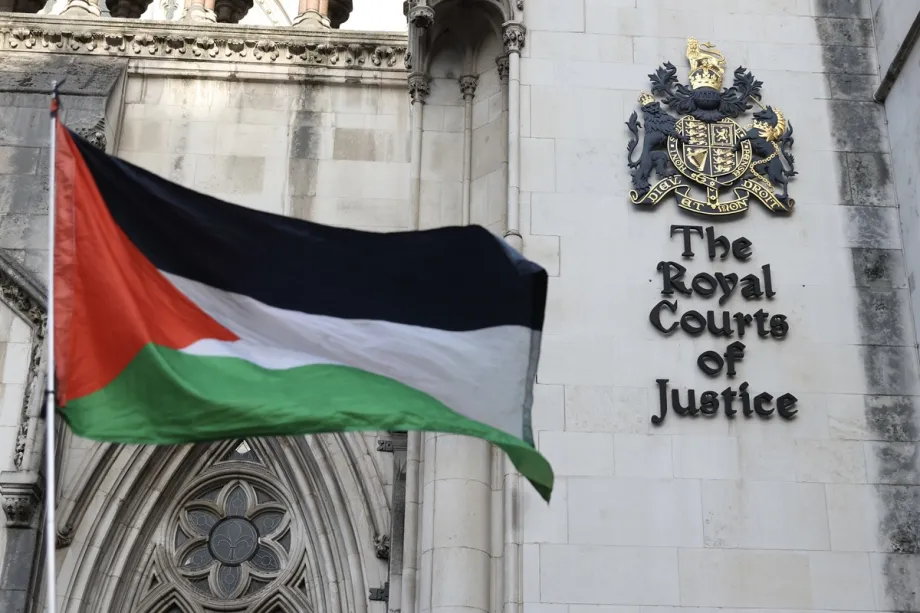
In a highly anticipated legal confrontation, the British government is set to face Hamas in court today, marking a significant moment in a long-delayed legal battle over the group’s proscribed status in the United Kingdom. The hearing, taking place at the Proscribed Organisations Appeal Commission (POAC) on Thursday, March 26, 2026, comes after more than seven months of procedural stagnation that has raised questions about transparency and due process.
At the center of the case is Hamas’ appeal against the UK government’s decision to maintain its classification as a banned organization. Mousa Abu Marzouk, a senior figure in the group’s political leadership, is expected to participate via video link, underscoring the international attention surrounding the proceedings.
Months of Delay Spark Scrutiny
The appeal was originally lodged over half a year ago, yet progress has been minimal. Legal observers have pointed to the unexplained delays as unusual, particularly in a case of such geopolitical sensitivity. Thursday’s directions hearing was scheduled at the request of Hamas’ legal team in an attempt to push the process forward.
The lack of movement has fueled concerns among analysts and legal experts that the delay may reflect institutional reluctance to engage with a politically charged issue. Critics argue that prolonged inaction risks undermining confidence in the UK’s legal framework, especially in cases involving national security and foreign policy.
Government Moves to Dismiss Appeal
The controversy has deepened following an attempt by UK Home Secretary Shabana Mahmood to have the appeal struck out entirely. Legal filings indicate that the government has not presented a detailed substantive argument to justify this move, prompting criticism from civil liberties advocates.
Opponents of the government’s position suggest that seeking to dismiss the appeal without full judicial review could be perceived as an effort to avoid legal scrutiny. The Home Office has yet to publicly elaborate on its reasoning, further intensifying debate around the case.
Background: The 2021 Proscription Decision
The roots of the dispute trace back to 2021, when then Home Secretary Priti Patel expanded the UK’s ban on Hamas to include its political wing. While the group’s military wing had been designated as a terrorist organization since 2001, the broader classification marked a significant escalation in policy.
The decision was controversial from the outset. Critics argued that it blurred the distinction between political and militant activities, potentially complicating diplomatic engagement and humanitarian efforts in Gaza. The move also aligned the UK more closely with allies such as the United States and the European Union, both of which classify Hamas as a terrorist organization.
Legal Challenge Backed by Experts
In April 2025, Hamas formally applied for deproscription under UK law, supported by testimony from a range of international experts. Among them were prominent academic Avi Shlaim and international law specialist John Dugard, both of whom have previously commented on Middle Eastern geopolitics and international legal norms.
The legal challenge argues that the UK government’s decision is flawed, alleging bias and political motivation. It also contends that Hamas does not pose a direct threat to British national security, emphasizing that its activities have been geographically confined.
The case raises complex legal questions about how states define and regulate non-state actors engaged in both political and armed activities.
Wider Implications for UK Policy
Beyond the courtroom, the outcome of this appeal could have far-reaching implications for British foreign policy and counterterrorism strategy. A ruling in favor of Hamas could force the government to reassess its approach to proscribed organizations and potentially open the door to greater political engagement in conflict zones.
Conversely, if the court upholds the government’s position, it may reinforce existing policies and set a precedent for handling similar cases in the future.
The proceedings also intersect with broader debates over freedom of expression, humanitarian access, and the role of international law in conflict resolution.
Analysis: A Test of Legal Transparency
This case represents more than a procedural dispute—it is a test of the UK’s commitment to legal transparency and accountability. The extended delay and the government’s attempt to dismiss the appeal have already cast a shadow over the process.
At a time when global attention remains fixed on conflicts in the Middle East, the UK’s handling of this case will likely be closely scrutinized by allies, critics, and international legal bodies alike.
The court’s willingness to fully hear the appeal—or to allow it to be dismissed—will send a powerful signal about the balance between national security concerns and the principles of justice.