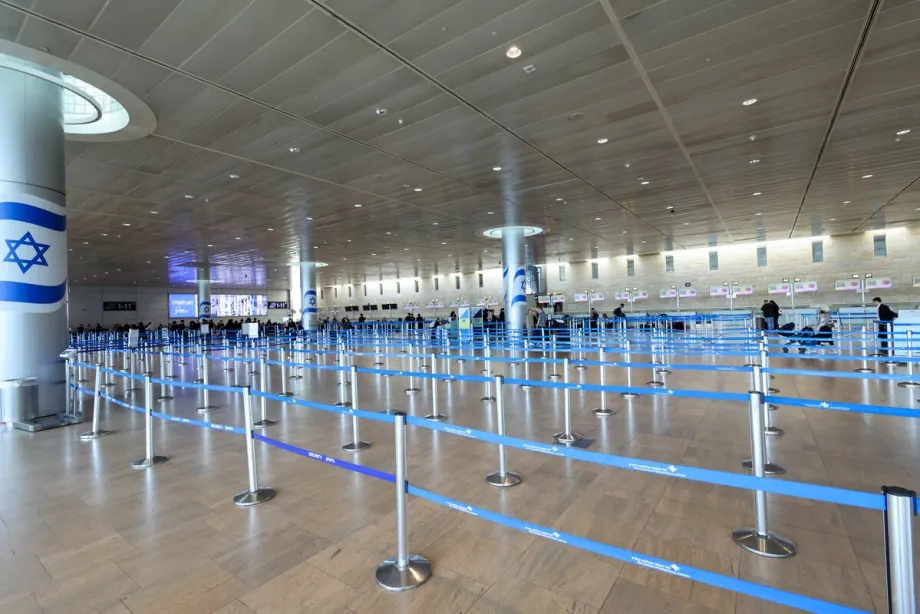
Israel has extended the closure of its primary international gateway, Ben Gurion Airport, until April 16, as intensifying regional hostilities continue to disrupt aviation and heighten global security concerns.
According to Israel’s Transport Ministry, the prolonged shutdown reflects ongoing security assessments linked to the widening conflict involving Israel, Iran, and allied forces across the Middle East. The decision, reported by Channel 13, signals continued instability in regional airspace and raises fresh concerns for international travel and commerce.
Airspace Closure Extended Amid Security Risks
In an official notice circulated to airlines and aviation authorities, the Transport Ministry confirmed that Israeli airspace restrictions would remain in place through mid-April. However, officials indicated that the closure could be lifted earlier if the security situation improves significantly.
The directive places pressure on foreign airlines to clarify their operational plans, particularly those that have not yet canceled scheduled April flights. Carriers are now expected to formally declare whether they will suspend or resume services, adding uncertainty for passengers and logistics operators worldwide.
The closure of Ben Gurion Airport—a critical hub for both passenger travel and cargo—has already disrupted thousands of journeys and strained regional connectivity.
Stranded Travelers Face Uncertainty
Israeli Transport Minister Miri Regev addressed citizens stranded abroad, confirming that the government would not offer financial compensation for travel disruptions caused by the closure.
The statement has drawn criticism from affected travelers and advocacy groups, who argue that the prolonged shutdown and lack of support leave many in difficult financial and logistical situations. With limited alternative routes and rising ticket costs, returning home has become increasingly challenging.
Regional Conflict Driving Aviation Shutdown
The airport closure comes against the backdrop of escalating military confrontation between Israel and Iran. Since late February, both sides have engaged in sustained attacks, including airstrikes, missile launches, and drone operations.
The conflict has expanded beyond bilateral hostilities, affecting multiple countries across the region. Iranian retaliatory strikes have reportedly targeted locations in Jordan, Iraq, and several Gulf states hosting U.S. military assets, increasing the risk of broader regional destabilization.
The scale of the violence has also had a significant human toll, with over a thousand reported casualties and extensive damage to infrastructure.
Global Aviation and Economic Impact
The continued closure of Israel’s main airport is reverberating across global aviation networks. Airlines are being forced to reroute flights, avoid contested airspace, and absorb higher operational costs. Insurance premiums for flights in the region have surged, while passenger demand remains volatile.
Air traffic disruptions are also affecting cargo shipments, including high-value goods and time-sensitive deliveries. This has added pressure on supply chains already strained by geopolitical tensions and economic uncertainty.
Financial markets have responded cautiously, with fluctuations in oil prices and airline stocks reflecting investor concerns about prolonged instability in the Middle East.
Uncertain Timeline for Reopening
While Israeli authorities have left the door open for an earlier reopening, much depends on the trajectory of the ongoing conflict. Any de-escalation could lead to a phased resumption of flights, but continued hostilities may push the closure beyond the current deadline.
Aviation experts note that even after reopening, it may take weeks for flight schedules to normalize, as airlines reassess risk and rebuild operational capacity.
Analysis: A Strategic and Symbolic Move
The extension of the airport closure underscores the severity of the current security environment and highlights how modern conflicts increasingly impact civilian infrastructure. Airports, as critical nodes of globalization, are particularly vulnerable during times of war.
Israel’s decision reflects a prioritization of security over economic activity, but it also carries long-term implications. Prolonged disruptions could affect tourism, foreign investment, and international perception of stability in the region.
For global aviation, the crisis serves as a stark reminder of how quickly geopolitical tensions can reshape travel patterns and supply chains. As the situation evolves, airlines, governments, and travelers alike will be watching closely for signs of stabilization.