In a closely watched vote, Israel’s parliament, the Knesset, has rejected a controversial proposal to designate Qatar as an “enemy state,” highlighting divisions within Israeli politics during an ongoing regional conflict.
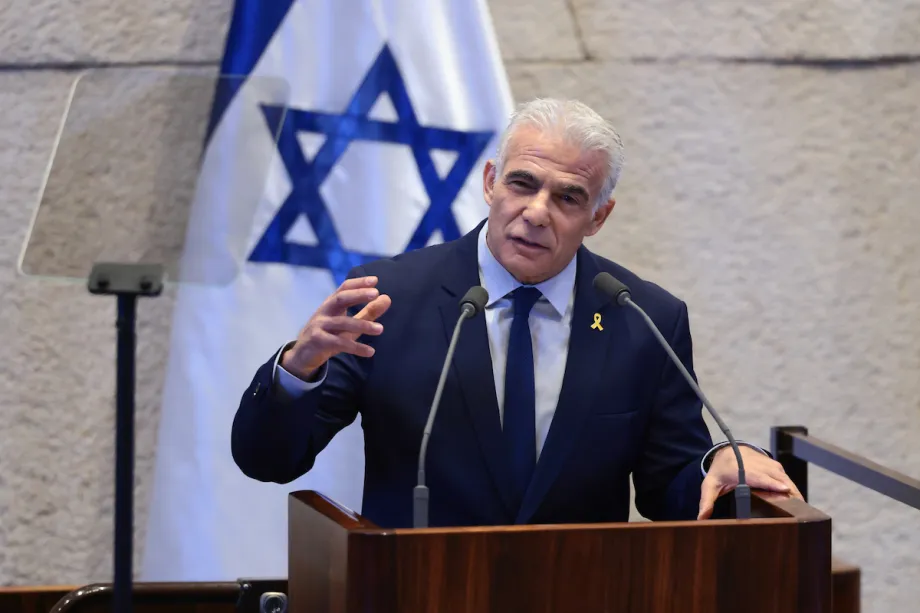
The bill, introduced by opposition leader Yair Lapid, failed to secure sufficient support on Wednesday, with 28 lawmakers voting in favor and 45 opposing the measure, according to local media reports.
Divided Vote Reflects Political Sensitivities
The outcome underscores the political complexities Israel faces as it navigates wartime decision-making. Notably, the centrist Blue and White party, led by Benny Gantz, chose to boycott the vote entirely.
Party officials reportedly argued that introducing politically sensitive legislation during wartime was inappropriate, suggesting that the timing of the proposal may have contributed to its defeat.
The absence of several lawmakers from the 120-seat Knesset further complicates interpretation of the vote, though the margin indicates a clear rejection of the bill.
Background: Rising Tensions with Qatar
Relations between Israel and Qatar have been under strain, particularly following a controversial Israeli airstrike in Doha in September 2025. The operation targeted Hamas-linked figures but also resulted in casualties, including a Qatari security official and several Palestinians.
Qatar strongly condemned the strike, and the incident drew widespread international criticism, intensifying diplomatic tensions in an already volatile region.
Despite this, Qatar has played a critical role in mediation efforts between Israel and Hamas, often working alongside Egypt and under U.S. supervision to facilitate indirect negotiations.
Qatar’s Role as Mediator
Doha has long positioned itself as a key intermediary in regional conflicts, leveraging its diplomatic channels to engage with multiple actors. Its involvement was instrumental in brokering a ceasefire agreement between Israel and Hamas that came into effect in October 2025.
This dual role—as both a host for Hamas political representatives and a mediator—has made Qatar a controversial but essential player in Middle Eastern diplomacy.
Analysts suggest that formally designating Qatar as an enemy state could have jeopardized ongoing and future mediation efforts, potentially limiting diplomatic pathways during a critical period.
Broader Context: Gaza Conflict and Ceasefire Strains
The rejected bill comes against the backdrop of continued instability in Gaza following a prolonged and destructive conflict that began in 2023. The war caused extensive damage to civilian infrastructure, with reconstruction costs estimated by the United Nations at tens of billions of dollars.
Although a ceasefire was reached in October 2025, reports indicate that violations have continued, with ongoing casualties fueling tensions and undermining trust between the parties.
The fragile truce has relied heavily on international mediation, including efforts involving Qatar, making its diplomatic role even more significant.
Strategic Implications of the Vote
By rejecting the proposal, Israeli lawmakers appear to have opted for a more cautious approach, balancing political signaling with strategic considerations. Labeling Qatar as an enemy state could have had far-reaching consequences, not only for bilateral relations but also for regional diplomacy.
Maintaining a degree of engagement—direct or indirect—may be seen as essential for managing ongoing negotiations and preventing further escalation.
At the same time, the vote reflects internal disagreements within Israel about how to handle countries perceived as having ties to adversarial groups.
Analysis: Pragmatism Over Politics
The failure of the bill suggests that pragmatism prevailed over political rhetoric. While tensions with Qatar remain high, the decision indicates recognition of the country’s unique diplomatic role in the region.
In times of conflict, backchannel negotiations and intermediary states often become crucial. Severing those channels could limit options for de-escalation and conflict resolution.
For Israel, the vote may signal an effort to preserve flexibility in its foreign policy, even amid mounting domestic and regional pressures.
As the Middle East continues to grapple with overlapping crises, the ability to maintain diplomatic bridges—even fragile ones—could prove decisive in shaping the path toward stability.